Iran decades away from first nuclear power plant
Iran's continued enrichment of uranium in contravention to UN resolutions is problematic because the country will have no obvious use of its growing low-enriched uranium LEU stockpile.
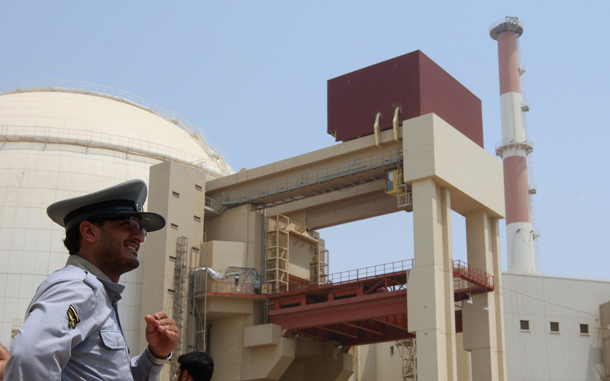
IHS Global Insight in a note says the Islamic Republic's Russian-built Bushehr reactor comes with an integrated fuel supply from Russia and Iran is decades from constructing and bringing its first domestically built nuclear power plant online.
"A favourable reading of Iran's intentions is of course that it wants to build energy security and not be reliable on Russian fuel supplies, but the quickly growing LEU and low-enriched uranium (HEU) stockpile is, of course, unlikely to be seen in that light particularly by the West," senior Middle East energy analyst Samuel Ciszuk and political analyst Gala Riani said in a note, sent to Emirates 24l7.
According to a leaked report by the International Atomic Energy Agency (IAEA), Iran has been able to increase its efficiency in producing more enriched uranium despite the heightened international sanctions.
Iran now has a LEU stockpile of 2,803 kg, having produced about 995 kg between 23 November 2009 and 6 August 2010. In the last three months, the growth of the LEU stockpile is equivalent to about 15 per cent, at a time when the number of active enrichment centrifuges actually having declined somewhat since the agency's May report, from 3,936 to 3,772.
While Iran, since the start of its enrichment programme's monitoring, has suffered continuous problems with its operational sustainability - leading to large fluctuations in the numbers of centrifuges in operation - the accelerated LEU production using less centrifuges indicates that Iran is honing its operational efficiency levels and is able to produce more enriched uranium with less centrifuges.
The total number of installed centrifuges by the end of August is now 8,856, showing that should all of those be brought into operation - for which Iran however most likely does not have sufficient uranium hexafluoride feedstock at this time - Iran's LEU or HEU production could spiral significantly.
Overall, the leaked document, "Implementation of the NPT Safeguards Agreement and relevant provisions of Security Council resolutions in the Islamic Republic of Iran", reveals few secrets and its findings are not surprising, IHS said.
The report however shows a much harsher stance by the agency against Iran's perennial failings to co-operate fully on inspections and continues to question the possible military aspect to the nuclear programme, IHS added.
"For Iran, the report is of little consequence, as the country has repeatedly come under pressure from the UN agency to comply more comprehensively with its inspections regime, but has refused to change its behaviour accordingly," it said.
IHS said it also would appear that the latest rounds of sanctions have made Iran more defiant and less willing to cooperate with the IAEA, at least in the short term. Since January 2007. Iran has withdrawn the designation of 38 agency inspectors.
"IAEA and Iran will continue to play a difficult diplomatic dance, with Iran retaining a minimum level of co-operation and providing the IAEA with only a limited degree of information, making the agency's findings persistently inconclusive," IHS said.