BofA-ML doubles research team
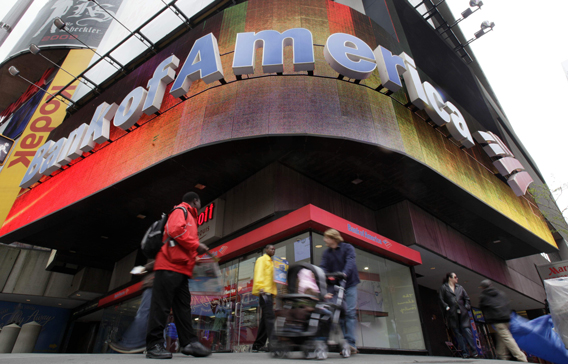
Bank of America's (BofA) acquisition of Merrill Lynch has been painless as far as the region is concerned. The consolidation has, in fact, been instrumental in the company's growth during the turbulent times, a top official said.
Saeed Maghdoori, Managing Director, President and COO, Mena, at Bank of America Merrill Lynch (BofA-ML), said the bank has doubled its equities and research team from 2008 to 2010 and is looking at expanding the scope of business in Saudi, where it had set up an office one-and-a- half years ago.
"We have had a focused increase of headcounts," he told Emirates Business in an exclusive interview. "You don't plan your growth based on a three to 12-month cycle. You plan based on a long-term vision of the region.
"There is no overlap and no pain at all, so it just became stronger," he said. "BofA's presence was more on commercial banking business while Merrill Lynch was more on wealth management and investment banking and the equity business."
He said the firm does not have a dispute with any client despite a market characterised by investment losses due to asset devaluations. During the past 18 months, a number of wealthy families or individuals began to sue their advisors by allegedly providing them with investment advice that led to losses.
"We never had this in the Middle East. I don't have the information because I haven't come across such a case. We advise our clients but it is still their decision at the end," he said.
Maghdoori said there is now a renewed appetite among banks to tap the debt capital markets as funding as cost of borrowing money in international markets comes down.
"Since September 2009, there have been six bank bond issues from National Bank of Abu Dhabi (one in September and another one last month), Abu Dhabi Commercial Bank, First Gulf Bank, Commercial Bank of Qatar and Ban-que Saudi Fransi. We did ADCB and the most recent NBAD one," he said.
When Bank of America Merrill Lynch moved your predecessor Fares Noujaim to New York, talks were that the reshuffling was a precursor to expanding the firm's operations in the Middle East. Has it indeed grown from the time you were seated last year?
The business of the past year has gone through some reviews and studies because, as you know, Bank of America acquired Merrill Lynch. The good news is that the Middle East is clearly a growth area and a good opportunity for the wealth management, for the equity and research franchise and for investment banking business as well. Our growth plans in the region have always been quite focused. There has been a focused increase in headcount over the previous years, even during the recessionary period. And you don't do your plan based on three, six or 12 months cycle, you plan it based on your long-term vision of the region.
I can tell you that we have doubled our research/equities teams and our coverage in the region, from 2008 to 2010. The equities business continues to grow as well as the investment banking. Our wealth management is our legacy business with about five decades' presence in the region, and it remains strong.
Which business division is the largest in terms of revenue?
I don't like to break down revenues into individual components. We look at our business holistically because there is a lot of synergy between various parts of the business.
Were operations here adversely affected by the consolidation of Bank of America and Merrill Lynch?
A lot of international financial institutions were going trough a period of uncertainties and clearly Merrill Lynch was taken over by Bank of America. Therefore, there was a period to pause and sit back and consolidate things. Bank of America is good at that – consolidating the companies they acquired into their franchise. I can be frank and I can say that we have not been affected by it and for this region, it turned out to be positive. It was not painful at all because we have no overlap in terms of what Bank of America did and Merrill Lynch's covered business in the region. They were complementing each other. Part of the answer to your question on how did we grow is the fact that the consolidation did not result into negative headcount impact. Bank of America's presence is more on the commercial banking business and Merrill Lynch's business is more on the wealth management, investment banking and the equity business. For me as the president, I can say that it was a positive development.
Is there a renewed appetite to tap the debt capital markets? Have you received any new mandates for bond or sukuk issuance and M&As?
The banks in the region are certainly looking more closely to the debt capital markets for funding as cost of borrowing money in international markets comes down. Since September 2009, there have been six bank bond issues from National Bank of Abu Dhabi, one in September and another one last month, and those from Abu Dhabi Commercial Bank (ADCB), First Gulf Bank, Commercial Bank of Qatar and Banque Saudi Fransi. We did ADCB and the most recent NBAD one.
Why do international firms continue to flock to this region – other than the structural shift of economic power from the West to East?
The potential for the region is there. It has not disappeared. You have to look at the sovereign wealth, the accumulation of wealth and the existence of natural resources and the prices of oil in the past years and the forecast over the next two years. Another thing to look at is the growing population of the region and the resources and the willingness of the governments across this region to address the needs of the population and the investment that would go with that over the next years. Add all those together and they should give us a positive outlook on where we are heading.
Transparency has been the buzzword over the past two years, especially when government-related entities and commercial firms began to undergo debt restructurings. The Middle East has taken quite a beating for the lack thereof. How do you define transparency and has the region been indeed lagging behind the international standard for transparency?
The assignment that has been given to the tribunal in DIFC, for instance, and the announcements that the government is making is to be taken as a positive step towards transparency. Transparency is a good thing. It is something that investors love to see everywhere. It is something that the region is taking in a positive direction. I don't want to go into more details on that.
Are you satisfied with the kind of transparency we have here?
You are seeing more transparency. Were you satisfied? That's a matter of your point of view and in which side of the transaction you are sitting. Transparency comes when you are entering a transaction and how much transparency you are insisting at that time, that is the transparency you'll get.
If you are prepared to live with less transparency then you will have less transparency in the transaction.
It is evolving. My view is that the more transparency the better it is for all parties because you then know the rules of the games and you play by those rules.
Even if you are not listed?
Transparency really is the clarity in each relationship.
What are the opportunities that are currently in front of you?
We talked about our presence in the region – we have been in Lebanon for five decades and in the UAE for four decades. We have our presence in Bahrain and we started our operations in Saudi Arabia one-a-half-years ago. We are in the process of expanding that. Our expansion is in terms of the scope of the licence that we have.
We are in discussions with the regulator to expand the scope of our licence to be able to provide international investors access products in the local markets.
Our current licence allows us to do wealth management and investment banking advisory.
When will you receive this new licence?
We expect to receive it before the end of this year.
What kind of licence do you have in DIFC?
Our licence here allows us to do wealth management advisory, we have an equity brokerage business, we have research team and investment banking team here, too.
Is there a room for further expansion?
Really we have the full licence that we have under DFSA. We are only expanding in terms of people.
Any other expansion plans in other GCC and Middle East countries?
We continue to look at opportunities in other markets. It would be pre-mature for me to mention any individual market at this stage.
Are people here still risk-averse?
On the wealth management side, people, when compared to two years ago, are more cautious.
It is no longer uncommon to see a client in wealth management suing their advisors because of the losses incurred. Is this becoming a trend here?
We never had this in the Middle East. I don't have the information because I haven't come across such a case. We advise our clients but it is still their decision at the end. Our business is an advisory business. It depends on the quality of financial advisors advising the client so there are whole host of factors.
Some say the debt crisis has been partly caused by the advisors who have no stake on the project or the deal and hence are not really answerable when something fails. They are said to have profited at the expense of countries or companies who have rather found themselves overly indebted. What's your take on that?
It is difficult for us to comment on individual issues. Again what I would emphasise is the way how we run our wealth management – we work with our clients during good times and bad times. We provide advise to our clients and provide them with the best research that we have and best portfolio tools. But they make the decision.
There are many researches available for investors. How accurate are your reports? What is the kind of reputation you have?
It is excellent. Our research team is one of the most highly-respected research franchises in the world. It really and truly is one of our main pillars of strength. We received an outstanding result from this year's 2010 Emerging Emea survey.
As per the poll, we ranked first in overall list, in Turkey and the US institutions and overseas offices of the US firms. We ranked second in the UK institutions and in South Africa and third in oil and gas, financials and Mena.