Abu Dhabi pursues $30bn energy investment plan
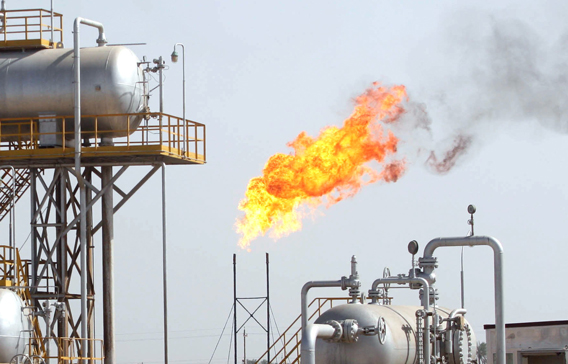
Abu Dhabi said Wednesday it was pushing ahead with a $30-billion massive investment programme involving the development of its hydrocarbon sector to meet domestic and foreign demand.
The programme, one of the biggest hydrocarbon investment schemes in the region, was launched in 2009 and is scheduled to be completed by 2014.
This expansion programme involves investment of nearly $30 billion, perhaps more, said Abdul Aziz Al Ameri, Deputy CEO for large projects at the government-controlled Abu Dhabi Gas Company (GASCO).
It includes the expansion of our oil and gas industry as well as the construction of petrochemical projects. There are nearly 37 projects involved in this programme, which will be completed at the end of 2014. Many local and international companies are participating in these projects on a contractual of joint venture basis, he told Emirates Business at an oil logistics seminar.
Ameri said the projects are part of an ongoing oil and gas expansion programme launched many years ago to tap the emirates mammoth hydrocarbon wealth.
A major part of those projects is carried out by the Abu Dhabi Company for Onshore Operations (ADCO), which will raise its crude output to nearly 1.8 million barrels per day from less than 1.4 million bpd.
In recent statements, ADOC, one of the world's largest oil producing firms, said it has plans to pump nearly $5.3 billion (Dh19.5 billion) into projects up to 2012 to increase its sustainable crude output capacity by around 225,000 bpd.
It said the investments are part of an ambitious two-phase expansion strategy that will lift its capacity by around 400,000 to 1.8 million bpd in 2017.
The company said the projects are part of an overall oil capacity expansion plan to increase the UAE's total sustainable crude output capacity to nearly 3.5 million bpd from an estimated 2.7 million bpd at the end of 2009.
In a report released this week, the Ministry of Economy confirmed plans by the state-owned Abu Dhabi National Oil Company (ADNOC) to lift capacity to 3.5 million bpd, an increase of around 30 per cent.
ADNOC is preparing to pump more crude after curbing output for more than a year to comply with OPEC cuts. ADNOC plans to boost its oil capacity by about 30 per cent in stages which is consistent with the company's goal of raising capacity to 3.5 million barrels per day by 20193, the report said.
The cost of production will also increase because oil companies are now adopting more advanced technologies to squeeze out more crude from existing oil fields, and are exploring non-conventional oil deposits, which are much more challenging and expensive to exploit than conventional ones.
Another key venture planned by ADNOC is the Shah Sour Gas project, with an estimated cost of more than $10 billion (Dh37 billion).
The Shah development is part of a long-term investment programme by Abu Dhabi to expand its gas resources and meet a rapid growth in demand due to a steady expansion in the industry sector and power generation facilities.
From around six per cent during 1990s, gas demand in the country is projected to pick up by nearly 13 per cent in the next decade, according to official forecasts. A large part of the increase will have to be met through the development of local gas resources and imports.
ADNOC has decided to push ahead with the Shah project following a sharp fall in construction expenses, which officials said would depress investments in that project by nearly 30 per cent over its previously estimated cost of $12 billion.
The UAE currently gets a large part of its gas needs from Qatar via a 360-km subsea pipeline owned by Dolphin company.
The UAE has the worlds fifth largest gas resources after Russia, Iran, Qatar and Saudi Arabia but most of them are associated with gas, making their separation a costly process. Increasing associated gas production also entailed hiking oil output, which is not in line with OPEC's fixed quota policy.
The country's gas deposits are estimated at 6.5 trillion cubic metres while its proven oil reserves of about 98.7 billion barrels are also the fifth largest after those in Saudi Arabia, Iran, Iraq and Kuwait.