BA drops two flights to Dubai, vows to fly 60% of passengers
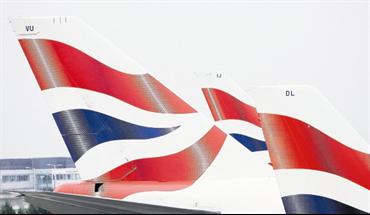
British Airways has announced its flight schedule for the first strike period – March 20, 21 and 22 – that sees two flights cancelled on the Dubai-London route.
The cancellation will be effective on March 22 and 23, while limited in-flight service could be expected on the remaining flights.
Europe's third-biggest airline has said it will focus its resources to operate more than 60 per cent of its long-haul flights to and from Heathrow airport during the first three days of action.
The airline will operate some of its own short-haul flights at Heathrow, and will lease up to 22 aircraft with pilots and crews from eight different airlines in the UK and Europe to enable some 30 per cent of its short-haul schedule. However, the airline will operate all long-haul flights for Gatwick and more than half of short-haul flights at the airport. All flights to and from London City airport will be unaffected.
The schedule aims to fly 45,000 customers each day on the dates, representing nearly 60 per cent of customers booked to fly during the period. Additionally, BA has also agreed with 40 other carriers that customers can be rebooked free of charge during the strike period onto their flights if BA cancels their flight.
The schedule for the second set of strike dates – March 27 until March 30 – will be announced after the first strike period by the airline's cabin crew has ended, BA said in a statement.
BA also announced it was still available to hold further talks. "We will continue to try to prevent this strike taking place, but we have reached a point when we must now offer some clarity to our customers," CEO Willie Walsh stated.
A BA spokesperson told Emirates Business: "A strike will not ground us. We have had nearly 6,000 volunteers, which includes nearly 1,000 who have trained as cabin crew and that is growing."
Cost of the strike
The walkout will be the first for BA since 1997, which resulted in a breakdown in talks between the airline and the Unite union over staffing levels and allowances.
A seven-day strike could cost £105 million (Dh580.9m), London-based analyst at Citigroup, Andrew Light, told Bloomberg. That's more than the £63m saving BA is seeking through a labour deal. Light predicted flight attendants would not support a strike. His estimate of the strike's cost assumes £70m of lost revenue from cancelling 50 per cent of flights, plus plane-leasing fees.
Virgin boost
Virgin Atlantic Airways has said bookings have increased as a result of the strife at BA, with traffic up three per cent in December, the month BA cabin crew voted for a Christmas walkout that was later blocked by a UK court.
"There has been a definite, sustained effect," Virgin spokeswoman Anna Knowles told Bloomberg.
However, insiders say this surge in bookings could also be a result of BA's commercial policy to rebook passengers on another date or with another airline for no charge.
When Emirates Business probed further on the impact of the turmoil, a BA spokesperson said: "The airline is tackling the effects of the economic downturn. Permanent structural change is being introduced, with £300m cost savings between April and December 2009. Non-fuel costs are down 6.4 per cent for the period, along with unit costs, which are down 6.7 per cent.
"We're on the right track but we are still looking at record losses this year. Although fuel costs are down some £400m and non-fuel costs down £300m, revenue is down some £900m for April to December 2009.
"Volumes are stable and yields are starting to show improvement. We reacted quickly to the financial crisis by cutting capacity, reducing costs and improving our liquidity. Capacity this winter has been cut by six per cent and we continue to succeed in managing capacity in line with demand."
In terms of overall passenger load factor, the airline stated the figure was up 2.2 points to 74.2 in February 2010, compared to the same period last year. BA's capacity measured in Available Seat Kilometres was down 1.9 per cent compared to February 2009, while traffic measured in Revenue Passenger Kilometres rose by 1.1 per cent for the same period.
The increase in traffic comprised a five per cent increase in premium traffic and a 0.3 per cent increase in non-premium traffic.
Long-term gains
The airline appeared upbeat about long-term prospects, with a spokeswoman confirming that the walkout won't delay the signing of a merger agreement between the airline and Spain's Iberia Lineas Aereas de Espana, scheduled for this month.
The airline is also going ahead with plans to invest £100m in a new first-class cabin. A spokesperson said: "We are investing £100m in a new first-class cabin, which has been to the UAE and Saudi Arabia and been received well."
BA also confirmed its order book, stating: "We are taking delivery of three new Boeing 777s this year, and three more over the next two years."
Unite won backing for a strike in a month-long poll of workers. However, last-ditch discussions to avert the strike broke down on March 10 after BA rejected union proposals for a 2.6 per cent pay cut this year, as well as lower staffing levels and a cut in allowances.
The carrier says the package falls short of the saving claimed by Unite and that its own plan achieves the sum with no wage reduction for serving employees. (With inputs from Bloomberg)