GCC likely to scrap cement and steel tariff
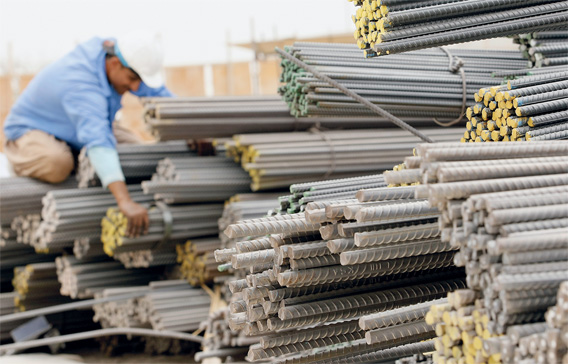
Six Gulf oil producers are expected to scrap a five per cent customs duty on cement and steel imports in October to ease supply bottlenecks spurred by recovering domestic demand, a senior Gulf official said yesterday.
The UAE, Saudi Arabia, Kuwait, Qatar, Bahrain and Oman, which make up the 29-year-old Gulf Co-operation Council (GCC), will take a decision on the abolition of the duties at the request of Kuwait, said Mohammed Al Mazroui, the GCC's Assistant Secretary-General for Economic Affairs.
Quoted by the Saudi Arabic language daily Okaz, Mazroui said finance ministers from the six member states would meet in Riyadh in October to approve the Kuwaiti proposal for exempting those two commodities from tariffs.
"The ministers will take this decision in accordance with a recommendation by the GCC Customs Union Committee when they meet in October," he said.
"Kuwait has proposed the exemption of cement and steel imports from duties and we hope it will outline its justifications for this proposal at the next meeting… I think most GCC member states will benefit from this decision but, naturally, Kuwait will benefit the most as it had made the proposal."
The GCC finance ministers discussed the proposal at talks in Riyadh last week but there was no final decision on the issue.
GCC countries, which control over 40 per cent of the world's extractable oil deposits, launched a customs union five years ago and a common market three years later. The moves were crowned by a monetary union, which was launched early this year by Saudi Arabia, Kuwait, Qatar and Bahrain. The UAE and Oman have pulled out for some reasons. The GCC suffered from a supply shortage in cement, steel and other building materials during the peak oil boom years of 2007 and the first half of 2008 before the global fiscal crisis reversed that trend. Many construction projects in the region were either cancelled or shelved because of the post-crisis downturn in member states and the global credit crunch. But several ventures have been back on track over the past few months, fuelled by a surge in oil prices and an increase in state capital spending in the GCC states, mainly Saudi Arabia, the largest member.
The lull in business activity in the third quarter of 2008 allied with higher production costs to depress the net profits of the region's main 24 cement producing companies by around 35 per cent to about $1.42 billion (Dh5.21bn) in 2008 from nearly $2.2bn in 2007.
Their performance remained poor in the first half of 2009, with their net earnings plunging by nearly 25 per cent to nearly $922 million from about $1.22bn in the first half of 2008.
According to the Kuwait-based Gulf Investment House (GIH), the projects market in the GCC was estimated at nearly $2.68 trillion in April 2009 but was slashed to around $2.2trn a month later. It said a major decline in the projects announcement came from the UAE whose total size plunged to about $960bn from $1.32trn. Oman had the second highest decline in the project pipeline to $96bn from $110bn.
Although work on different projects in Saudi Arabia and Qatar is going on at a brisk pace, the overall project pipeline in these countries went down by nine and four per cent to $586bn and $209bn respectively.
"Despite the decline in projects, we believe Saudi Arabia, Qatar and Abu Dhabi are still having a healthy outlook, but we note that new contract awards on average are down by 50 per cent year-to-date across the GCC," GIH said.
CEMENT PRODUCTION IN GCC
Official figures showed cement production capacity in the GCC stood at around 85 million tonnes at the end of 2008 and is projected to peak at nearly 112 million tonnes in 2011 after new projects and expansions are completed.
The bulk of the increase will come from Saudi Arabia and the UAE. Saudi cement companies will expand their capacity from 44 million tonnes a year in 2008 to 55 million tonnes by 2011, while UAE producers will boost output from 29m to 41m tonnes.