GCC steel demand to remain strong despite crisis
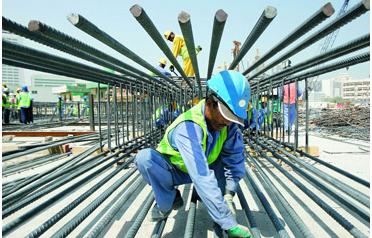
Steel demand in the Gulf is expected to remain strong despite the fallout from the global financial crisis as they are pushing ahead with a massive construction drive, an investment bank said yesterday.
The GCC countries, which are reeling from a sharp drop in crude prices, could still pump up to $9 billion (Dh33bn) into steel expansion projects and the UAE is expected to be the top investor, Global Investment House (GIH) said in a study sent to Emirates Business.
The projects will lift the GCC's combined steel output capacity by nearly 27 million tonnes per year and this could have a downward impact on prices following a sharp rise over the past 18 months because of the economic and construction boom, said the Kuwait-based GIH.
"Despite the financial turmoil affecting world economic growth we believe that the demand for steel will remain strong in GCC. An estimated $850bn will be spent by the GCC countries in the next three to five years on infrastructure, petrochemical industry, tourism and other projects," the study said.
"These huge projects will create an incremental demand of about 17 million tonnes per year over the next three to five years. The GCC countries are diversifying their revenue sources to reduce their reliance on oil income and setting up of steel and aluminum industries is part of the plan.
"The new capacities that are coming online are unlikely to pull down prices significantly as additional output will be absorbed by strong steel demand. However, we believe that steel prices are likely to come down on the back of falling crude oil and raw material prices and lower world economic growth."
But the study said it believed a prolonged world economic slowdown and reduction in oil prices can lead to cancellations and postponements of projects that will have a detrimental effect on the industry as a whole.
"The GCC countries will continue to remain major consumers of long products, which constitute 60 per cent of the estimated demand as they look to develop their infrastructure and petrochemical industry to sustain economic growth."
NEW INVESTMENTS
GIH estimated the GCC's combined investment in new steel projects at between $7bn and $9bn in the next three years. It said such projects would enhance the iron and primary steel output capacity by 27 million tonnes to 45.1 million tonnes per year to meet the growing appetite for steel.
Its figures showed that the UAE and Saudi Arabia are bringing in the largest increase in primary steel-making capacity while Bahrain and Oman are focusing on iron pellet production for exports. Qatar and Kuwait currently have no major expansion plans.
Companies in UAE will execute six projects worth $2.7bn to increase the primary steelmaking capacity by 3.8 million tonnes per year and the secondary steel-making capacity by about two million tonnes.
One of the major projects is being undertaken by Emirates Steel Industries, a subsidiary of the newly established holding company Abu Dhabi Basic Industries Corporation (Adbic), which is planning to expand Mussafah steel plant in Abu Dhabi by 1.4 million tonnes at a cost of $1bn.
The project, which is the second phase of the Mussafah steel plant, will raise capacity from 600,000 tonnes to two million tonnes per year. The expansion is part of Adbic's plan to reach a capacity of five million tonnes per year over a period of five years and the plant will be completed in early 2009.
OTHER PROJECTS
Companies in Saudi Arabia will execute six projects worth about $1.6bn to increase the primary steel-making capacity by 5.7m tonnes and the secondary steel-making capacity by 1.7 million tonnes.
According to the study, Oman has plans to become a steel power house. It is focusing on establishing primary steel industry for export purposes. The largest project is being undertaken by Sohar Industrial Port Company (SIPC). SIPC plans to establish an iron ore pelletising plant at the Port of Sohar.
The plant will have a capacity of 7.5 million tonnes per year and is proposed to be located in the Special Economic Zone west of the port. The iron pellets will be exported mainly to Saudi Arabia and Qatar. Completion of the project is scheduled for the first quarter of 2010.
Bahrain is also looking to place itself as a major player in the steel industry. Gulf Industrial Investment Company is undertaking an expansion project worth $525.3m for its existing iron pelletising complex at Hidd Industrial Area. After completion, the capacity will be enhanced by six million tonnes to 11 million tonnes of iron pellets.
HIGH CONSUMPTION
"The construction boom led by the petrodollars and the desire to diversify oil-based economies has made the GCC a major business hub for international investors. Steel consumption throughout the GCC has increased significantly underpinned by demand from construction," GIH said.
"Liberalisation of the real estate sector and diversion of oil revenue towards construction and infrastructure building has led to a high demand for rebar, a steel bar commonly used in reinforced concrete."
The GIH data showed about 13 million tonnes of rebar is consumed by the GCC countries. Nearly 40 per cent of the total steel demand is met locally while the rest is imported mainly from Turkey, North Africa and the CIS countries. The demand for long products, which are mainly used in building and construction, form 60 per cent of the overall demand while an estimated 10 to 15 per cent of the construction cost comprises cost of steel bars. The study showed there are 18 steel companies in the GCC engaged in production of raw steel and finished steel products.
UAE TOPS
Saudi Arabia is the largest producer in the region while the UAE tops the list with a demand per-capita consumption of 2,348kg followed by Qatar with about 985kg. GCC as a whole has a per-capita average consumption of 645kg, which is higher than the world average of about 240kg.
"With relatively low populations and massive investment in infrastructure and tourism-related projects, the per-capita consumption in GCC is likely to stay higher than the world average," the study said.
In another study on the GCC steel sector published recently, the Emirates Industrial Bank urged member states to expand their steel and other building materials industries to slash imports and cut soaring prices.
NEED FOR MORE
"The present boom in the real estate sector has resulted in steep increases in domestic demand for building materials. This has led to the establishment of more projects and this in turn has contributed to efforts to diversify the economy and at the same time stimulated the private sector and banks and other lending institutions," the study said.
"But there is a need now for more projects and expansion of existing units in all member countries to meet the surge in demand and reverse an upward trend in prices. The private sector should now take advantage from the creation of the common GCC market and embark on such projects. There is no doubt such projects will eventually lead to stabilising prices and at the same time support efforts to tackle inflation in the region since higher prices of building materials are the main cause of the surge in rents."
The study gave no figures on the GCC production of building materials but independent estimates put cement output in the six members at more than 60 million tonnes in 2007 compared to 35 million tonnes four years ago. Production capacity is expected to peak at 80m tonnes in 2010. Steel production is also expected to surge in the next three years as most member states are expanding their plants and constructing new projects to catch up with demand.
IMPORT SURGE
According to the Doha-based Gulf Organisation for Industrial Consulting (GOIC), which advises on manufacturing policies in member states, steel production in the GCC soared by nearly 21 per cent between 2001 and 2005 but consumption leaped by 64 per cent during the same period. "This has led to ever increasing imports of steel into this region. Imports of finished and semi-finished steel were nearly 13m tonnes in 2005. The steel industry has taken note of the continued growth in steel imports and a number of major projects have been planned and are under implementation in some GCC countries."
Goic said global steel demand recorded a compound average growth rate of eight per cent between 2001 and 2005 while the rate was as high as 17 per cent in the GCC, which controls nearly 45 per cent of the world's proven oil wealth. Global demand is projected to grow by about 4.9 per cent until 2010 before it slips to 4.2 per cent between 2010 and 2015, according to the study.
"As for the GCC, the level of economic growth will continue to be robust based on sustained high surpluses generated by oil revenues. This economic growth will in turn continue to fuel the construction boom as money is pumped into real estate, infrastructure and tourism projects," it said.
UAE steel projects
EMIRATES INTEGRATED STEEL COMPLEX EXPANSION
The project is an expansion to the existing steel rolling operations undertaken by Emirates Iron and Steel Factory located in Musaffah, Abu Dhabi. The project will cost $550m. The expansion will be built adjacent to the existing operations.
ESI-MUSSAFAH STEEL PLANT- PHASE 2
Emirates Steel Industries, a subsidiary of the newly-established holding company Abu Dhabi Basic Industries Corporation (Adbic), is planning to expand Mussafah steel plant (currently under development) in Abu Dhabi by 1.4 million tpa at a cost of $1bn. The project which is the second phase of Mussafah steel plant will raise capacity from 0.6 million tpa to 2.0m tpa. The expansion is part of Adbic's plan to reach a capacity of 5.0 million tonnes over a period of five years. The plant will be operated by Emirates Steel Industries. The plant is set to be completed by by first quarter of 2009.
BILDCO STEEL
Abu Dhabi National Company for Building materials plans to develop a steel rolling mill in Mussafah for $50m. The grass root plant will have a capacity of 300,000 tpa of reinforcing steel. The commissioning of the project is expected in 2009.
Al GHURAIR/TRADELINE – STEEL COMPLEX IN ICAD (MUSSAFAH)
Al Ghurair and Tradeline are planning an expansion of the plant worth $60 million which will comprise of 0.5 million tpa pickling line, 0.5 million tpa second cold rolling mill (CRM), 0.2m tpa galvanising line, 0.2 million tpa Alu zinc. Phase 2 is expected to start production in 2009.
ANIE- MUSSAFAH STEEL COMPLEX
Al Nasser Industrial Enterprises is developing a steel manufacturing complex in Mussafah. The complex will comprise two plants, a HYL-ZR DRI Direct Reduced Iron sponge iron plant and a steel billet manufacturing plant with a capacity of 250,000 tpa of sponge iron and 300,000 tpa of steel billets. The project will have an estimated cost of $300 million. The plant is expected to be commissioned in the fourth quarter.