UAE to have first Arab nuclear power plant in 2015
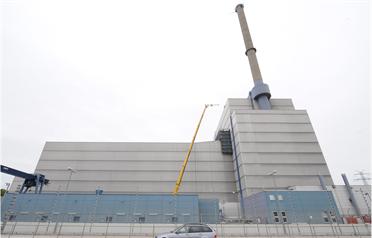
The UAE, which has got an approval from the United States to proceed with its nuclear plans, is expected to have its first nuclear reactor completed by as early 2015, making it the first operator of a nuclear plant in the region, experts told Emirates Business.
"If I were to make a bet, I would say the UAE will the first one. They stand the best chance of having the first power plant online by 2017-2019," Dr Adnan Shihab-Eldin, former secretary general of Opec and a board member of the Kuwait Nuclear Committee, said. "Egypt probably will have one soon, but the Egyptian process is very slow. They may come on stream after the UAE."
Mahmoud Nasreddine, Advisor to the Secretary General of the League of Arab States expects the first plant to be completed by early as 2015. This is substantially shorter as the IAEA guidelines calls for about 10 to 15 years of planning, preparation and execution, before a nuclear power plant is online.
On March 23, 2008, the UAE became the first country to approve nuclear plans although on the next day, Bahrain also penned a deal with the United States to co-operate on a civil nuclear power. The US State Department held out the deals as model for nations seeking to to meet their energy needs and cut their greenhouse gas emissions.
Eldin said the UAE is not taking any short cuts, but is rather "fast-tracking" the process to fulfill the requirement in minimum time feasible, which involves engaging with competent and experienced vendors, usually through joint ventures.
"Because they don't have the manpower they are building their own independent organizations, they are recruiting staff while at the same time they are training their own people. They are probably thinking of a joint venture with an experienced utility provider," he said.
One of the UAE's fast-tracking measures was its voluntary renunciation of its rights to enrich uranium under the non-proliferation treaty (NPT).
"One of the controversial issues is the UAE's announcement that it gives up voluntarily its right for enrichment under the NPT and perhaps that policy is the reason why the US president agreed and endorsed the agreement," Eldin told this newspaper on the sidelines of the Utilities Expansion Summit in Dubai last week.
"Some people said they should not have gone to that extra mile. I think they are doing it right. Obviously, this model of the UAE may be fit for the Gulf, but may not fit to countries like Egypt and Morocco," he added.
Due to the political will and the fast tracking efforts, the UAE could indeed be the first in the region to have a nuclear plan, Ali Boussaha, Director for Africa at International Atomic Energy Agency (IAEA) concurs.
"There is a big chance that they could be the first because they are quite advanced in their planning," he said. "I have to say Egypt is also quite advanced in the planning. Now who will be the first, I cannot really say as it will depend on how things develop. Another contender is Jordan as they have uranium sources and they a big energy shortage." The UAE is currently using a build and operate model, which will see the country invest its own capital. The construction will be completed by a foreign company and the operation will be carried out by the same or another company.
In contrast, under the build own and operate model, the investor – a foreign company or a country – will invest in building and operating the plant. It will then sell the electricity to the country, which hosts the facility.
In either model, there is a question concerning the mission and the identity if the regulatory body.
Meanwhile, the UAE has created two independent bodies –the Emirates Nuclear Energy Corporation (Enec) and the Federal Authority for Nuclear Regulation (Fanr).
Nasreddine, said the UAE government's decision to adopt a nuclear option is based on the rapid increase in demand for electricity and fresh water.
He said as many as 2,300 nuclear scientists, technicians and support staff will be needed to run the UAE's proposed three-reactor civil nuclear programme.
Such a plan would need to develop education and training programmes with partner utilities, suppliers, universities and with regional and international organisations.
Observers say that the GCC's nuclear programme, which once started as a joint scheme, has now become an individual country race in becoming the first Arab state to develop atomic energy.
Eldin said that a regional programme approach to introduce nuclear power as suggested by decision of GCC Summit 2006 is logical and warrants serious consideration, given similar economic, social, political characteristics, it is more likely that the initiative would end up as a collection of individual country projects.
In the past, Arab countries, especially oil-rich countries have not been in favour of electricity generation by nuclear energy. Such option has been excluded due to the abundance of cheap fossil fuels.
"As they undergo economic growth, their needs for fresh water and electricity increased. Decision makers are obliged to consider their energy strategies and to agree on different available options – nuclear and renewable energies," Nasreddine said.
He said given the very long lead time required to build and implement a safe, secure nuclear power programme, it is imperative that a small nuclear program be prepared and started now, to be able commence first nuclear electricity around 2020.
"By 2020-2025, the relative size of future role of nuclear power versus gas power and the role of renewable energy becomes clearer. Waiting means it may be too late or too costly to start then," Eldin added.
UAE WELCOMES OBAMA'S APPROVAL
US President Barack Obama approved yesterday the Agreement for Co-operation between the Government of the United States of America and the Government of the United Arab Emirates concerning peaceful uses of nuclear energy, the White House announced.
"I have considered the proposed Agreement for Co-operation between the Government of the United States of America and the Government of the United Arab Emirates concerning peaceful uses of nuclear energy, along with the views, recommendations, and statements of the interested agencies, the US president said in a memorandum for US Secretary of State and Secretary of Energy.
"I have determined that the performance of the agreement will promote, and will not constitute an unreasonable risk to common defence and security. Pursuant to section 123 b of the Atomic Energy Act of 1954, I hereby approve the proposed agreement and authorise the Secretary of State to arrange for its execution," Obama said.
The United Arab Emirates and the United States signed in January 2009 a bilateral agreement for peaceful nuclear co-operation that enhances international standards of nuclear non-proliferation, safety and security.
"This agreement will benefit both of our countries, and is another example of the strong relationship between the United States and the United Arab Emirates," said Sheikh Abdullah bin Zayed Al Nahyan, Foreign Minister of the UAE, after signing the agreement in Washington with the then-United States Secretary of State Condoleezza Rice.
"Under the terms of this agreement, the UAE will gain access to significant capabilities and experience in the peaceful use of nuclear energy.
"This will allow the UAE to develop its civilian nuclear programme to the highest standards of safety, security and non-proliferation. The agreement will also open opportunities for US firms to be active participants in the UAE nuclear energy programme," Sheikh Abdullah added.
In statements after meeting separately US Secretary of State Hillary Clinton and US Secretary of Energy Steven Chu in last April in Washington, Sheikh Abdullah said: "The UAE has made a binding commitment not to enrich uranium or to reprocess spent fuel; committed to absolute operational transparency for civilian nuclear energy programmes; endorsed international non-proliferation protocols; and supported the creation of an international nuclear fuel bank to assure security of supply and to remove any rationale for unilateral enrichment programmes.
"Signalling its unqualified commitment to this goal, last year the UAE contributed $10 million (Dh36.7m) to the International Atomic Energy Agency fuel bank, proposed by the Nuclear Threat Initiative," he added.
In another qualitative move to affirm its commitment to transparency in its peaceful nuclear programme, the UAE released in April 2008 a detailed policy document on the evaluation and potential development of peaceful nuclear energy.
The UAE policy is based on the principles of complete operational transparency and the highest standards of safety, security and non-proliferation.
The nuclear energy policy of the UAE was developed following a study that projected massive increases in demand for electricity in the coming decades.
Keep up with the latest business news from the region with the daily Emirates Business 24|7 newsletter. To subscribe to the newsletter, please click here.