Shipping sector likely to stay volatile this year: report
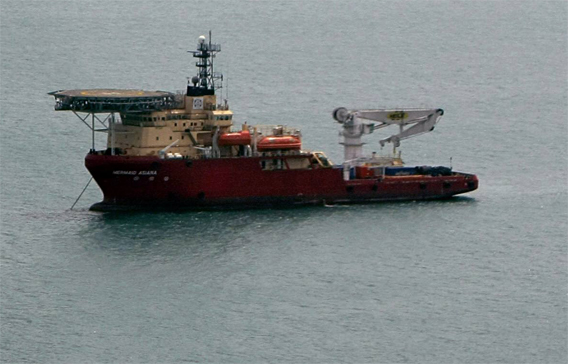
As profits continue to fall in major US and European shipping companies, the industry is being warned that volatility is set to continue in 2010. According to a report published by Charles Stanley Securities, the results season for many shipping companies has been characterised by difficult market conditions in 2009.
Regarding the dry bulk sector, the report said Chinese demand and infrastructure spending hold the key and that prospects for global growth look more positive in 2010. The supply side continues to be dominated by new vessel deliveries and the ability to absorb new capacity. After a poor 2009, the outlook is more upbeat for tankers.
"The impact of the cold winter and declining oil stocks has stimulated the market. After falling in 2009, global oil demand is expected to increase in 2010. Containers suffered significantly as a result, leading to a sharp decline in demand and overcapacity. Better conditions are anticipated in 2010 tempered by continued new deliveries," said the report.
The research analysed results from a number of US and European shipping companies including three dry bulk operators – Genco Shipping & Trading, Excel Maritime Carriers and DryShips as well as General Maritime, a predominantly tanker business. It also had results from Frontline, which has one of the world's largest fleets of very large crude carriers (VLCC), Suezmax tankers and Suezmax oil, bulk and ore (OBO) carriers.
"The tenor of these results give us an insight into the outlook for various segments of the shipping market – dry bulk market, tanker and containers as well as the chartering trend. They also give an insight into current vessel valuations as well as the latest developments in the newbuilding and vessel delivery pipeline," the report said.
The Baltic Dry Index has been volatile in the past year fluctuating between 1,463 points in April 2009 and 4,661 points in November 2009. While volatility has continued into this year, the market has rallied recently.
China spurs dry bulk recovery
"One of the factors behind the recovery in the dry bulk market has been the demand for iron ore imports from China for infrastructure expenditure," it said. Chinese steel production increased by 13 per cent year-on-year. Close to 50 per cent of steel consumption in China is used in construction projects. In January, China imported 46.62 million tonnes (mt) of iron ore, an increase of 43 per cent over comparable month last year. The January total represents a decline of 25 per cent from the amount in December of 62.16 mt. This reflected positioning ahead of the annual price negotiations and utilisation of the spot market. In 2009, China imported 627.78 mt of iron ore, 41.6 per cent more than in the previous year.
Freight rates currently stand at about $30,000 (Dh110,182) for capesize and around $30,000 for supramaxes. "There has been strong demand for both iron ore and coal from Australia to China. The market has also been impacted by congestion and shipping delays at ports. As an example, reports of shipping delays at Port Headland, in Australia, stand at 12 days from the more normal one to five days, the report said.
Tanker rates, it added, have been relatively low as a result of lower global energy demand, given the global economic downturn and the impact of newbuilding deliveries. "Oil demand in the US fell by 4.2 per cent to an average of 810,000 barrels per day (bpd) but there are expectations that it will grow by one per cent in 2010. Chinese demand remains the key with oil consumption increasing by eight per cent in 2009 and increased demand in Q4 2010," the report added.
In the fourth quarter of last year, rates were relatively static although there was a rally in December, with VLCC rates rising to $29,700 per day and Suezmax rising to $23,300. "It appears that there were fewer deliveries than expected with 10 VLCCs delivered against an estimated 19. Ten Suezmaz were delivered compared to an estimate of 21.
"Tankers used for storage continue to play a significant role in the market. Tonne-miles were on a par with Q4 2008," the report said. According to analysts, there is increasing evidence of a disparity between double-hull and single-hull vessel charter rates. A key to the future direction of the market is the phase-out of single-hulls as mandated by the EU, by the end of 2010.
Higher tonne-mile demand
Tonne-mile demand is estimated to have fallen by four per cent in 2009 compared to global oil demand declining by 1.5 per cent. It is estimated that tonne-mile demand will increase in 2010 with oil demand expected to grow by 1.9 per cent.The fundamentals of the market remain strong, with the average distance transported increasing. China and India are increasing imports from West Africa and the US. Chinese tonne-mile demand increased by 37 per cent in December (year-on-year) and there was a 30 per cent increase in imports.
Cancellations, delays and deferrals are still positively affecting the market as evidenced in 2009. Tonne-miles are estimated to increase by seven per cent in 2010. Maersk sees rates remaining unsatisfactory, with the addition of new tonnage combined with weak demand for crude oil and refined product, expected to cause challenging market conditions in 2010.
The report said results clearly indicate that sale and purchase activity has continued to be strong. "It is evident that the fall in values has stimulated interest among owners. The number of transactions has increased and it appears that liquidity has returned to the market. There has been notable demand for both modern and second-hand tonnage in the dry bulk segment. There has also been activity in the container segment with buyers looking to exploit reduced valuations," it said.
Another factor that has underpinned the stabilisation of the market has been the increase in demolition/scrapping of older vessels, particularly in the container and tanker segment. "It is estimated that ship demolition reached a 13-year high in 2009 with approximately 1,014 ships being scrapped with a combined carrying capacity of 31.5m dead weight tonnage (dwt) which is the highest level since 1996 and double the total in 2008. The biggest component of scrapping was bulk carriers followed by oil tankers. According to Clarkson Research, total demolitions will increase to 53.5m dwt as single-hull capacity is withdrawn from the market by the end of 2010," said the report.
Difficult outlook
A key to the outlook, the report argued, is the level of new deliveries as well as any slippage or cancellations that may occur. "With a record 130m dwt of new ships due to be built in 2010 and 2011, the outlook is difficult. Original estimates for the proportion of the existing dry bulk fleet which were anticipated to be delivered over the next three years stood at 66 per cent with the Capesize segment accounting for the highest proportion," it said.
Actual deliveries however, have been lower. There have also been some deferrals and cancellations which helps mitigate the impact. There are estimates that the slippage rates for newbuilding deliveries in 2009 amounted to 60 per cent. "There is a forecast that dry bulk deliveries in 2010 will increase by six per cent, having fallen by one per cent in 2009. There will undoubtedly be a capacity surplus in 2010, which will hinder the progress in rates in the near term.
Within the tanker fleet, it is clear that slippage occurred in 2009 and is anticipated to be repeated in 2010. Estimates of the VLCC orderbook show deliveries of 54 vessels in 2009 and expectations of 67 deliveries in 2010 out of an order book of 178 vessels. This compares to a current fleet of 529 vessels," it added.
In the Suezmax fleet, 46 vessels were delivered in 2009 compared to an orderbook of 134 vessels and an expectation of 62 vessels in 2010. "This compares to a current fleet of 393 vessels. The overall position is mitigated by those vessels used in storage and gasoil," the report said.
Fall in newbuilding
"There was very little newbuilding in Q4 of 2009 with prices continuing to fall. Estimates of fleet development show slippage of about 20 per cent in the VLCC segment and 37 per cent in the Suezmax segment. There is also the impact of the proportion of the VLCC fleet, which is over 15-years old, with oil companies appearing more reticent about using," the report added.
It said increased incidence of slow and super slow steaming has influenced the container market. "This is the practice of slowing down vessels routinely to below 20 knots and up to 30 per cent of normal speed. The driver for this change is primarily economic – to minimise the impact of oversupply. It also reduces bunker usage (fuel), which is the largest single operating expense. This has increased the utilisation of the fleet generally as more vessels are employed. The net result is that as container rates recover, these vessels may well return to normal speeds, adding further capacity to the market," the report concluded.