Supply chain industry pushes green drive
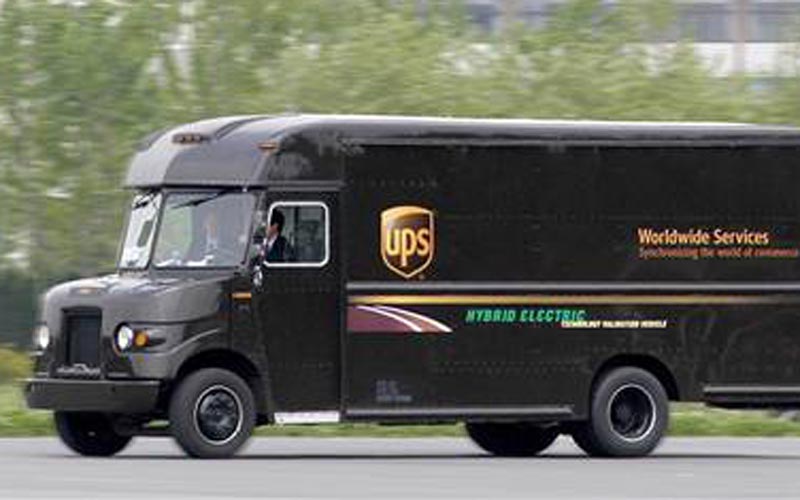
The pressure on supply chain industry to become more sustainable is increasing and efforts are on to ensure that companies bring down their carbon dioxide (CO2) emissions by 20 per cent.
A senior industry official told Emirates Business that transportation alone as a sector is responsible for 24 per cent of global CO2 emissions. Eelco Dijkstra, Managing Director, Europhia Consulting, said government measures and increasing price of oil will be a major driving force for supply chain management companies towards going green.
He was speaking on the sideline of a recent forum in Dubai to discuss the "Financial Aspects of the Supply Chain," organised by the Chartered Institute of Logistics and Transport. "We are already witnessing some big companies taking initiatives in carbon emissions reduction programmes. But the major driving force will be government guidelines and initiatives," he said.
"Increase in oil prices will also act as a catalyst. Sustainability will become a strategic issue for the industry in the coming years," Dijkstra added. The reasoning was further justified in a recent report from AMR Research and software giant SAP. The survey of 189 companies in both energy-intensive and non-energy-intensive industries in the US shows that when it comes to drivers for sustainability, compliance to regulatory requirements jumped from 11 per cent in 2008 to 27 per cent in 2010.
Another recent study to identify what is pushing companies towards energy and carbon efficiency, by Johnson Controls covering more than 1,400 companies, found that energy cost savings and brand image were the most significant drivers for investing in energy efficiency.
Dijkstra said oil prices are going up and is having a big impact on transportation companies worldwide.
"It remains the same for companies operating in the Middle East as well. There are various initiatives already being put in place including the use of LNG and fossil fuel, although it will take some more years for the latter to become effective, especially for use by trucking companies," he said. "Some of the big manufacturers of trucks during a recent conference said that fossil fuels still has a long way to go in terms of being used in trucking vehicles," he added. Dijkstra said there are a whole range of other measures from driving behaviour of drivers, collecting fuel data from the fleet to training programmes to improve drivers fuel consumption.
"There are also practical measures such as in Europe very large companies put wooden blocks under the accelerator to prevent drivers from accelerating beyond a point. It has resulted in fuel saving of up to seven per cent," he said.
Dijkstra said large companies are adopting more complex measures, including purchase of energy efficient fleet. TNT, for example, achieved the leadership position in its super sector in the Dow Jones Sustainability Index for the third consecutive year in 2009, with the highest score of any company in this index.
Meanwhile, according to reports, FedEx in its Global Citizenship Update released recently said its carbon emissions worldwide were 16.2 million tonnes in 2009.
UPS's recent available report puts its emissions at 15.4 million tonnes of CO2 globally in 2008. While both companies have about 1,900 alternative-fuel vehicles each, at FedEx it constitutes to about four per cent of its delivery vehicles and at UPS, they account for about two per cent, according to a report in the Atlanta Journal.
Meanwhile, Dijkstra said there are various programmes and models that are being developed to enable smaller supply chain companies to reduce their carbon footprint. "One such programme, Supply Chain Green was developed in Holland by a consortium of companies and specifically aimed at companies related to the supply chain management. The model first helps the company identify its carbon footprint, and helps them develop measures to reduce them and ensures that these measures are adopted on a long term basis."
"The model allows you to simulate certain scenarios like optimising the loading capacity and also looks at intermodal mix sets. Like what if certain air freight is transferred to sea freight or rail roads or trucks and determines what it does to the CO2 emissions and energy costs," he said.
Dijkstra said the programme helps companies reduce energy emissions in supply chain and the final step is to embed them in the company's process.
Third-party logistics firms boost sustainability efforts
Third-party logistics providers have ramped up their sustainability efforts in 2008 and 2009 despite the effects of the global recession, according to a report.
The "Third Party Logistics Sustainability Report", written by Robert C Lieb, professor of Supply Chain Management at Northeastern University, is based on key findings from the 2008 and 2009 "3PL Provider CEO Perspective" surveys, which interviewed 35 3PL CEOs across North America, Europe and Asia-Pacific whose companies were responsible for generating about $60 billion (Dh220bn) in revenue each year. Surveyed CEOs were asked if their companies had formal green/environmental sustainability programmes in place, and 28 said they did. Twenty of these firms had also established a management position to oversee company efforts in the area.
None of the companies surveyed in 2009 had scaled back sustainability goals due to the recession, and in fact, 63 per cent said they had expanded the existing sustainability programmes over the previous year.
In addition, 71 per cent of CEOs said they had launched completely new sustainability initiatives.