Better Homes banks on stable leasing
Better Homes, a Dubai-based realtor has terminated its agency agreements with developers for three to four major projects in the emirate, a senior company official said. "There are three or four major projects in Dubai for which we have terminated our relationships. We have told the developers that we cannot keep selling in good conscience unless the project starts construction. Since that has not happened, we decided to walk away after selling a number of properties, unfortunately."
In an interview with Emirates Business, Ryan Mahoney, Managing Director, Better Homes, said most of the company's agency contracts signed with developers are time-based. "In most cases we have sold out the properties but there have been cases where we have walked away from some projects."
Have you terminated any of your agency agreements with developers?
Most of our agency contracts are time-based so in most cases we have sold out the property. However, there have been cases where we have walked away from projects. There are three or four major projects where we have terminated our relationships.
One example is of a major project that was launched in the Dubailand area where we have been demanding that they start construction but that has not happened. We told the developers that we cannot keep on selling in good conscience unless the project starts construction. They promised but it hasn't happened so we said we are walking away and that we cannot deal with this. It is difficult. We have walked away after selling a number of properties, unfortunately.
Can you name the developer?
I would rather not divulge the name of the developer.
What happens to properties that you have sold in projects that are delayed?
There are a number of scenarios. In many cases developers pay back. However, in some cases the owner may not be able to recover anything from the developer. We have not dealt with developers who are con-artists and have subsequently fled the country. That is something we have not faced so far. In such a case, one almost never has recourse [to recovery] and the buyer cannot recover [his money]. We have not seen many of those [cases] because we were very careful when selling projects for developers.
The situation that we have seen is where some developers have sold and they continue to be in the market and continue to advertise their properties but the starting date for construction is way delayed and no one knows when [the project] is going to be delivered. The buyer stops making subsequent payments towards the project as no construction has begun and the developer does not have the financing to develop the project – a Catch 22 situation.
Do you find yourself going back and forth constantly from the developer to the buyer? Is there a sense of responsibility at the broker's end to see this through?
We do everything we can. It is our responsibility right from when we sell a property to a buyer to ensure that all the right documentation is in place. We cannot get inside the head of the developer and see what other things they have going. We do our best to support both parties but we mainly support the buyer by giving as many details as we can about the developer. We cannot guarantee that a project will be built but we can guarantee the information given by us to the buyer is transparent and as accurate as possible. The individual buyer will have to make his own decision.
What is the documentation that you ask the developer to provide before starting to sell the project?
One of the things that we ask from a developer is proof of ownership of land. We ask for all legal documentation of the company.
We ask for the Real Estate Regulatory Agency (Rera) registration number and construction permits. Further, when we represent the developers we take proof from them that the layout, floor plans, images and other specifications are as accurate as possible.
If an agent is working with big developers whereby they sign contracts providing proof of ownership and incorporation documents, then there is nothing more that agents can do.
So you are not changing any criteria for vetting a developer in today's market conditions?
We have been incredibly strict in the past two years with many telling us that we are going over the top and asking for too much documentation. These requirements continue to remain the same and we have not changed this even when the global crisis hit the real estate market.
How has Better Homes performed in the last one year?
The business now generates far smaller revenue than it did during 2007-2008. We have managed to keep our costs down to a point where we are able to make a small profit and ride out this storm. Every market has its cycles and inevitably there will be a period when things are really slow. It might be for six months or for two years. We have some mainstays within our business such as property management, leasing and sales. Sales has fallen dramatically. However, property management has picked up dramatically. Our leasing portfolio remains stable.
In December last year, by how much did your revenues decline?
Compared to the previous year, last year end we saw an 80 per cent decrease in our revenues. One of the big challenges for us was consolidating our infrastructural investments. We did really spend money on building the size of our company and the infrastructure that our competitors did not have. Hopefully, that will give us an edge over our counterparts when the market picks up again.
Do you believe that even in a crisis, having an elaborate support infrastructure will help?
What we invested in was customer care, training facilities and employees. Our training was quite a big facility. We also have a legal department. We tend to be a more expensive business to run because we have things like customer care and we invest in things like training because we take those things seriously. Nonetheless, at the beginning of 2009 we cut our costs, shut down a couple of our offices, reduced the number of staff across the board and got ourselves to a break-even point. When I look at 2009 and compare our performance to 2008, it is very different in terms of profitability. However, we are happy to still be able to make a profit when many others have made significant losses.
The challenge now is that most people will say the world has fallen apart and that they should shut down everything. People have to stop themselves and be rational. The market will not necessarily be what it was in 2007 and 2008. But the market will come out of this cycle. When it does recover, one should not be in a position where one is unable to cater to a rebounding market.
Rental yields in Dubai are falling due to service charge increases? What are your views on it?
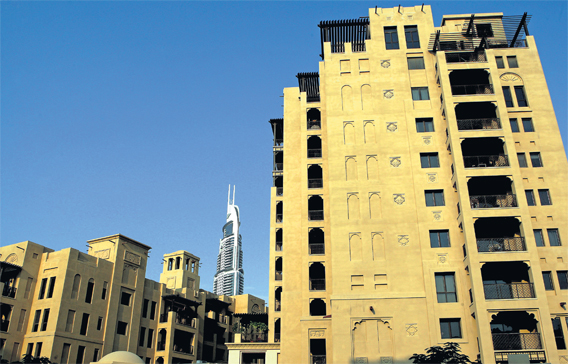
Rental yields in Dubai depend on location. There are properties in the Old Town, which for example, are still earning six per cent to nine per cent annual rental yields after maintenance fees which is still good compared with other developed markets. There are plenty of areas where rental incomes have fallen but then so have sales prices. I think there are good rental yields out there. That is quite attractive.
What is keeping rental yields high in the Old Town?
There are some areas like the Old Town that attract people who want to live and work within a particular community. Dubai Marina also has been very popular along with Green Community. We also see a bit of resurgence in Jumeirah.
Would you say these are the current hotspots in Dubai?
There is growing demand in areas such as Arabian Ranches, Motor City, Green Community West, Old Town, Dubai Marina. One aspect that affects rental yields which is critical and where authorities need to make a decision quickly, is in terms of passing the Strata Law.
Currently it is a bit of a dark area because no one really knows and is able to look at the books and say that a fair value and fair price has been set on maintenance charges. It is a problem for both parties because on one side the developer is not making any money out of this and on the other, landlords are of the opinion that they are being ripped off by the developers, when this may not be the case at all. Maintenance costs should be made available to owners. There is a sense of true urgency on this.
Is there anything amiss in regulations governing the real estate market? There was talk of Rera coming up with new contract forms, is that in place yet?
There is a lot that Rera has planned to do and it is in the process of dealing with all the issues in the real estate market. There is no doubt a gap between announcements from Rera and their effective implementation. But usually there are many ground realities that need to be dealt with. As agents, we would like to see the new forms put in place by Rera. I know they have very good intentions to solve it.
Do you visit the Rera office often to discuss issues of the real estate sector?
I visit them from time to time and they are all always helpful.