Government action benefits end users
From weeding out speculators by issuance of a new law to setting up of a property court, the Dubai Government set forth a new regional trend clipping flippers and protecting end users in 2008.
The year began on a positive note with the Dubai Government reducing the rent cap from seven per cent to five per cent in a bid to control rising rents.
According to EFG Hermes, the year was a tale of two halves with the first marked by a general air of buoyancy, as the Dubai market continued to mature. The first half of 2008 was characterised by vigour, as prices continued to appreciate in Dubai and supply was further delayed.
The investment bank said residential real estate prices rose 11.7 per cent in first half of 2008 due to rising interest in the Dubai property market, impact of price increases in areas considered prime locations, such as Burj Dubai, The Palm Jumeirah and Dubai International Financial Centre and property handovers, which, importantly, enable end users to see a finished product.
Moreover, the continued state of disequilibrium in the market, where supply has fallen short of demand for a fourth year running, contributed to sustained price rises, with other drivers such as abundant liquidity, a pickup in speculative demand and a continued trend of cost inflation beginning to become important. At the same time, falling interest and mortgage rates helped spur demand, with some of the pickup attributed to increased speculation.
In the commercial segment, finding good office space in the UAE remains an arduous task. Companies often choose less desirable locations, rent temporary space, set up branches or smaller offices or buy office space rather than lease it. Occupancy rates remain at 97-99 per cent in both traditional and newer areas. Dubai remains one of the world's most expensive business cities, with an average rent of $156 (Dh572) per square feet, almost as high as Singapore but lower than the $164 in London.
At the same time, the gap between office rents in Dubai versus Abu Dhabi has narrowed, primarily due to supply constraints which rose rates in the capital.
Selling prices rose with continued strong interest in the Dubai property market and a widening foreign investor base that was increasingly focusing its attention on commercial property. Prices of off-plan developments in Dubai jumped by about 30 per cent over the first six months, driven mainly by the desirability of certain locations, by expectations of strong yields and a paucity of supply.
However, sentiments were quick to turn, with investors adopting a more risk-averse attitude and steering clear of all cyclical sectors.
The combination of increasing fears of a softening in the property market, regulatory attempts to curb speculation and a series of corporate scandals and arrests hit hard. A sell-off by foreign investors, recent concerns of a mass exodus of speculative investors, the scaling down of the real estate companies (and even the potential they will have liquidity issues) allowed a large degree of fear to creep into realty sector.
"We are entering a new phase of the cycle. We believe it is important to highlight that a lot of the recent negativity has been directed towards Dubai. While the transaction volume growth in Dubai is slowing, the market is not at a complete standstill.
"We believe this largely relates to transactions of completed properties, with the real pain and slowdown being experienced in the off-plan sales segment. The fact that transaction volumes in Dubai have not taken a complete dive would suggest there is still some perceived value in the Dubai real estate market."
Dubai continues to accentuate its status as a financial centre with zero taxation and an accommodative immigration policy and as a luxury haven for wealthy Indians, Pakistanis, Saudis and Iranians, especially in times of distress or depressed economic conditions in their home markets.
At the same time, according to EFG-Hermes Dubai residential price index, prices declined in September, October and November on a year-to-date basis, suggesting the better-than-expected momentum of the first half of the year is eroding.
Steeper price drops for off-plan properties have been noted, while locations considered prime appear to be holding onto their value. We nonetheless also hear that a tranche of speculators is walking away from deposits as some of the higher priced property does not find secondary buyers.
"What would be worrying is if this trickle of defaulters became a flood, then Dubai would, indeed, has a more immediate problem. The situation has worsened as mortgage firms and banks tighten purse strings, thereby crowding out genuine end-users," EFG report said.
In July, Jones Lang LaSalle gave Dubai the "Semi-Transparent Tier" (Tier Three) ranking. It said the emirate had registered the greatest improvement in real estate transparency of any market worldwide over the past two years. "One of the amazing thing of Dubai is how quickly it has developed. If you look at London, Singapore or Hong Kong, they have taken decades to mature. Dubai has reached the maturity curve fast compared to any other country," Craig Plumb, Head of Research (Middle East and North Africa) of Jones Lang LaSalle, had told Emirates Business.
He expected Dubai to move up the transparency ladder provided it introduces performance benchmarks and dispute resolution mechanisms. A report by Morgan Stanley said speculative investment was most evident in the regional land market, with plots being bought and resold within a matter of months at potentially very attractive profits.
"There is a lack of data on historical land transactions and selling prices in most of the Mena markets, with the exception of Dubai. The recent hikes in land prices have made land cost a major component in developers' total costs. Land cost is highest in Qatar, while Egypt still has the lowest, despite major price increases," the investment bank said in a report titled Winners and Losers in Middle East and North Africa (Mena) Property.
In August, the Dubai Government introduced new mortgage laws to try and regulate the market.
The law makes all mortgage deals that are not registered with the Dubai Land Department null and void, allowing the department to better regulate property and mortgage transactions.
His Highness Sheikh Mohammad bin Rashid Al Maktoum, Vice-President and Prime Minister of the UAE and Ruler of Dubai, issued Law No 14 for 2008 that regulates property mortgages and ties between mortgage issuers and the borrowers.
The 35-article law includes all procedures concerning a mortgage and its legal effects on the concerned bodies, as well as execution procedures on the mortgaged property, and the ties between mortgage lender and borrower.
In the same month, the government announced the off-plan property law, barring developers from allowing to charge transfer fees.
"Law No 13 of 2008 is aimed at regulating off-plan sales and making registration compulsory with the Land Department," said Emad Eldin Farouq, Senior Legal Advisor, Land Department.
Off-plan sales refer to the practice of marketing housing or commercial units based on an architectural plan of the property before the structure is built.
In September, Dubai set up a court to deal exclusively with property-related cases.
"The Property Court will be set up as per Law No1 of 2003 under the main section of the court called The First Instance Court.
"It will have jurisdictions over properties in Dubai except those of Dubai International Financial Centre, which has its own judiciary system," said Judge Mohammed Yousuf A Sulaiman, Deputy Director for Dubai Courts and Cassation Court's Senior Judge.
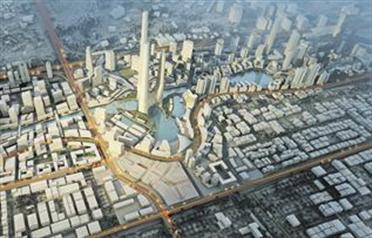
In October, a day ahead of the Cityscape event, Nakheel announced plans to build the world's tallest tower, at standing more than a dizzying one kilometre in height.
Nakheel Harbour and Tower will be a 270-hectare development, stretching between phase two of Ibn Battuta shopping mall and the 75-km Arabian Canal. The one-km-high tower will be the centre-piece of the area, the company said.
During the event, Meraas Development announced the launch of the Dh350bn Jumeirah Gardens in Dubai, its first master-planned community.
Jumeirah Gardens will be built over 12 years across an area north of Sheikh Zayed Road between Diyafa Street and Safa Park. The redevelopment of the existing site will create a mixed-use, freehold and leasehold development, which will be an integrated city within a city.
A transportation network will link low, medium and high-density areas with business, residential, retail, leisure and recreational components. It will include several parks and a number of smaller community parks to ensure extensive green areas. A large canal will flow through the heart of the development and will be linked to the Business Bay Canal and the sea.
Dubai has set up a financial advisory committee to deal with its financial and real estate issues, a senior official announced in November.
The committee comprises Dubai-based master developers and a few private developers, said Nasser Al Sheikh, Director-General of Dubai Department of Finance.
"For the first time, a committee has been formed to oversee the real estate development in Dubai and help synchronise projects of various developers with the intention of securing future supply," he added.
Finally, as the global real estate market witnessed a slowdown, realty developers in Dubai started to feel the pinch due to lack of external funding, which led to many developers announcing delays in their projects and change in construction plans.
Subsequently to address the needs of investors and end users, developers started to offer easy payment options to attract customers.
Emaar Properties announced two payment schemes – Plan to Own and Rent to Own – to attract buyers, while Union Properties offered potential residents and businesses three options to choose from – rent, own or rent-to-own.
Major events
JANUARY
His Highness Sheikh Mohammed bin Rashid Al Maktoum, Vice-President and Prime Minister of the UAE and Ruler of Dubai, issued a decree on December 27, 2007, lowering the annual rent cap in Dubai to five per cent from the existing seven per cent, beginning January 1, 2008.
AUGUST
The Dubai Government introduced new mortgage laws to try and regulate the market. The law makes all mortgage deals that are not registered with the Dubai Land Department null and void, allowing the department to better regulate property and mortgage transactions.
The Law No 13 of 2008 aims to regulate off-plan sales and mandates registration with the Dubai Land Department. According to the latest property law, it is mandatory to register off-plan property sales in Dubai with the Land Department. The law also states that master developers and sub-developers will no longer be allowed to charge transfer fees on off-plan sales. However, they will be allowed to accept administrative charges after approval by the Land Department.
SEPTEMBER
Dubai set up a court that will deal exclusively with property-related cases. The Property Court will be set up as per Law No 1 of year 2003 under the main section of the court called The First Instance Court. It will have jurisdictions over all properties in Dubai except those of Dubai International Financial Centre, which has its own judiciary system.
OCTOBER
Meraas Development announced the launch of the Dh350 billion Jumeirah Gardens in Dubai, its first master-planned community. It will be built over 12 years across an area north of Sheikh Zayed Road between Diyafa Street and Safa Park.
Nakheel announced plans to build the world's tallest tower, at over a dizzying one kilometre high. Nakheel Harbour and Tower will be a 270-hectare development, stretching between phase two of Ibn Battuta shopping mall and the 75-km Arabian Canal.
The one-km-high tower will be the centrepiece of the area.
NOVEMBER
Amlak and Tamweel got the government green light to merge into a single bank in a move to build confidence as the emirate's property woes mount. The combined market value of the firms is Dh2.5bn. Later, the Real Estate Bank was announced to merge with Emirates Industrial Bank creating Emirates Development Bank.
Dubai has set up a supreme financial committee to deal with its sovereign debt as well as challenges arising from the global financial crisis.