Oversupply of offices and undersupply of homes in Abu Dhabi
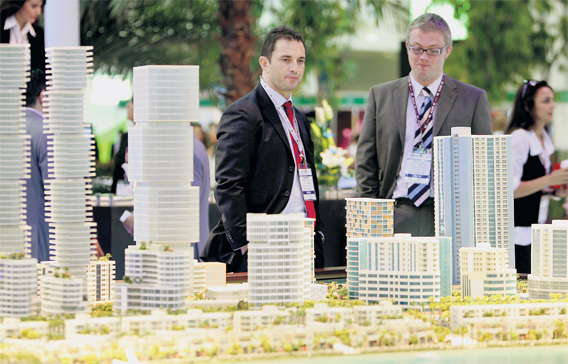
Abu Dhabi's office market is expected to be the first sector to witness an oversupply in the currently undersupplied real estate segment in the emirate as a number of projects under construction exceed demand for 2010-2011, a report said.
Supply in hotel industry too would increase and the number of hotel rooms are expected to double to 26,500 from the current 13,500 by 2013, said property advisory firm Jones Lang Lasalle (JLL) in the report.
The level of planned supply could result in a short-term situation of over supply but the sector would continue performing well and established hotels in the Central Business District and near the Corniche would continue to perform strongly, JLL said.
The residential market, according to the report, would remain generally under-supplied, especially for the lower and middle market segments even as the number of units are estimated to increase 35 per cent to 2,38000 by 2013.
In spite of being impacted by the global financial turmoil in the past 18 months, the future prospects of the market remain bright, according to JLL.
The key to unlocking this long-term success will be achieving greater transparency, improving the regulatory framework and the transition from the reliance on a short-term speculative development model to a more stable investment horizon, it said.
One of the last markets to witness the impact of global economic crisis, Abu Dhabi saw transaction activity slowing down and asset prices plummeting much below the 2008 levels.
The impact, however, was less dramatic compared to other regional markets, the report said.
"This was because the slowdown occurred after only a few years of growth since the opening up of the land market (and therefore a limited overhang of supply) and because of investor confidence in Abu Dhabi's long-term growth potential compared to other markets in the region," it said.
JLL said the economic slowdown had a positive impact too in terms of developers re-assessing their schemes, scaling back more ambitious projects, seeking more sustainable means of funding projects and planning products that are more aligned to the needs of end users. Presently fairly tight, the supply scenario in Abu Dhabi is set to change in varying degrees in short to medium term, according to the real estate services firm.
Office market
The current office stock in Abu Dhabi Metropolitan area is around 1.8 million square metre. According to JLL report, the office market is expected to be the first sector to become significantly oversupplied as the number of projects under construction exceeds projected demand for 2010–2011.
The main office districts are Central Business District, Midtown and other clusters. Supply is expected to rise especially for grade B and Grade C buildings, it said .
Presently, there is a shortage of around 5,00,000 square metre of office space and many companies are operating from very low levels of office space per employee, it noted. "As more supply comes on stream, take up rates will increase as companies take up more space per head and move more employees to Abu Dhabi."
Expecting total market-wide demand for office space to increase significantly, JLL said this may be insufficient to absorb the expected level of completions in the coming few years.
While some of the demand would be generated by existing occupiers who upgrade their office space, majority will be generated from companies expanding their Abu Dhabi base and new entrants to the Abu Dhabi market, it said.
Among the sectors that are expected to drive demand from 2010-2013 are financial services, professional services, realty developers, construction firms and consultants and government sector.
Retail supply
The current retail supply in Abu Dhabi Metropolitan is around 1.42 million square metre of Gross Leasable Area (GLA). This is expected to go up to 2.2 million square metre by 2013.
Analysing the retail sector in the emirate, JLL said there are currently only 16 major retail centres in Abu Dhabi, with a combined GLA of less than 520,000 sq m.
The market is experiencing a significant shortage of international quality projects and an undersupply of floor space relative to the potential demand.
As a number of new centres come up and with extension of existing malls, the present stock is poised to grow significantly.
The major additions to retail supply in the short term will be located on Abu Dhabi Island. There are currently only 16 major retail centres in Abu Dhabi, with additions to supply on Reem Island, Shahama, Mohammed Bin Zayed City, Baniyas and Al Falah.
In line with the governments objective of developing tourism, hotel supply is expected to increase significantly in the coming few years, said JLL.
Hotels
The total supply of hotel rooms, it said, will double, from its current level of 13,500 to 26,500 by 2013.
Large scale tourism projects such as Saadiyat Island, Yas Island and Al Raha Beach, will distinctly transform the hotel market over the next four years.
Other major hotel stock will be delivered in new mixed-use projects on the Corniche, including at Nation Towers, Itihad Towers, Central Market, together with other projects at Al Bateen and Al Sowwah Island.
The development and expansion of the Abu Dhabi National Exhibition Centre (Adnec) has enabled the Emirate to generate further hotel demand within the Mice (Meetings, Incentives, Conferences and Exhibitions) segment of the market. The Capital Centre development adjacent to Adnec is expected to provide a major supply of high quality hotel rooms and serviced apartments up to 2012, the report said.
According to JLL, while occupancies and room rates have both fallen in 2009, Abu Dhabi has continued to outperform other regional markets.
Average occupancies for 2009 were 75 per cent, well down from their peak of above 80 per cent in 2008, but still well ahead of regional and global benchmarks.
The impact of the global economic slowdown on world tourism and the recent introduction of around 3,400 additional rooms into the Abu Dhabi market resulted in average performance continuing to soften in early 2010. The market is becoming more segmented, with hotels in established locations such as the Corniche and the CBD outperforming those in newly established areas such as Yas Island, between the Bridges and around Adnec, it added.
It said that the level of planned supply of new hotel rooms is expected to result in a short-term situation of oversupply.
"Despite the overall softening of market conditions in 2010, established hotels in the Central Business District and along the Corniche are expected to continue to perform strongly."
Taking stock of macroeconomy, JLL said the economy declined in 2009 due to the impact of falling oil prices and output, combined with Abu Dhabi being affected by the global economic crisis leading to a major slowdown of real estate markets and other industries, exacerbated by a lack of bank lending and a reduction in investor confidence.
These factors resulted in a decline of seven per cent in real GDP for Abu Dhabi in 2009. But Abu Dhabi's current economic downturn is expected to be relatively shortlived and its GDP much ahead of the average for entire UAE.
According to estimates, Abu Dhabi is will see a positive real GDP growth of 6.7 per cent in 2010, well ahead of the 2.2 per cent growth expected for the entire UAE, largely led by a recovery in oil production and prices.
Over the next five years, the Abu Dhabi economy is expected to record an average real growth rate of 6.1 per cent per annum from 2009 to 2013.
The future prospects for the Abu Dhabi real estate market remain very strong, said the report.
Jones Lang LaSalle's Investor Sentiment Survey earlier this month had highlighted the importance of both regulations and transparency as investors seek increased certainty in a period of rapidly changing market conditions.
This survey shows that real estate investors are relatively confident about the prospects of Abu Dhabi, with a quarter of respondents expecting the city to offer the strongest performance of any market in the Mena region over the next 12–24 months.