Silver lining in the realty downturn
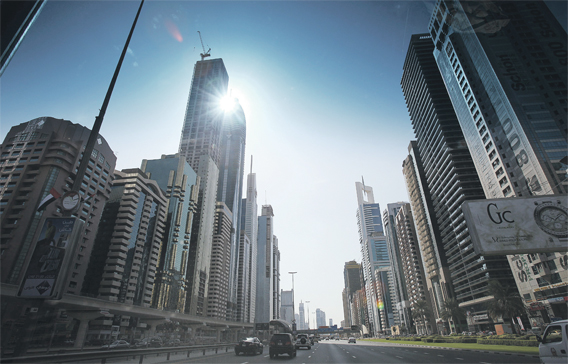
An astute market player can capture higher yields and gains from the currently shaky real estate sector in Dubai, according to a study by the Kuwait Financial Centre (Markaz), one of the Middle East's leading investment banking and asset management companies.
The report said trade is the founding pillar of Dubai's economy, while tourism, financial services, real estate and construction are other supporting pillars.
Excesses in the real estate sector led to a 50 per cent contraction in terms of prices and around 19 per cent in terms of activity levels during 2009. This, in turn, has led to static prospects with downward pressures in the activity levels during 2010-11, the report said.
The tourism and financial services sector suffered from a downturn as well during the last year due to the slowdown in global economy and the debt restructuring concerns.
While tourism is expected to stage a moderate growth during 2010-11, backed by the global economic recovery, financial services are expected to recover from the impact of the debt settlement and register a moderate growth only by 2011.
According to the report, internal trade suffered during 2009 with a 28 per cent contraction in commercial licences issued.
On the other hand, external trade grew during 2009 with a 23 per cent surge in exports and a 19 per cent growth in re-exports. This suggests that the foundation of economic activity is still intact, and the authors of the report expect the growth in trade, which is expected to continue during 2010-12, would lead the economy to an overall recovery by 2012.
Residential property
The segment contracted in all metrics, such as transactions, rentals and prices, and is expected to contract further during 2010.
The authors expect transactions to stage a moderate contraction limited to the range of 0-2 per cent month-on-month during 2010 and stabilise during 2011.
Regarding rentals, the report said the instability in rentals – due to the "cannibalistic demand" from communities within Dubai and demand from cross-emirate relocations – would continue in the short term.
The authors advise investors looking for yield to await progress in the operational environment in terms of issues with service charges to reap attractive returns both from high current yields and from yield compressions when the market matures.
Projects worth $60 billion (Dh220.37bn) are currently under execution and a Real Estate Regulatory Agency project audit suggests that 74 per cent of the projects are on track, albeit with delays.
Short and near-term supply would restrict prices from recovering, but astute market players can tap opportunities arising from price fluctuations and from yield compression when the market matures on the property management front, said the report.
Office realty
Demand for office space arises from the creation of office-based employment, and the service sector-based economy of Dubai creates a higher proportion of office-based jobs in general.
In the emirate, 50 per cent of the jobs on offer are office-based and this gives the sector a strong fundamental base, despite a temporary slowdown, said the report.
While the long-term supply is conveniently placed to match the slack in supply (with 64 per cent of projects at design stage), 48 per cent of the projects currently under execution are to be completed in 2010.
This could lead to a dip in prices and rentals, and the slack might remain until 2012, a situation one could take advantage of while setting up business.
Warehouse and logistics
Trends in external trade activity is the key demand driver in this sub-sector and although imports contracted 28 per cent year-on-year during 2009, exports surged by 23 per cent and re-exports grew by 19 per cent, indicating that the demand for logistics and warehouses remained protected from heavy contraction.
The authors of the study said they expect imports to remain stable during 2010-12 and exports and re-exports to continue growing; thus, the demand for logistics/warehouse would remain intact.
Warehouse projects under construction accounts for one per cent of all future supply, and legal facilities have been extended to enhance investment, they added.
While asking prices contracted by 10.5 per cent during March 2010, the authors expect rentals to remain stable and provide attractive yield capture opportunities during the year and price appreciation gains during 2011-12, said the Markaz report.