A new lease of life for the oldest trade in the Gulf
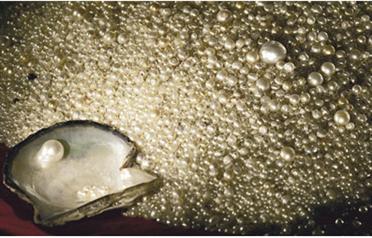
However, did you know that less than a century ago, pearls contributed towards the income of many residents, and thus the country’s economy?
Then, the Gulf was home to some of the best pearls in the world, due to the formation of the seabed, the temperature and shallowness of the water. According to historical data, an estimated 80,000 men in the UAE alone were involved in pearling and the sale of pearls.
And now it looks like the UAE could soon witness the revival of the pearl industry thanks to many groups and organisations taking an active interest in the expensive commodity. The first signs became apparent at last year’s First International Pearl Convention, when Khaled Al Sayegh, chairman of the Pearl Revival Committee released a fifty-page report outlining the history and the current status of the pearl industry regionally. According to the report, which was put together by senior business analysts of the region, it is estimated that the global pearl industry is expected to grow into a $3 billion (Dh11.1bn) industry by 2010.
At the time, Al Sayegh said: “Though pearling has been an important economic activity in the Gulf region since ancient times, and pearling flourished from the latter half of the 19th century to the early decades of the 20th century, the discovery of oil and the invention of cultured pearls seemingly put an end to the old days. But there is a purposeful effort to re-establish the pearling industry in the UAE and Gulf.”
In terms of the UAE’s history, the pearl industry was of utmost importance around the sixth century in Dubai, and by 1766, when the British gained control of the region’s waterways, Dubai managed to expand its pearl trade through every channel. In 1903, the Great Depression, compounded by the emergence of artificial pearls in 1929, cast a dark cloud over Dubai’s pearling industry, and that’s when an interest in other potential money-making materials, such as oil and gold, moved to the forefront.
“Pearling was an incredible asset for the UAE’s economy. So many people were reliant on pearl diving for their livelihoods,” Tawfiq Abdullah, chairman, Dubai Gold and Jewellery Group said.
“Our pearls were sold to Europeans and Asians until the 1960s when oil was discovered and Japan began to harvest oysters, mass producing pearls that looked as natural as ours, but at a fraction of the price.”
One of the UAE organisations taking an active role in reviving the pearl industry in the country is the Dubai Multi Commodities Centre (DMCC).
Last year, the centre announced the launch of the Dubai Pearl Exchange, an initiative in order to encourage trade in the country. Now, DMCC’s latest venture is Pearl Essence, an international pearl jewellery design programme, which is the world’s first global design initiative for pearl jewellery, incorporating different categories of pearls, including Tahitian, South Sea, Akoya and Freshwater.
Pearl Essence will involve both leading professional designers, as well as students studying jewellery design. The professional designer tier constitutes a custom-designed collection of pearl jewellery pieces, created by ten invited luxury brands inspired by the rich Arabian pearling heritage and represented in a modern and contemporary fashion.
The student tier, meanwhile, is a competition for final year students from schools in different parts of the world that offer a minimum two-year full time jewellery design course. The introduction of Pearl Essence is a vital new element of the DMCC’s comprehensive pearl strategy, which seeks to revitalise the Middle East’s leadership status in the pearl sector and re-establish Dubai as a centre for the global trade.
Gaiti Rabbani, Executive Director, Coloured Stones and Pearls, DMCC told Emirates Business: “It is certainly difficult to estimate how much pearls are worth, because it varies depending on where they are from, or whether natural or cultured.
“However, if you have the right pearls, they make a great investment, and with pearls making a comeback in the fashion industry. Now is certainly a better time than ever.”
Speaking about why the DMCC decided to promote awareness of this minor industry, Ahmed bin Sulayem, Executive Chairman, DMCC said: “This international pearl jewellery design programme will both highlight Dubai as a centre for the global pearl trade and increase the visibility of pearls in the fashion industry.
“Pearl Essence will invite participation from the global marketplace and provide a neutral and innovative programme for the international pearl community.”
Rabbani continued: “Pearl Essence is a very exciting initiative. It pays fitting tribute to the gem of Arabia, while at the same time bringing together the international pearl community in a unique manner.”
DMCC is currently in discussions with leading luxury jewellery brands including members of the Dubai Pearl Exchange to create one unique piece each for the collection. The entries will tour international jewellery trade exhibitions before being auctioned by Christie’s with the proceeds being donated to charity.
For the student competition, DMCC is working with 44 jewellery design schools from Australia, China, India, Japan, Lebanon, Singapore, South Africa and Turkey to solicit entries before the early 2009 deadline. The student entries will be judged on commercial design, theme-based creativity and “wearability”.
“Through Pearl Essence, we aim to enhance awareness and appreciation of the beauty of this gem, drawing on the artistic finesse of luxury jewellery designers as well as the budding talent in the industry,” Rabbani said.
“Key milestones have been crafted during the programme to create unique opportunities for networking amongst young talent and established professionals, with a view to career enhancement.”
Rabbani also explained why no students from the Gulf region are involved. “There are simply no schools that teach jewellery design at the moment.
“There is a lot of talent, but those who go on to design jewellery either study their craft abroad or just use their talent to kick start their career. Hopefully, having a competition such as Pearl Essence will help promote awareness of how important the pearl is to the region, and thus we can start having institutions in the future.”
A shortlist of ten student designs will be fabricated into finished jewellery by DMCC-nominated manufacturers and pearl sponsors. The fledgling designers stand to win several awards including a 30-day internship with an international jewellery design house, a week’s visit to the pearling operations of Paspaley Pearling Co in Western Australia, a seven-day course at Gemological Institute of America’s (GIA) Carlsbad campus and online pearl courses from GIA.
And the future is looking bright for the region. Several UAE-based companies have already taken an interest in the programme, including Damas, so it is already attracting the right attention.
“We are very encouraged by the response we’ve had from the pearl community; Paspaley Pearling Co, for example, has confirmed a support sponsorship role,” said Rabbani.
“Damas, Dhamani, Mikura Pearls and Pinctada have confirmed participation as official manufacturers and the list gets longer as more partners sign up with Pearl Essence.”
The two-year programme will culminate in a gala event in Dubai, which will include an exhibition showcasing the pearl jewellery created by both the designer brands as well as the students and an awards ceremony to select and honour three winning students.
Additionally, the final pearl jewellery collection will form part of a six-month travelling exhibition to major international jewellery shows.