Few useable phones, SIMs delay mobile payment
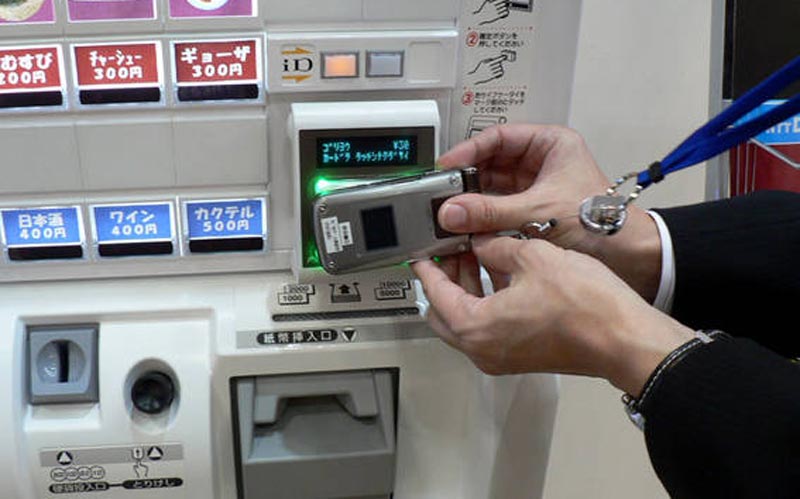
Lack of NFC (near field communications) enabled mobile phones, pay readers and SIM cards are delaying the commercial launch of NFC mobile payments in the UAE, according to operators.
Du was the first one to announce its joint NFC payments pilot project along with Dubai First last year. The pilot project was conducted in Dubai involving 250 customers selected from holders of the new, contactless Dubai First/Dubai Properties Group co-branded Platinum MasterCard. The card is currently available to residents of Dubai's Jumeirah Beach Residence. The commercial launch was scheduled this year.
Meanwhile, etisalat announced its NFC mobile payment trial during Gitex last year along with Emirates NBD, Gemalto and Visa. The partnership allowed Emirates NBD visa cardholders to purchase goods and services by using their etisalat contactless mobile phones.
NFC payments are made by simply waving the NFC-enabled phone in front of the payment terminal eliminating the need for the traditional swiping of payment cards. The mobile NFC contactless technology operates within a 4cm range and customers will have a passcode to make transactions more secure.
Telecom operators are now facing a major challenge with the shortage of NFC-enabled mobile phones in the market. Manufacturers like Samsung and Nokia are working to launch additional handsets.
Rashed Majed Al Abbar, Director, etisalat Mobile Commerce, said: "Telecom operators globally and regionally are waiting for mobile phone manufacturers to launch commercial handsets. There are only test models in the market. These companies were supposed to launch by the end of third quarter last year. However, they have cancelled their plans in the roadmap for this year. There are no specific plans on the NFC or any replacement."
Mitchel Roda, Senior Manager, Marketing (Payments) Commercial, Du, said: "Handset manufacturers are aware of the problem but they don't seem to be anxious to launch NFC phones. There are all mixed message from them as few of them have delayed the launch."Globally there are 180 pilot NFC mobile payment projects, of which only two have gone commercial in China and Malaysia.
"Telecom operators are at a standstill as pilot projects are not able to kick off into commercial deployments. This has also opened the market for interim solutions. There are SIM-based solutions hitting the market, whereby the NFC reader is attached like an SD card. This converts a regular mobile phone into an NFC handset," said Al Abbar.
Etisalat is stuck in the pilot phase due to these reasons and is also currently talking and testing these interim solutions, he added. "Technical complexities have to be taken care of to bring about customer acceptance. Even NFC-enabled solutions must be accepted by the customer," said Al Abbar.
Lara Hussein, Head of Electronic Banking, Alternate Channels, Retail Banking at Emirates NBD, said: "Critical mass has to be created before such a solution goes commercial. Interoperability and mass adoption have to come in at a consumer level. Customers don't want to change their regular mobile phone and use NFC handsets as it changes thier lifestyle."
Operators also cannot go ahead with non-branded NFC-enabled phones as acceptance will be a challenge. "The main manufacturers for NFC are companies such as Nokia and Sagem and we still don't have a BlackBerry and an iPhone," said Roda.
Telecom operators are also facing a shortage of NFC-enabled SIM cards and pay readers. Currently Paypass and Paywave are being used as pay readers. Roda said: "Critical mass has to be created as a target base of 1,000 customers is not enough go commercial. The pay readers also have to be standardised as the phone mimicks the contactless card. This enables the user to use it globally."
Al Abbar said: "There is a lack of NFC-enabled pay readers and another big challenge is sharing the cost. Though it is a minor cost to switch to NFC-enabled pay reader, it is not clear who will bear the cost?"