GCC firms postpone issuance of bonds
Companies in the Gulf are postponing bond issuances due to higher costs and demand for higher yields from investors.
BBK, the Bahrain-based retail lender formerly known as Bank of Bahrain and Kuwait, has delayed a bond sale as investors demanded higher yields to buy emerging-market securities, said a banker with direct knowledge of the plan.
The bank met fixed-income investors in Asia, the Middle East, and Europe starting from May 13, according to an invitation for the promotional tour obtained by Bloomberg News on May 11.
Citigroup, Deutsche Bank and HSBC Holdings are arranging the sale.
Sabic Capital, a unit of Saudi Basic Industries Corp, delayed the sale of a "benchmark-size" bond planned for this week because of higher costs, a banker familiar with the transaction said.
Sabic is committed to the development of Saudi Arabia's financial and capital markets and promote Islamic Finance, said its Executive Vice-President, Corporate Finance, Mutlaq H Al Morished.
"Sabic has three sukuk ($4.3bn, Dh15.7bn) outstanding. A significant part of our consolidated cash investment is based on Islamic structures and 30 per cent of our consolidated debt portfolio is Shariah compliant," he said.
The future prospects of the Islamic finance industry are promising as the number of issuers grows within Islamic bloc and beyond.
"The underlying assets for sukuk have also witnessed increasing diversification," said Al Morished.
"The volume of sukuk market will grow rapidly," he said.
The industry, however, needs common Shariah standards. "Enforceability is another issue as it depends on governing law of a country. The industry's growth is highly dependant on constant innovation of new products. It needs to enhance its competitiveness and efficiently structure .
"We need global financial centres and support from regulators , a standard governance and prudent regulation," he said.
He also highlighted the need to deal with shortage of experienced professionals in Islamic finance.
Sabic Capital, affiliated to Sabic, that has planned a benchmark dollar bond issue, may price it this week.
Al Morished told Emirates Business that if the pricing is not right, the company may not issue the debt.
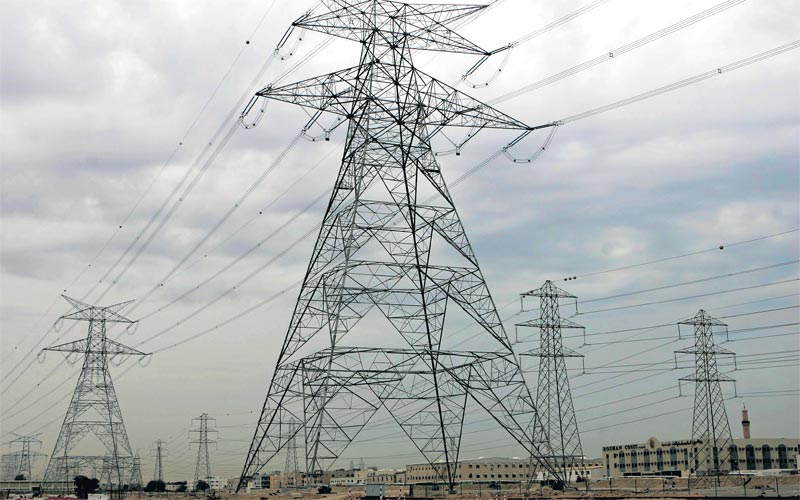
Earlier, Ahmed Al Jogaiman, Vice-President for Finance at Saudi Electricity (SEC), said the company is eyeing its first international bond issue in early 2011, a senior executive said yesterday, having completed a domestic Islamic bond sale earlier this month.
Al Jogaiman said the next sukuk would be marketed internationally next year.
Electricity demand in top oil exporter Saudi Arabia is growing at an average of seven per cent per year due to a growing population and development of several projects particularly infrastructure by the government, Jogaiman said.
Demand is set to triple to 121,000 megawatts from current generation capacity of 40,000 MW, a top government official said earlier in May. "At the rate demand is growing, capacity will have to double in the coming 10 years with a huge capex," Jogaiman said.
The capex outlay for the next five years is SR150bn (Dh150bn), he said, adding that the funding will come from a mix including bonds and government funds.
Recently, SEC secured a SR15bn soft government loan that would be used as capex for two years. (With inputs from Agencies)
Bonds are new hot property
Volatile equity markets and low interest rates on deposits in recent years are drawing investors in Saudi Arabia towards bonds, a new asset class poised for growth, said Fahad Al Saif, Director of Investment Banking at HSBC Saudi Arabia.
About SR50 billion worth ($13.33bn) of bonds have been issued in the kingdom from mid-2006 with more issues in the pipeline, said Al Saif.
"Investors have only two asset classes – equities and deposits in banks. Equities are now volatile and interest rates are low, so they are increasingly turning to bonds, bringing debt allocation into their portfolios," he told reporters at a project finance conference.
Several bonds including sukuk are lined up ahead of being launched by government-backed and private entities, said Saif, adding issuers have started talks with investment bankers.
One of the upcoming issues is by a joint venture including state oil giant, he said without elaborating.
"If the market is disturbed internationally and it remains stable here, you will have more bonds and sukuk," he said.