Saudis in drive to cut water consumption
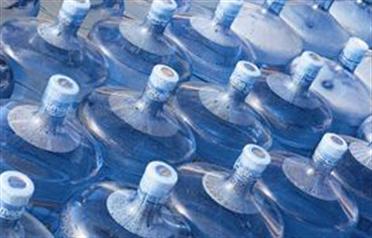
Saudi Arabia has launched a two-week campaign to cut domestic water consumption to avert a future supply crisis that could be caused by rapid population growth and scarce resources.
The novel drive – the first in the world's oil superpower to be sponsored by the government and spearheaded by the private sector – was kicked off under the slogan: "Save 40 per cent of your water."
Saudi officials started the campaign with a warning that the Gulf country's 25 million people have no choice but to rationalise their consumption because of a steady decline in local fresh water sources.
The warning echoed a recent study by an official Arab oil investment group that Saudi Arabia and other Gulf countries are sapping their own sweet water resources by relying heavily on water injection to maximise their crude output.
Launching the campaign in Riyadh, Saudi Ministry of Water and Electricity Undersecretary Mohammed bin Ibrahim Alsaoud said domestic bathrooms and washing machines alone drain nearly 40 per cent of the water wealth.
"Most of the Kingdom's water resources come from non-renewable sources. This means that rationalisation is imperative and crucial for the present and the future," he said during the launch ceremony. "We are not talking about options in this respect because our land is a mere dry valleys and arid desert. The available renewable and non-renewable water resources in the Kingdom will not be sufficient for the future generations. This of course makes rationalisation a national duty."
Speaking at the function, private sponsors said rationalising water use in washing clothes could alone save the Kingdom 37 billion litres of water a year.
"A simple change in the local habits of excessive use of water in washing clothes will save around 720 million litres a week in around four million houses in the country. This means the Kingdom can save a total 37bn litres of fresh water annually," said Yassin Al Attas of the Saudi Modern Industries Company.
Officials said the drive would cover all Saudi Arabia and include media programmes and advertisements, lectures, booklets and leaflets.
Saudi Arabia is the world's richest in oil but one of the poorest in water resources as most of its land is desert and its massive Empty Quarter close to the UAE border is one of the most barren and lifeless deserts in the world.
Given its limited underground water resources, the Kingdom has turned to the sea to secure its fresh water needs and meet a rapid growth in consumption due to the high population increase, injection of water into its oil fields, and lack of awareness about rationalisation in consumption.
Its hot weather is also a key factor in the surge in individual consumption, one of the highest in the world, estimated at more than 100 gallons per day, according to official estimates.
A recent independent study estimated the Kingdom, which controls more than a quarter of the world's recoverable crude deposits, needs to pump nearly $53bn (Dh195bn) into projects to expand its sweet water production capacity to meet the long-term needs.
The study by Palm Water, an affiliate of the UAE-based Istithmar World-owned Palm Utilities, said Saudi Arabia is the world's largest producer of desalinated water, handling 30 per cent of global production.
Its figures showed the Kingdom has about 30 major desalination plants, with a combined output capacity of around 600 million gallons per day, meeting 70 per cent of the country's domestic drinking water needs.
"The Kingdom requires $53bn to increase its desalination capacity to 10.7 million cubic metres per day in order to meet the projected demand by 2020."
Saudi officials, addressing a recent conference in the UAE, said the Kingdom needs to invest in excess of $2bn a year in the next two decades to expand output and develop its water distribution network. The funds include about $23bn in capital spending while $17bn would be invested in operation and maintenance of the facilities, said Loay bin Ahmed Al Musallam, Deputy Minister for Planning at the Ministry of Water and Electricity.
He said the investments are needed to prevent a shortage in water supplies given the high growth in consumption, estimated at six per cent.
He noted that Saudi Arabia is one of the largest water consumers in the world despite its limited natural water resources, which are in sharp contrast with its massive crude oil reserves of more than 260 billion barrels.
"Current water production in Saudi Arabia is estimated at around 5.7 million cubic metres a day… nearly 70 per cent of the output comes from desalination plants while 30 per cent is produced from underground resources," he said.
In a study early this year, Dammam-based Arab Petroleum Investment Corporation (Apicorp), which groups the governments of 10 Arab oil producers, said Gulf countries are draining their water resources by their excessive reliance on water injection to boost their crude and gas production capacity.
"Current trends point to unrelenting and mounting pressure on the region's scarce fresh water resources, driven by rapid population growth in most of its countries, economic progress, expanding urbanisation and a deteriorating ecological environment," said Apicorp, an affiliate of the Kuwaiti-based Organisation of Arab Petroleum Exporting Countries (Oapec).
"Faced with mounting pressure on freshwater resources, they need to rationalise water use and reduce water pollution. This is more critical in the case of the Gulf petroleum producing countries. In these countries, water is a significant input in the petroleum sector's operations, both upstream and downstream."
It said in the upstream sector, the industry uses "huge amount of underground water in enhanced oil recovery schemes" to increase production and ultimate recoverable reserves.
Keep up with the latest business news from the region with the daily Emirates Business 24|7 newsletter. To subscribe to the newsletter, please click here.