Thai king to swear in new cabinet
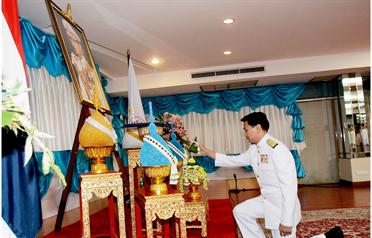
Ministers were also due to meet to finalise policies to revive the economy and to foster reconciliation after months of turmoil that peaked with a blockade of Bangkok's airports by Thaksin's foes last month.
Abhisit was elected as PM by parliament last week following a court verdict on December 2 which disbanded the pro-Thaksin ruling party, and Thaksin supporters have pledged to gather at parliament on Sunday.
Oxford-educated Abhisit however brushed off his opponents' claims that the new government -- whose foreign minister openly backed the airport blockade -- was undemocratic.
"I insist that is not true," the 44-year-old Abhisit, who heads the Democrat Party, told reporters. "This government came from a majority of the votes in the parliament with open-voting and freedom among the members."
He said the government was "ready to explain" its position when it officially presents its policies in parliament next week.
Monday's swearing-in ceremony was expected to start around 1000 GMT.
Abhisit added that the protest plans by Thaksin's supporters -- which echo the tactics of the People's Alliance for Democracy (PAD) that helped bring down the last government -- would not help the country.
"I want to work and enable the country to move forward," he said.
The new cabinet includes a number of controversial appointments, not least foreign minister Kasit Piromya, who was a vocal supporter of the seizure of Suvarnabhumi international airport in late November.
The blockade caused some of the massive economic damage that must now be repaired by the cabinet, whose economic team is headed by finance minister Korn Chatikavanij, an Oxford contemporary of Abhisit.
Korn formerly worked for investment bank JPMorgan Chase.
The choice of ministers was partly influenced by the need to bring in members of coalition parties that have backed Abhisit, as well as defectors from the former ruling People Power Party which was allied to Thaksin.
Thai business leaders have criticised the choice of other economic ministers tasked with reviving the country's fortunes, which have been hit by the global financial downturn in tandem with the kingdom's political turmoil.
On Friday members of the business community said they were disappointed by the chosen industry and commerce ministers.
Thailand has been in crisis since Thaksin was ousted in a military coup in 2006. He is currently in self-imposed exile to avoid a jail term for corruption.
His allies won post-coup elections in December 2007 but the PAD took to the streets again in May this year, seeing off two pro-Thaksin prime ministers in the process.
The clash between the two sides has its roots in deep divisions in Thai society.
Thaksin's opponents in the traditional Bangkok-based elite of the palace, military and bureaucracy saw the tycoon's influence as a drain on their power.
The former PM's support base meanwhile is in Thailand's poor, rural north and northeast, areas where Abhisit and the Democrat Party have never been able to win backing.