Tabreed's project pipeline makes 2009 busiest year
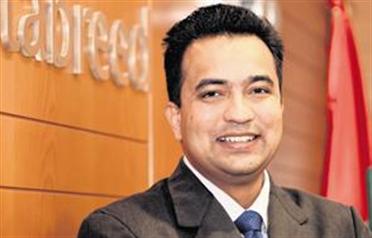
Abu-Dhabi based National Central Cooling Company (Tabreed) is seeing the busiest year with 16 district cooling plants poised to be commissioned this year. Consequently, the company is expecting a steady stream of revenue in coming years and will increase its staff strength. In an exclusive interview, Tabreed CEO Sujit S Parhar told Emirates Business that the company is fundamentally and financially strong and has no debt maturing over the next one-and-a-half years. Denying ratings agency Standard & Poor's projections that Tabreed will face negative free cash flows beyond 2010, Parhar said the pipeline of projects coming on stream over the next 12 to 18 months will significantly add to its cash flow. However, he acknowledged that the decline in Dubai property growth has resulted in fewer inquiries for district cooling plants. Excerpts from the interview:
What are your expansion plans?
Tabreed is currently working on 17 district cooling plants and 16 of them will be commissioned this year. We are increasingly getting more approaches from developers to look at their cooling requirements going forward. Our programme is in line with Plan Abu Dhabi 2030: Urban Structure Framework Plan. If you look at the plan, it is assumed that district cooling needs to be the base case for power forecasts.
This means an immense programme requirement for the district cooling industry because 1.5 million tonnes of cooling waters capacity will be required in Abu Dhabi – which translates into five times more of Tabreed's current delivery today. We're an Abu Dhabi-based utility company and are committed to help transform the emirate's vision into reality.
We have a strong deal pipeline ahead of us in terms of work over the next 10 to 15 years. Since utility companies focus on providing stable, long-term and recurrent earnings, there are considerable opportunities for growth for Tabreed in the emirate. Of course, there is always the flip-side of any opportunity, and for us there is the challenge of laying the advance infrastructure for district cooling and providing the funding for it – while providing for the emirate's future needs. It's an interesting challenge that Tabreed is facing head-on.
With regard to expansion in other countries, we have several opportunities around the region including Qatar, Oman and Saudi Arabia. We have two operational plants in Oman, a joint venture in Saudi Arabia, and several opportunities around the region which I will reveal at a later date.
I strongly believe that Saudi Arabia is a good market. In Jordan, Tabreed has done some work already. I would say that as the pioneers of district cooling in the region and with 11 years of experience behind us, Tabreed has an incredible amount of district cooling intellectual capital that no other company in the region can match.
How much do you plan to invest in infrastructure development this year?
Since we are a publicly listed company it is difficult for me to share specific figures. What I can tell you in terms of capacities is that for 2009 the capacity coming on stream is going to be 100,000 tonnes from Tabreed alone. This is a very busy year for Tabreed because we are delivering 16-17 plants this year – keeping in mind that building a district cooling plant generally takes about 18 to 24 months.
What about the response from Dubai developers?
Tabreed is active in Dubai – currently we have six plants under construction for the Dubai Metro project. We also have one plant operating that has recently been expanded.
The district cooling industry has not witnessed much deal activity in Dubai over the past few months.
Which market will contribute most to Tabreed's future revenues?
I think bulk of our revenues will be coming from the UAE, and more specifically from Abu Dhabi. Tabreed is an Abu-Dhabi utility company with reach across the UAE and around the region. I believe that a company has to be strong in the home market. The strength which can then be duplicated into other areas and countries.
How much progress has been made with regard to restructuring?
Aside from creating a holding company to look after Tabreed's overseas assets and operations, there is little focus at present on any major restructuring of Tabreed.
Do you plan to set up a new company for managing pipelines?
Tabreed already has a number of service companies that are either wholly owned or majority owned. Our service companies cover engineering and mechanical services, water quality services, water and HVAC systems consulting, the conversion of existing cooling systems to district cooling and the manufacturing of insulated pipes.
As part of expansion, do you plan to increase staff strength?
Yes. In contrast to most of the companies in the region that are laying off staff, we're looking at strengthening our team by hiring approximately another 50 to 70 employees for the district cooling plants that will come on-stream this year.
Do you see decline in new projects affecting Tabreed's profitability?
Since all contracts we have with our clients are in the neighbourhood of 20 years, short-term changes in the market do not impact our recurring income. This is the model of a utility company. What we may see is a decline in new projects.
What is your forecast for second quarter results?
Since we are a company that is listed on DFM, I cannot reveal any results forecasts. What I can say is that I believe Tabreed has the best talent in the business, and since it is a pioneer in district cooling industry it has strong prospects in the future.
How do you see competition from rivals such as Palm District Cooling and Empower?
Competition in any market is always a good thing – I believe that it gives the opportunity to set the benchmark. I think competition is good because it enables companies to differentiate. For Tabreed in particular it is about providing better service delivery and technical expertise. Competition also drives us to constantly improve our quality of service. I personally go and visit all of our customers to learn their needs and how to deliver on their expectations. Personal interaction is very important in the utility business because it helps customers explain their needs better and how Tabreed can assist them.
Do you plan to buy back shares to boost share price?
Share buy back is a market sentiment driven largely by the current economic situation. We have no plans to pursue a buy back scheme. Our focus is continuing to build a strong utility business, support the Emirates 2030 Plan and deliver the best customer service in the industry.
What about refinancing?
As Tabreed is a utility company, we are a capital-intensive business and therefore have a constant dialogue with financial institutions. Despite the current global economic climate we don't have any refinancing issues.
In February this year, Tabreed refinanced its $100 million (Dh367m) loan. In terms of funding for new projects, we pursue this on a project to project basis. Although the markets are tough for financing right now, Tabreed has been successful in securing required finances for its projects. Partly because of our focus on long-term low-risk ventures, we have extremely supportive relationships with all our financial institutions. The next major refinancing we are looking at is in 2011 when our next sukuk matures.
S&P said that Tabreed would face negative cash flow from 2010 beyond. What is your comment on this?
If you look at the pipeline of projects coming on stream over the next 12-18 months, I believe that Tabreed will significantly add to its current cash flow – mainly because all of our projects are built on the back of having customer agreements signed for each new district cooling plant. We don't build our plants until its capacity is signed-for. Meaning that when plant comes on stream there is always waiting customer base for the chiller water. Our business philosophy of low-risk means that we build only to meet agreed customer demand.
How much liquid cash does Tabreed have right now?
Again, I can't answer this question because we are a listed company.
Are any of your plants affected due to delays in property projects?
I am pleased to say that we are forging ahead with our Dubai Metro plants and that we have recently commissioned our Yas Island plant. All our 17 plants are under construction and 16 will come on stream this year and deliver chilled water to our customers. This will be a record year for Tabreed in terms of delivery.
Do you plan any acquisitions?
Our focus right now is on delivering our 17 new plants this year, providing the best customer service for our all our clients, and as we are a utility company our focus is on delivering long-term stable returns for our shareholders.
Has the cost of building district cooling plant fallen?
We have found that the construction industry has seen a lot of changes over the past 6-8 months. While the prices of some of the products have fallen, not all prices have come down. In fact, prices of some equipment of the cooling plants are still high; this is because the cooling industry is still quite robust around the world.
What is the outlook for the industry?
For the region where Tabreed focuses, the outlook from a number of perspectives is positive. Since Plan Abu Dhabi 2030 has immense district cooling requirements, Tabreed is faced with a tremendous opportunity in the sector.
The increasing needs for sustainability points towards district cooling as an option; our ability to reduce the power generation requirements and our focus on using alternative water sources means that Tabreed is at the forefront of sustainability. I can say that for Tabreed the outlook is very optimistic for our long-term future.
PROFILE: Sujit S Parhar CEO, Tabreed
Parhar took over the reins of the Abu-Dhabi based utility company National Central Cooling Company (Tabreed), in May 2009. He has an extensive experience from the utilities and infrastructure sectors in Singapore.
Prior to joining Tabreed, Parhar spent more than eight years with Sembcorp Industries across a number of functions including his most recent post as Senior Vice-President and Regional Head of Business Development.
In this role, Sujit was responsible for identifying and developing acquisition and greenfield development projects in power and utilities, environmental management, marine and industrial parks.
Sujit led the winning bid for the Fujairah F1 Project in the UAE in 2005 and was involved in other energy and utilities projects in the Middle East as well as Sembcorp's bid for Singapore GenCo Acquisition, utilities supply to several industrial parks in Asia and the Middle East as well as waste to resource projects in Asia Pacific. He also played an integral role in the formation of a joint venture company for the provision of utility services to all industrial parks in Abu Dhabi and Al Ain.
Prior to Sembcorp, Sujit worked with Keppel FELS Energy for four years across utilities supply and project development functions.
Keep up with the latest business news from the region with the daily Emirates Business 24|7 newsletter. To subscribe to the newsletter, please click here.