UAE sows the seeds of sustainability
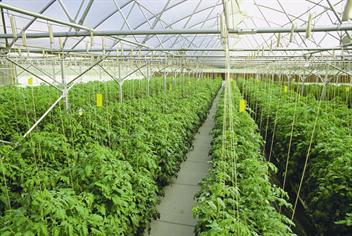
The UAE, it is safe to say, has never had green fingers when it comes to homegrown crops.
With freshwater supplies scarce and available farmland scarcer, the Emirates has faced a constant battle to feed its soaring population.
Imported goods have satisfied the diverse tastes of UAE nationals and expats, with at least 85 per cent of food now eaten here grown on foreign soil.
Now it seems there is no going back as efforts are stepped up to buy plots of land abroad to plug the country's widening food gap. Food industry experts say that, while the Emirates has reaped rich rewards from industries ranging from banking to real estate, there is no longer such a thing as UAE agriculture.
"There is a very small percentage of local crops in supermarkets and the majority of these come from small traditional farms in the country, but the UAE's crop production has gone down drastically," said Najeeb Khouri of local grower and exporter Mirak Agricultural Services.
The country's lack of farmland – finding fertile patches of desert is more than a little tricky – and limited water supplies have always made it more expensive to produce foods, such as strawberries and wheat here compared with more arable regions.
Farming and national production capacity have dropped steadily since 2000, according to the Ministry of Agriculture. The UAE had around 38,500 farms and a total cropped area of around 530,000 hectares in 2003.
Although the number of farms has continued to fall, the size of farms in terms of acreage has increased. However, the ministry was unable to supply accurate figures.
Mirak is the closest to a mass-production farm that remains. The more traditional farms scattered around the country are declining in number and produce low-value crops.
Khouri said the company grew more than 90 per cent of its crops – including strawberries, lettuce, capsicums, tomatoes and roses – hydroponically, a soil-less method that uses containers of nutrient mixtures.
"What we do is completely different from traditional farming. We have the largest open field hydroponic growing system in the world and mainly grow crops that have a very high market value and high export potential.
"Farms in Abu Dhabi used to produce crops but with shortages of water and high cost of labour most of these traditional farms are closing or shifting to produce other things."
The company, which grows more than 3,500 tonnes of produce annually, exports more than 65 per cent of its production to world markets including Japan, Singapore and Europe. It has more than 200 acres of farms at Dhaid, Al Hayer, Swaihan and Al Ain.
Mirak's operations are expected to increase to five times their current size, boosting its trade volumes to more than Dh100 million a year. High commodity prices over the past year have put extra pressures on the UAE food sector, which spends $4 billion each year on imported supplies. Food prices in the region have increased by 75 per cent since 2000.
And despite embarking on research to revive its soil, the UAE's agriculture investments are not entirely focused on boosting domestic harvests.
The country is currently one of many in the region looking to acquire foreign farmland to ensure its food security for the long-term.
Dr Mohamed Al Hammadi, a specialist in soil, water and the environment at the UAE University's College of Food and Agriculture, said that every year more and more domestic crops were being overshadowed by rising imports. And the country's problem of low water resources means food imports will continue to increase. "We have money and we can import technology we don't have," he said. "If you have money you can prepare land and find water resources, and then you can grow anywhere."
He said the country's lack of freshwater was being remedied with the use of desaliniated and recycled water. Agriculture continues to be the prime water-consuming sector in the UAE – it accounts for 80 per cent of freshwater use – despite the industry's minimal contribution to GDP. Last month palm tree farmers in southern parts of Ras Al Khaimah were reportedly facing widespread loss of crops due to water shortages.
The UAE University is conducting a five-year study into the exact crop water requirements for date palms, which Dr Al Hammadi said were the UAE's largest agriculture sector. Food export restrictions in certain countries – such as Egypt and India for rice – as well as rapidly growing populations and rising incomes have created a greater need for food imports in the UAE. The GCC's food bill grew by 25 per cent from $16bn in 2006 to $20bn in 2007, according to the Arab Organisation for Agricultural Development (AOAD).
The UAE now ranks second behind Saudi Arabia in terms of the high costs of food imports. Abah Ofon, a global softs analyst at Standard Chartered bank, said the country was a "capital-rich" net food importer and was looking for alternative ways of contending with the issue of rocketing food costs and export bans.
"The UAE has looked at ways of conserving water and of actually subsidising food, or at least trying to temper the inflationary aspect of food," Ofon said.
The country's per capita water consumption is around 550 litres a day – one of the highest rates in the world. Ofon said the UAE's plans to invest in farmland abroad was a way of locking in supplies from the source because of a physical need for food and not purely as an investment gain for capital purposes. The country plans to expand agricultural operations by acquiring land across the Middle East, Far East and East Africa, including 100,000 acres of land valued at $500m in Pakistan and 70,000 acres of farmland in Sudan. Dr Rajendra K Pachauri, Director-General of the Energy and Resources Institute in India, said such moves were understandable given the poor soil conditions in the UAE and the low possibility of adequate agricultural production.
However, the Nobel Peace Prize laureate, who was co-recipient of the award in 2007 along with former US Vice-President Al Gore, believes the region's key to its own long-term environmental sustainability is moving from oil wealth to soil health.
Dr Pachauri said land resuscitation is possible in the region using biotechnological methods.
"There are vast areas of land in the UAE that could be revived. I want to see how we can improve the quality of soil, to use science and technology, by which soil becomes productive, and then at least you can start growing vegetables and fruit on a larger scale."
Food for thought
Main imports to the UAE:
- Sugar
- Dairy products
- Meat
- Rice
- Tea
- Coffee
- Poultry products
- Wheat flour
- Fruit
- Domestic UAE crops:
- Dates
- Tomatoes
- Melons
- Cucumbers
- Lettuce
- Camel milk
- Akkawi cheese
- Aubergines
- Celery
An organic future?
Traditional farming methods in the UAE are proving impractical to meet the Emirates' growing population. But despite the steady decline witnessed in recent years, the country is breaking new ground in the field of organic produce. Late last year, the first internationally recognised organic farm in Abu Dhabi was certified to European standards. Spread over five hectares, Abu Dhabi Organic Farm has been a work in progress for about two years, but finally received its full accreditation in December. The Food and Agriculture Organisation supervised the certification process carried out by a European certification centre, which falls under the International Federation of Organic Agriculture Movements. Organic produce grown on the farm will include tomatoes, mushrooms, cabbage, carrots, cucumbers and herbs as well as strawberries and mangoes.