Homecoming for animals gets tough
Climate change has affected the natural habitats of animals to such an extent that scientists are developing and reworking guidelines for re-introducing animals into the wild.
Some of the world's leading conservation and re-introduction experts are at the Al Ain Wildlife Park and Resort (AWPR) to begin the painstaking task of drafting a set of guidelines for conservation that take into account the effects of climate change on the re-introduction of animals back to their natural habitats.
Once in place, these guidelines will be presented in 2012 in Korea at the World Conservation Congress. The meeting in the UAE is the first in a series that will be held over the next two years by scientists and conservation and re-introduction experts from all over the world.
Talking to Emirates Business, Dr Mark Stanley Price, visiting fellow, University of Oxford, a field biologist who worked on the Oryx releases in Oman and who chaired the workshop, said: "For the last 15 years, the world has been following a set of guidelines for reintroducing endangered species into the wild. For example, animals and plants cannot be released in a place that is not their natural home. They have to be released in their natural habitat, and conservationists have to ensure that they are not diseased, have adequate food, are breeding and are not dying. If they are dying, then find out why they are dying.
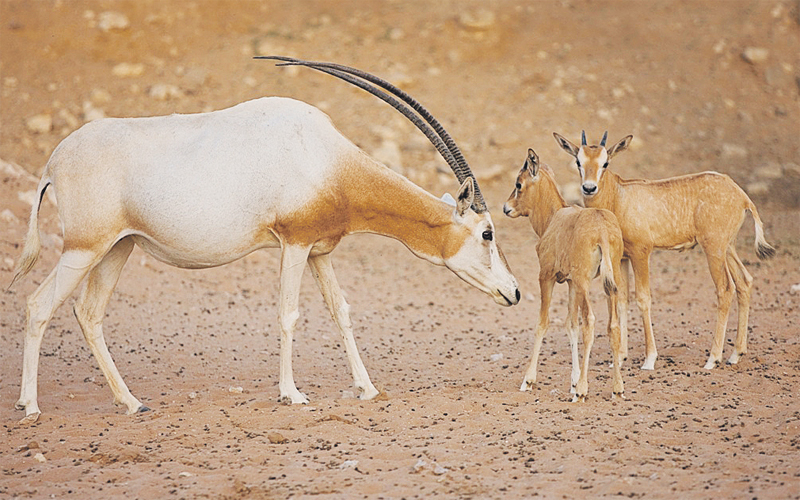
"The most important factor in reintroduction efforts is that animals have to be supported by the local populace. For example, when we were reintroducing the Arabian oryx to Oman, which disappeared from the area decades ago, all the conditions were right. There was a lot of food, space and there were no predators to threaten them, but the local populace posed a problem. They wanted to capture them and sell them to collectors.
"So reintroduction efforts have to be monitored and managed properly till the animals can manage on their own. While these guidelines have been very effective in improving the quality of reintroduction around the world for the last 15 years or so, now, due to climate change, they have to be reviewed to help the animals deal with it."
Experts from major institutions such as the Massey University (New Zealand), Institute for Environmental Protection and Research (Rome), Aberdeen University, Endangered Wildlife Trust (South Africa) and the Environment Agency Abu Dhabi are participating in the workshop.
Reintroduction has been successfully used to conserve a number of threatened plants and animals species including the Houbara bustard in the Middle East.