The way risk is measured must change: expert
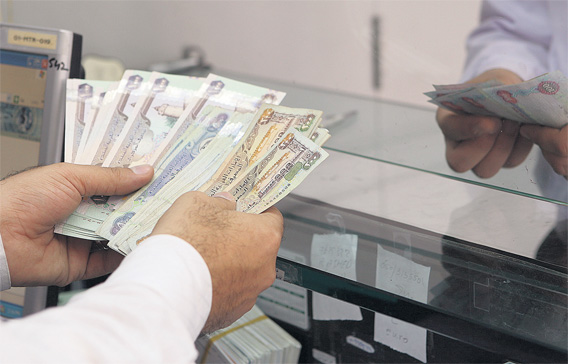
The recession that gripped the financial services industry proved that even the so-called big players are vulnerable to a certain extent.
In the region, the economic slowdown pointed out the inherent problems in the system and forced people to reconcile with the fact that no institution, however big it be, or whoever lead them, cannot take the pressure of high-risk assets.
Experts view that the region has not accorded the desired importance to risk management in the system, albeit the fact that UAE banks enjoy one of the highest capital adequacy ratios (CAR) in the world.
But the rules of the game are changing and risk management has gained much more respect and relevance than what it used to be.
In an interview with Emirates Business, Chitro Majumdar, Director of Quantitative Risk Management, Horwath Mak & Founder of R-square RiskLab, talks about new trends emerging in the area of risk management.
He also spoke about the new accord set by the Bank of International Settlement (BIS), Basel 2, which is being implemented by banks the world over. Following are excerpts from the interview.
We have now Basel 2. What is the basic difference you find between Basel 1 and Basel 2?
Basel 1 addresses only the credit/counter-party risk. Basel 2, on the other hand, is more exclusive for market risk and operational risk. Basel 2 incorporates internal ratings-based (IRB) and advanced IRB approaches and is structured more towards addressing market volatility and operational risk within the company.
Basel 1 recommended more simplistic methodology for calculation of credit risk capital – total asset-base has been divided into five groups based on risk weights to be assigned, at 0 per cent, 10 per cent, 20 per cent, 50 per cent and 100 per cent.
The outstanding amount in each category is multiplied by the category's risk weight and subsequently the total risk weighted assets is multiplied by eight per cent. However, the accord was criticised because risk weights are pre-assigned by the regulator, instead of considering actual credit risk of each asset. The issue has been addressed and resolved in Basel 2.
The recession has taught us many lessons. What suggestions you would make to the 'risk management regime' banks follow currently?
There are a lot of lessons the recession has taught and still teaching the financial services industry, especially banking institutions. Implementation of Basel 2 will ensure that depositor's savings and lender's money is secured to a good extent.
The IRB and Advanced IRB methods will help reach more accurate assumption of possible risk weights according to individual banks. I believe that there is a need to concentrate and work more on a rating system for counterparty internally, rather than depending solely on external rating agencies.
We need to realise that economic risk capital or economic capital has to plan a big role in today's stressed environment. Economic capital tells the financial institutions how much capital they need in order to address their future uncertainty. Competitive, regulatory and stakeholder pressures are bearing down on the banking industry across geographical boundaries.
Plunging equity markets, high levels of volatility and credit spreads reaching unprecedented levels have left many banks with considerable losses. Banks should move towards de-risking as a remedy, though it is not indeed a long-term solution.
Reduced risk may reduce exposure, but it also lowers potential reward; shareholders buy stock to reap rewards and exposure to risk is part of the same framework. Quantification of potential future exposure (PFE) is relevant and presents a clear need for mathematical sophistication. Today, after recession, financial stability is a major issue to policy makers of emerging market countries like India, Brazil, China etc. Promotion of financial stability can be obtained by the close monitoring of inherent risks in the banking business and also among the corporates.
Do you think Basel 2 can address most risk management issues facing the banking industry?
No, Basel 2 is the capital proposed by the regulator and which the bank has to maintain to secure depositors' savings and lenders' big amount of money. This capital is maintained to cover the possible losses from present portfolios and possible losses arising from the counter-party default, market volatility and the failure of operational system. But the economic risk capital in the current context plays a bigger role in the banking business.
Economic risk capital is calculated from the estimated predicted future losses of companies from their total portfolios, and the required buffer capital would be raised from equity investment. This depends more on market volatility and the valuation of instruments that varies from time to time.
What risks you perceive as the most important for GCC/UAE banks and what is your suggestion to address the same?
Most GCC/UAE banks are into a standardised approach. Banks need to introduce more sophisticated environment for an advanced possible risk quantification, ie, an advanced approach, but getting the required data is the problem. Banks need to work more on the economic scenario generation modelling, and we need to also work on scenario data, more in order to satisfy advanced measurement approaches (AMA) of Basel 2.
One of the drivers of the world financial crisis was 'reductive' accounting standards that tried for objective valuations of non-tradable items. The approach we have in insurance is that experts exercise their judgment to certify values, working under tight professional standards. This is applicable wherever a market value is not readily accessible. Actuarial methods are pretty simple, and are really just a 'sense check', but they work.
UAE banks are required to maintain 11 per cent CAR as of June-end 2009, which they need to raise to 12 per cent by June this year. In CAR, Tier 1 needs to represent not less than 67 per cent. Do you believe these CARs alone can address the risk issues facing UAE banks? Otherwise, what are your suggestions?
Tier 1 capital is mostly invested in exchange-traded capital market and also seen as a matrix of a bank's ability to sustain future loss. The UAE market is more balanced and no such air bubble is expected in the equity index compared to other Asian markets. It is expected that during the next five years, substantial investments will come into the infrastructure, in the form of foreign direct investments and from banks in the form of lending, which are a stable form of funding. Stable markets can be regulated and can sustain its risk exposure with lesser capital. In the case of UAE banks, the average CAR has already exceeded 20 per cent as of March end, 2010.
How relevant is 'judgement' in certifying values?
Let me give you another perspective. There are two key issues in the design of a business cycle-adjusted supervisory framework. Economic data are available only with long delays, and actually true figures (after the preliminary releases) become known often two or three years later, even in developed countries. In other words, it is necessary to design a system of 'early warnings', which authorities can rely on.
Even if the data were available, it is hard to know whether a deviation from the mean is temporary or permanent even in the best circumstances. Hence policy makers need to make a judgment call. These problems are well known and are typically faced by any central bank, each time they decide on interest rates.
Currently our Tier 1 capital has perpetual debts and other hybrid instruments. There have been calls from overseas regulators that the Tier 1 capital should predominantly be made of common shares. What is your view?
Hybrid instruments are complex and their valuations remain very volatile, and thus Tier 1 capital changes frequently. Common shares act like a mutual fund, which is having potential growth with stability in most times. Thus Tier 1 capital valuation would be more stable if it has more of common shares. Say for instance, computing credit charges on callable Libor exotics is a hot topic all the time since only a handful of people know how to do it in a right way. I am working on this with a promising collaborator at the moment.
How do you view the role of credit rating agencies in the risk identification and mitigation? Do you think the way these agencies approach the companies should change?
Yes, rating agencies need to upgrade their systems while working on quantitative measures. Say for instance, searching for the solution to high 'transition matrix'. As I have said, it is a basic need for a bank these days to calculate economic risk capital. I believe that banks need to focus on their individual rating and risk identification processes before they should rely on external ratings. Moreover, the rating agencies should also focus more on balance-sheet as well as off-balance sheet, from where they may be able to predict possible future risk exposures of an institution.
What is the main flaw you find in the current credit rating system?
Frankly speaking, the current method of measuring risk is one of the reasons behind the current crisis. The poor data on mortgages and cash-flow CDOs have led to the crisis. The model followed was 'garbage in garbage out'. So if data is not good, the output also won't be good, regardless of how sophisticated the model is. Rating agencies failed when they gave an AAA without assessing the quality of underlying assets.
And this practice triggered extra risk-taking among players, as they could rid bad things through securitisation. Global supervisors also failed to realise this. But they had an excuse because they were asked to believe market values. I believe the only way out from this trap is to rely on calculating MCEV (market consistent embedded value) and its redefined best-estimates.