- City Fajr Shuruq Duhr Asr Magrib Isha
- Dubai 04:32 05:49 12:21 15:48 18:47 20:04

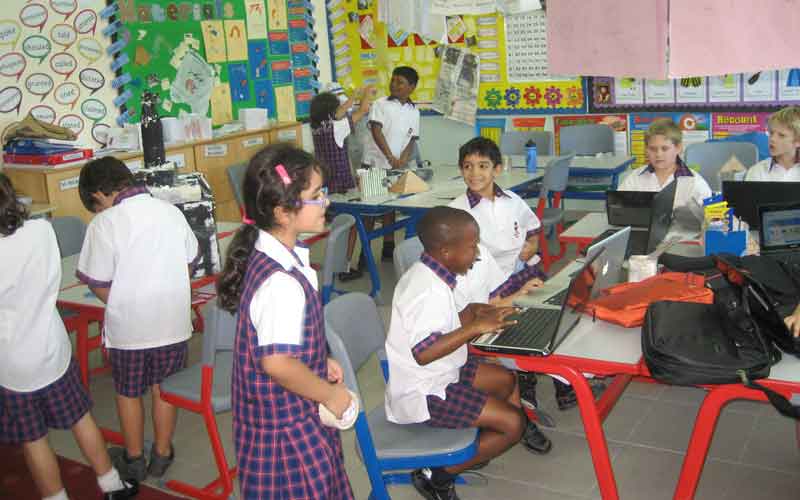
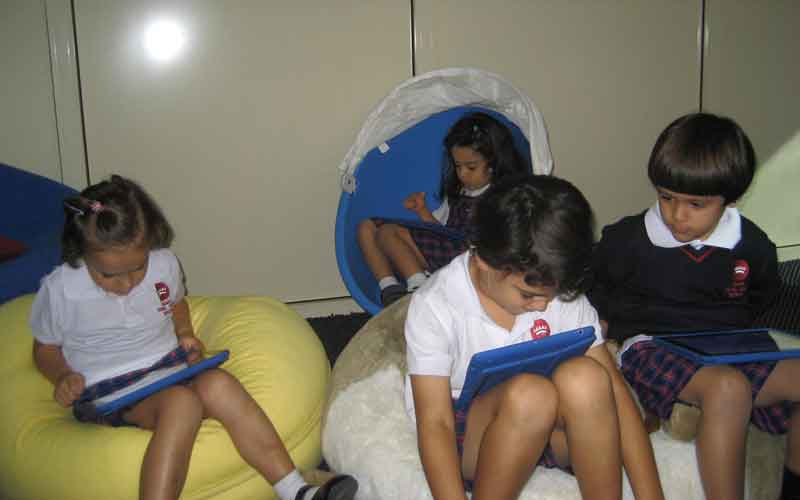
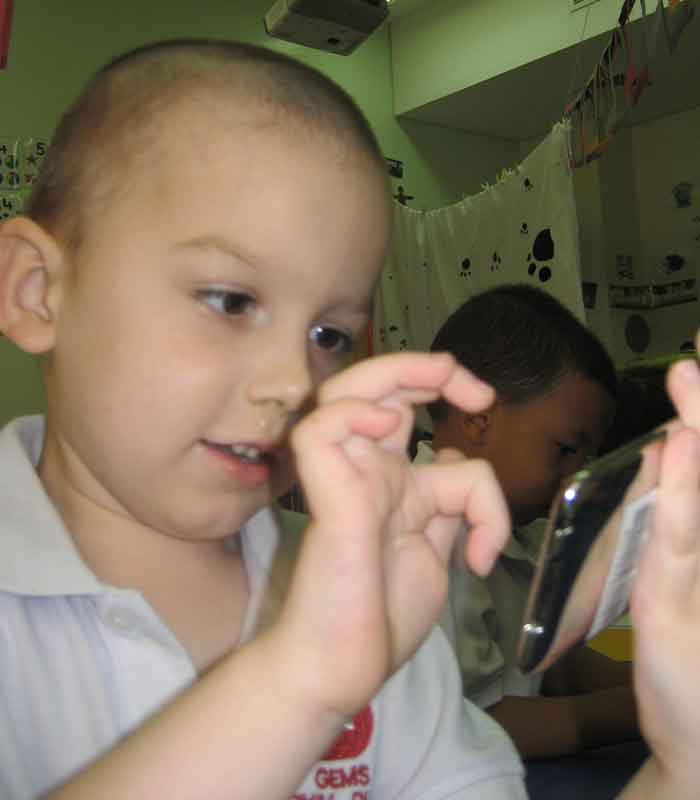
A regular classroom has an electronic whiteboard, toys and some iPads, iPods and iPhones at GEMS Royal Dubai School. “It is our duty to introduce the children to the world of technology, because that is the world they will eventually be living in,” says Philip Redhead, Headmaster of the UK-curriculum based primary school.
Technology is finding its way to education. This is solidified in the Development Strategy outlined by the Ministry of Education (MOE) for the years 2010-2020, stating that the MOE “takes great interest in e-learning, which is in line with the directive of the UAE, and with what the UAE has accomplished in the field of information and communication technology”.
Without a doubt, the use of high-technology applications in classrooms is well-received by children, who find all kinds of technology extremely interesting. Especially the iPad seems to become the must have of children, as the apps specially designed for them are numerous and children are keen to discover its use by themselves, at which they succeed with more ease than adults.
However, we should not forget that a child’s best teacher is the parent, and that school time only accounts for 85 per cent of a child’s learning time, referring to a simple calculation done by Dr. Cynthia Fuselier, Director of Curriculum at the New Brighton Area School District in the UK. The rest of the learning time of a child is spent primarily at home, and it is therefore important to look at the role of the parent in growing with new technology use at schools.
“I was wary at first,” says Michelle Proto, a 44-year-old British mother of two children attending GEMS Royal High School. “I grew up with the idea that learning should be about books, paper and pen.”
Soon after her children started going to school in Dubai, they came home reporting on what they had learned on the laptop or the iPad that day. They would make videos, do interviews and put it all on the net. They became experts in things Michelle had never heard about.
“I saw that they were learning very fast, and that they enjoyed doing homework! I realised it gave my children large benefits, Michelle says admittedly. It was because of her children that she decided to know more about it.
Like Michelle, many parents feel the need to get by when it comes to the high technology their children are using.
At American Collegiate School, an American curriculum-based primary school, there is even an IT class for parents. “We have had a growing demand of parents who wanted to learn how to use IT, so I started teaching them," says Suzanne, ITC teacher at the school.
Philip Redhead realised all the more the challenge that the new development might face the parents of children attending his school. “When we just started to implement high-tech devices in classrooms, we had some resistance. Some parents were really pessimistic about it. We cannot force parents to do or buy anything, and if we did that it would not be very convincing. We therefore organised parent support groups, where parents share their experiences and teach each other.”
Philip would not ask parents to purchase the high-tech applications the children are using in the school, but also does not need to. Nowadays most children have iPads, which they are more than happy to take to school, he says.
At GEMS Royal Dubai School, there are 120 iPads and iPods available, and many children bring in their own. “It was my son’s biggest birthday wish, so when he turned seven last week, we got him an iPad, says Farhana Hamicon (35) from Sri Lanka.
Michelle is not quite sure yet if she wants to take the step towards purchasing the yearned for iPad for her children. “It is on the Christmas list of both my children, they want to read e-books. I am still not sure if I like this idea. I do not want them to forget about books.”
Chris Jeong (36) from South Korea is certain about it. “There is no way I will buy an iPad for my child. It is all he is asking for, but I am not going to give in. It is fine if he uses it in class, but that is about the time he can have with the device. I do not want him to get addicted to it.”
According to Philip, it is all about time restriction. “Two hours of iPad use a day should be the max,” he says. In this way, a child will still engage in the more physical activities and not risk complications such as RSI.”
“I keep on pushing my child to maintain working on his hand writing,” says Farhana. “I tell him very clearly that the iPad is nice, but that he needs to have other skills too.”
Children learn quickly, and they know their way around on the net. This exposes children to a couple of risks, most notably the easy access pedophiles now have to the unsupervised children.
“We have had many parents concerned about pictures children put on the net,” says Philip. It took a while before they could feel comfortable with this, but they trust us now as we have a set of standards, such as no pictures of children with bathing ware online.
“Legally, children must be 13 years old at least in order to have a facebook or twitter account. We have school accounts, for which the children need us to sign in. Every now and then we encourage them to publish something, but always with our consent," Philip adds.
Farhana points out that she always checks what her son is writing in his blogs before it goes online, as she wants to know what he exposes to the rest of the world. “He might want to share every little detail of what is happening in our house,” she says.
“I do not believe it is good to ban these things though,” says Philip.
Children will find their way to the social media anyway. It is better to be aware of what they are doing and openly discuss it.
An often heart critique on the use of high-tech apps is the isolation of the user that it brings along, the device causing a child to act independently rather than demanding the feedback of a parent.
It is, therefore, important for the parent to be just as involved with new social media as the child is, finds Michelle. “It took me a while, but I am now able to follow up on the activities of my children and I know more about them than I did before, as they publish their experiences in the form of blogs, videos and statements. I know what they are doing all day long, and when they come home and tell me their stories, I know what they are talking about.”
As she expects, the use of social media must come in handy as many children in the UAE have family abroad. “My parents in the UK are following what my children are doing, and my husband often needs to work away from home, this is a good way of keeping him involved.”
Maral Aubrey loves it. “I really see the progress my child is making,” says the American mother, whose child is attending American Collegiate School. “The iPad is encouraging problem-solving skills and has a great influence on the self-confidence of my child; she constantly wants to share with others what she has achieved.”
Philip says to know of no actual evidence that the use of high-tech apps in schools improve the final exam results, but believes this is not the aim of e-learning. “It is about providing children the knowledge that they are going to need at an age early as possible.”
 Follow Emirates 24|7 on Google News.