Who says that crime does not pay?
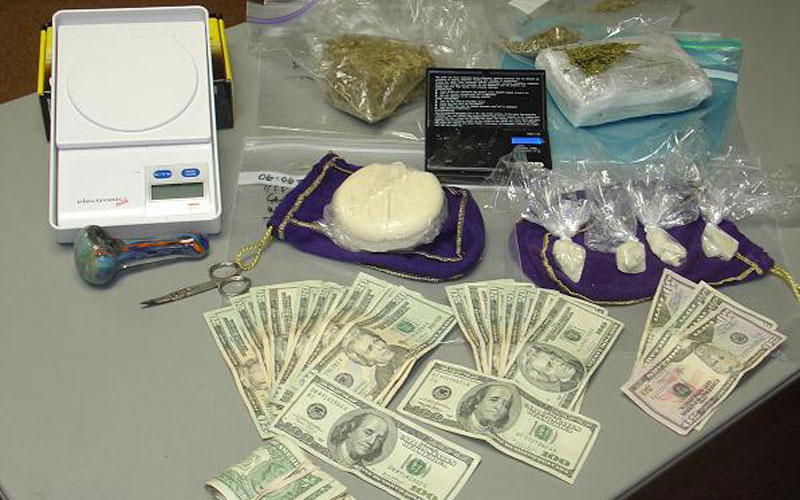
Organised crime generates revenues of more than $120 billion dollars globally every year, with drug smuggling by far the most lucrative activity, the United Nations Office on Drugs and Crime said Monday.
"Organised crime has ballooned to global proportions," UNODC chief Yury Fedotov told a meeting marking 10 years since the adoption of the so-called Palermo Convention on transnational organised crime.
Amid fears that globalisation was "extending the reach of crime in unprecedented ways," the convention was a "powerful but underutilised tool", Fedotov said at the start of the meeting.
Some 157 states had ratified the convention, which forms the global basis for extradition and mutual legal assistance, but Fedotov said more awareness was needed of how states could make more effective use of it, by coordinating efforts by law enforcement agencies.
UNODC calculated that heroin and cocaine smuggling generated annual revenues of $105bn worldwide, which was being invested in criminal businesses and fuelling terrorism. "To put it another way: cocaine and heroin traffickers are earning almost $280 million every day, almost $12m every hour, and almost $200,000 every minute," he said.
Human trafficking and smuggling of migrants accounted for annual revenues of an estimated $10bn; illicit trade in fire arms for more than $53m; trafficking in natural resources for $3.5bn; counterfeit medicines for $1.6bn and cybercrime for $1bn, the UNODC estimated.
UN Secretary General Ban Ki-Moon said Saturday at a conference on good governance in Morocco that "Organised crime syndicates grow ever more powerful. In some places, police and armies are being out-gunned. Our ability to deliver justice is not evolving as quickly as the criminal's skill at evading it," he said.