Developers use “force majeure” to skip compensation
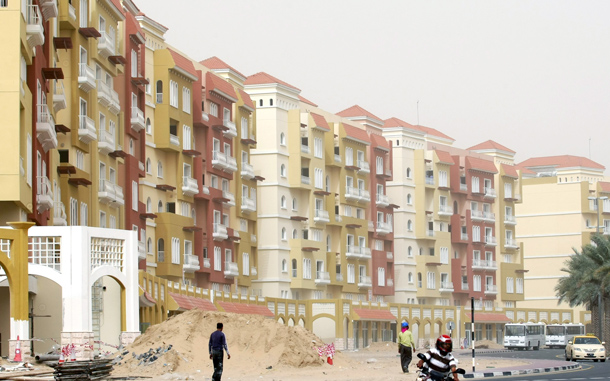
Majority of developers in Dubai try to invoke “force majeure” provisions in their contracts to explain delays, while a very few are willing to pay compensation, according to realty experts.
“We are aware of only a handful of developers who willingly agree compensation is due for delays, whereas the majority of developers try to use the contract to invoke ‘force majeure’ provisions or other acts beyond the control of the developer to explain delays,” Ashraf Sayed, Associate, Hadef & Partners, told Emirates 24|7.
“As a result the developers often refuse to pay compensation. The most common explanation used by developers is delay by master developers or government authorities in providing consents or delays in handover of plots in order to commence construction.”
Youcef Betraoui, Managing Director, Land Sterling – MENA believes investors should be able to claim some sort of compensation particularly if they have paid the full amount of the property as delays mean a year of lost rent/investment.
Mohanad Alwadiya, Managing Director, Harbor Real Estate, adds that all really depends on the terms and conditions of the contract between the investor and the developer, but most of the developers have included in their contracts a grace period of one year or more that allows them to delay the hand over without having to bear any financial compensation or legal obligation.
Ameya Salatry, Head of Legal, Better Homes, emphasizes that investors have the right to summon the developer and enquire on the delay.
“Alternatively, they may approach Real Estate Regulatory Agency (Rera) and have a notice issued to the developer.”
Compensation is covered under the Civil Code and sometimes under the relevant sales contract. Sometimes under contract compensation is payable for the period from the completion date specified in the contract until the actual date of handover.
It is common to see compensation under contract to be based on Eibor/Libor, which are currently a nominal amount.
The courts usually provide for payment of compensation in the form of interest payable on monies paid till date (approximately nine per cent) and/or payment of actual losses.
Exceptional losses may also be claimed by purchasers, however this usually requires substantial proof the developer acted maliciously or in bad faith.
Under Article 386 of the Civil Code, if it becomes impossible to perform a contractual obligation, compensation shall be payable instead.
The same judgment shall be passed if a performance is delayed. It should be noted however, compensation under the Civil Code requires a notice to be served first.
Asked if contracts in Dubai do include clauses of compensation, Sayed says: “We have seen many contracts that require payment of compensation. Typically, compensation is provided for instead of termination rights for purchasers, however, we have seen examples of contracts that provide both compensation and termination rights for purchasers. It should be noted that contractual rights to compensation and actual payment of compensation by developers are two very different concepts.”
Betraoui says: “Usually contracts in Dubai are drafted by the developers and from experience, I would say that many of the contracts we came across are ‘vague
and ambiguous’ on compensation to be paid by the developer incase of missing deadlines of completion.”
Alwadiya adds not many contracts include a clause of compensation.
“Having said that, most contracts include a clause that allows the investor to request a refund of their money after the grace period is lapsed, subject to the terms and conditions of the agreement.”
Salatry says most of the contracts are developer-friendly and seldom have clauses for compensation. However, some of them have a pre-agreed clause of compensation and can be enforced by court of law in the event of default.
Asked if the property laws define the minimum or maximum compensation to be granted to investors, Sayed points to Article 389 of the Civil Code, which says if compensation is not estimated in law or in contract then the judge shall make an estimation equivalent to the actual damage suffered.
Article 390(1) of the Civil Code states the parties to a contract may pre determine the compensation by stating the same in the contract. However, Article 390(2) goes further and states that a judge at the request of either party may make the compensation equal to the damage incurred (ie. override the contract).
It is likely that in order for a purchaser to be succeed in his claim, he must evidence actual loss, he adds.
Betraoui thinks the laws are again ambiguous, adding, “There are laws regarding compensation in the case of developer finishing a property to a different size than the original area agreed… however, I have not come across compensation by the developer on missing handover deadlines.”
According to Alwadiya, the compensation amount is usually left to the court to decide or unless mentioned in the contract.
Salatry adds there is no specific value defined under law and all depends on factors such as the purchase price, amount of deposit paid, and so on.