Ahmed bin Saeed chairs Dubai Free Zones Council meeting on business sustainability
Council reviews initiatives to strengthen resilience, innovation, and investment environment
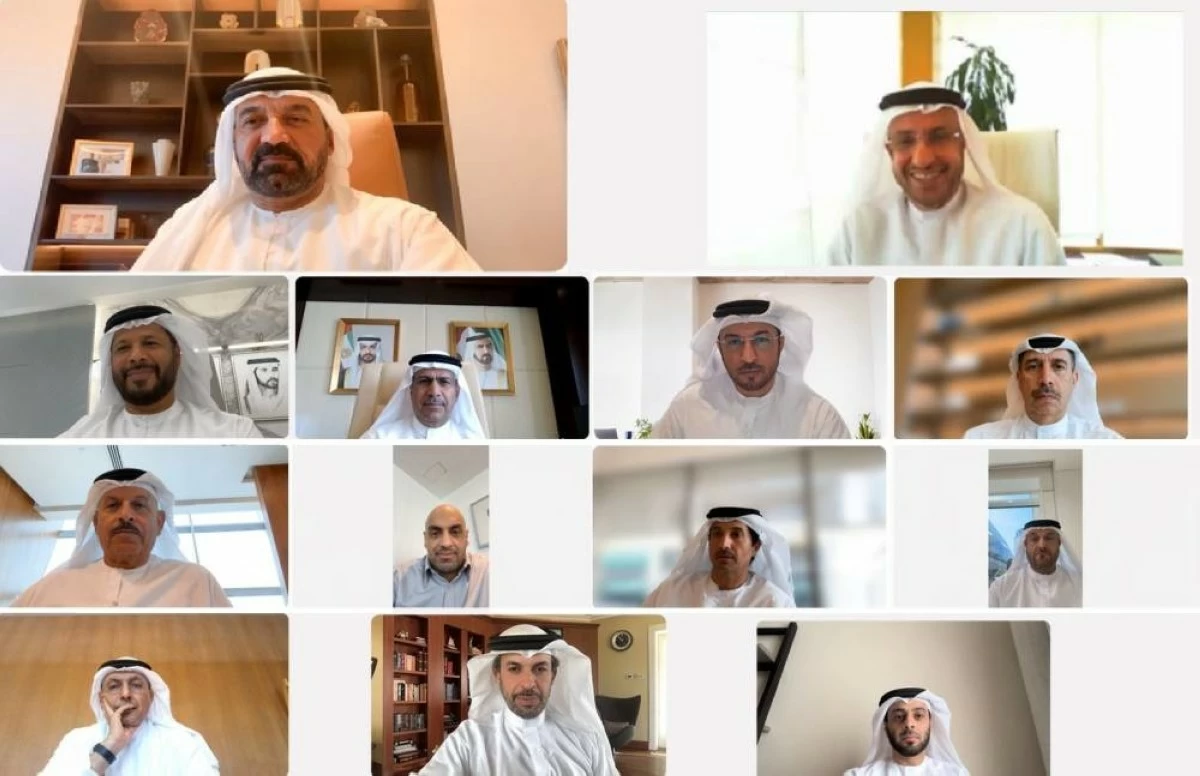
Dubai: The Dubai Free Zones Council, chaired by His Highness Sheikh Ahmed bin Saeed Al Maktoum, held its '34th meeting' to review strategic priorities aimed at enhancing free zone readiness, supporting business sustainability, and keeping pace with evolving economic and regulatory developments. The discussions align with Dubai’s vision to further strengthen its flexible, competitive, and investment‑attractive business environment.
At the start of the meeting, the Council was briefed by the Dubai Government’s economic team on the latest developments related to economic initiatives and facilitation packages launched by The Executive Council of Dubai. Members also reviewed initiatives presented by the Dubai Free Zones Council Strategy Team to support the business ecosystem and enhance companies’ resilience.
The Council discussed proactive approaches to anticipating the needs of companies operating in free zones and providing integrated support to reduce operational and financial burdens, strengthen investor confidence, and facilitate ease of doing business.
Strengthening business sustainability
The Council continues to advance initiatives aimed at improving business performance and continuity, enhancing regulatory readiness, and supporting the growth of existing, new, and emerging sectors. These efforts form part of a comprehensive vision to reinforce the competitiveness of free zones, strengthen their adaptability to economic shifts, and expand their contribution to GDP and the national economy in line with the highest standards of efficiency and compliance.
Enabling innovation
Members discussed enabling innovation through the responsible regulation of the virtual assets sector and reviewed a presentation by the 'Virtual Assets Regulatory Authority (VARA)' on its role in developing regulatory frameworks for virtual asset platforms and Virtual Asset Service Providers. The discussion focused on supporting Dubai’s growth as a regional and global hub for virtual assets while empowering users, raising awareness, and fostering innovation in alignment with the Dubai Economic Agenda D33.
The Council also examined institutional coordination with VARA on regulatory awareness, inspection procedures, complaints handling, and cooperation on anti‑money laundering and counter‑terrorism financing measures.
Supporting the halal industry
The meeting explored efforts to create a supportive environment for scaling local small and medium‑sized enterprises and technology startups in Islamic finance and the halal industry, in line with initiatives by the Dubai International Financial Centre and the National Strategy for Islamic Finance and Halal Industry 2031. Discussions included leveraging free zones as platforms to promote local production of high‑value halal products, advance food technology, agri‑tech and pharmaceutical innovation, and strengthen halal supply chain compliance and traceability systems.
Free zone readiness
The Council reviewed the short‑ and long‑term readiness of free zones for the upcoming Financial Action Task Force (FATF) assessment, focusing on strengthening compliance with anti‑money laundering, counter‑terrorism financing, and illicit financing standards. Proposals included forming dedicated compliance teams, aligning policies and procedures, and completing digital integration ahead of on‑site assessments.
Members also received an update on the 'Unified Employment Contract' project, launched in coordination with the General Directorate of Identity and Foreigners Affairs – Dubai. The project aims to standardise employment contracts across free zones while preserving their institutional identities and operational frameworks. Implementation will proceed in phases, culminating in a fully integrated digital employment contract system across all free zones.