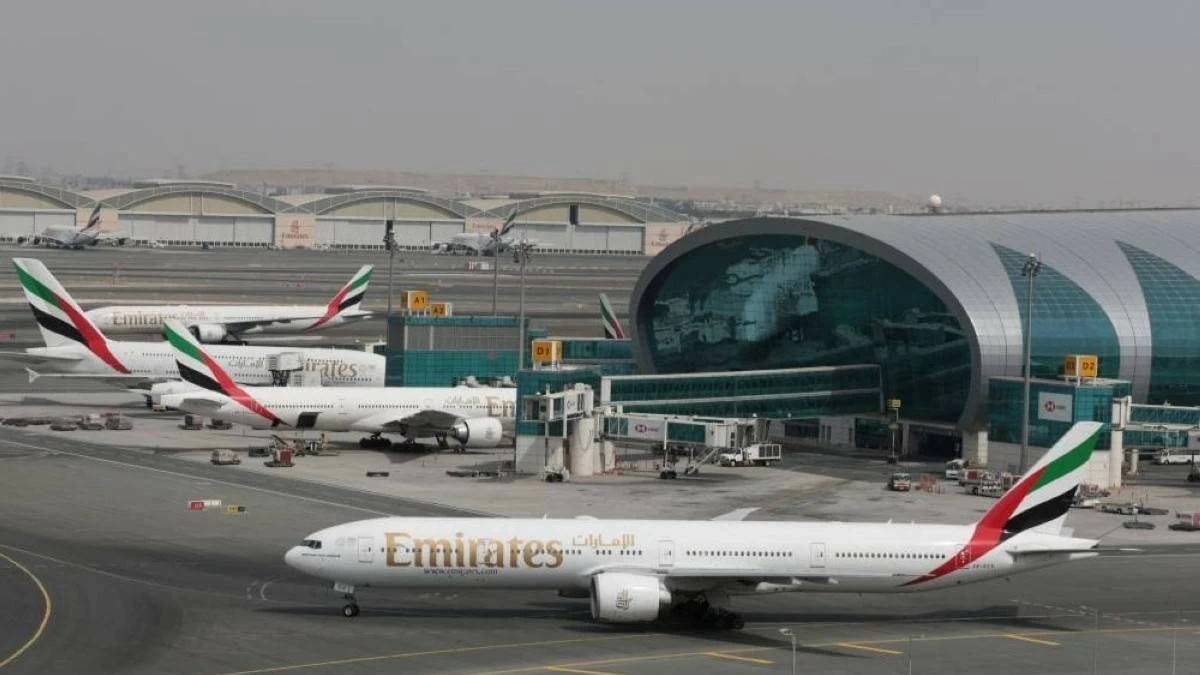
Dubai International Airport maintains global connectivity amid regional airspace challenges

DXB manages 18.6 million passengers in Q1 2026, demonstrating operational resilience and rapid recovery as UAE airspace capacity restores

By Emirates247 Published: 2026-05-04T08:18:00+04:00 3 min read
Following the lifting of all precautionary restrictions on UAE airspace, Dubai Airports began the next phase of recovery operations, working to intensify the number of daily flights and enabling airlines to gradually restore their flight schedules. Current capacity is primarily aligned with the availability of regional air routes, with ongoing coordination to enhance the efficiency of air traffic flows through neighboring airspace.

Dubai: Dubai International (DXB) has continued to maintain the fluidity of global connectivity during a period of regional disruptions that imposed significant restrictions on airspace capacity and flight schedules across one of the world's most important aviation corridors.

In light of the restoration of full airspace capacity in the UAE, Dubai Airports is actively expanding its operations and increasing flight traffic in line with the available capacity of regional air routes.

Since these developments began on February 28 and intensified throughout March, Dubai Airports has maintained operational continuity despite restrictions, helping to secure the movement of more than 6 million guests and over 32,000 flight movements, in addition to handling more than 213,000 tonnes of vital cargo.

DXB also maintained its operations under rapidly changing conditions, aligning operational schedules, passenger flows, and ground handling services with available airspace capacity. Meanwhile, coordination mechanisms and joint decision-making across the airport ecosystem contributed to maintaining safe and consistent service and operations despite significant operational constraints.

Following the lifting of all precautionary restrictions on UAE airspace, Dubai Airports began the next phase of recovery operations, working to intensify the number of daily flights and enabling airlines to gradually restore their flight schedules. Current capacity is primarily aligned with the availability of regional air routes, with ongoing coordination to enhance the efficiency of air traffic flows through neighboring airspace.

This success was based on close cooperation across the oneDXB airport community, including international airlines — led by national carriers Emirates and flydubai — service partners, and regulatory authorities. Through coordinated efforts, various parties worked within an integrated system to ensure the continued movement of passengers and cargo, while enabling a rapid and coordinated increase in operations as soon as capacity became available.

Commenting on this, Paul Griffiths, CEO of Dubai Airports, said: "The exceptional developments of the past weeks posed an unprecedented challenge for any major global aviation hub the size of Dubai International. International transit travel through the Middle East accounts for a significant share of the global air travel market, with more than 22.4 million annual trips in this sector passing through DXB, making the maintenance of fluid operations at the airport pivotal to the continuation of global travel. Our focus during this period was to ensure safe and consistent operations for our guests through close coordination and rapid decision-making across the entire airport community, while ensuring system readiness for a swift response whenever conditions improved."

He added: "Our collective response to these challenges has strengthened our ability to adapt quickly. This readiness will enable us to meet renewed demand as capacity is restored, reinforcing DXB’s role as a leading global hub, even as some restrictions on regional routes persist."

Dubai’s status as a global aviation hub is closely linked to the international transit market. Out of 99.3 million potential transit passengers passing through the Middle East, the region captures about 70% of this traffic, with DXB handling 32% of it. As current conditions stabilize, the sector is expected to see a rapid recovery supported by significant demand that cannot be easily absorbed by other global airports.

The performance achieved by DXB during this period reflects the readiness and flexibility of Dubai’s aviation sector and its high capacity to adapt and respond as air traffic returns. Dubai Airports continues to focus on maintaining safe and stable operations, aligning operational capacity with current conditions, and supporting airlines and guests during this transitional phase.

Dubai Airports’ outlook for the current year remains supported by strong underlying demand for travel in the coming period. As airspace capacity continues to improve, DXB is actively working to increase flight traffic in cooperation with airline partners and air navigation authorities to provide additional capacity across the network.

With the restoration of airspace capacity, DXB is well-positioned to accommodate traffic growth in the coming months. Simultaneously, long-term expansion plans continue at Dubai World Central (Al Maktoum International Airport), supporting Dubai’s future vision as a global aviation hub.