Dubai property 2026: India tops international buyer interest, US surges to second
DXBinteract's analysis of digital searches from June to August reveals the UK third, Pakistan fourth and Saudi Arabia fifth, with the top 10 countries accounting for 65.4% of global interest
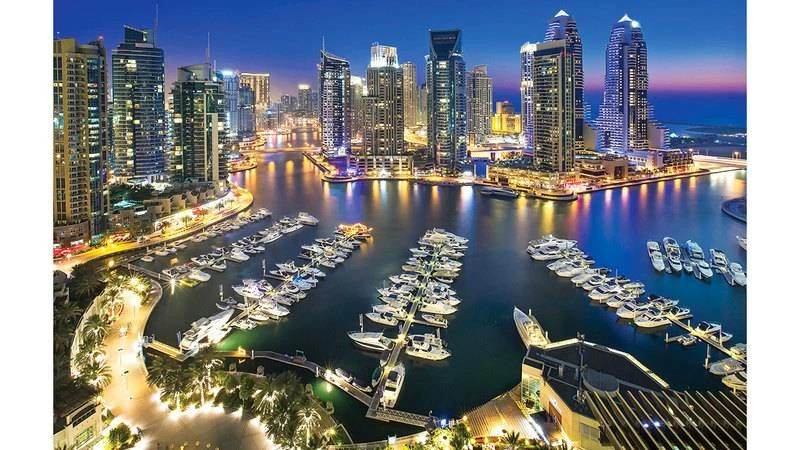
Dubai: An analysis conducted by the real estate platform DXBinteract showed that Indian investors topped the list of international interest in buying properties in Dubai, with a share of 16.3% of the total interest and digital search observed during the period from June to August 2026, while the United States recorded a remarkable jump to occupy second place with a share of 13%.
The platform found that America’s second-place ranking on the list represents the highest ranking the United States has ever recorded in its readings, making the rise in American interest the most prominent shift during the analysis period, and an indication of the expansion of the potential demand base for Dubai real estate to include markets that were not ahead in previous rankings.
According to the data, the United Kingdom came in third place with 10.7%, while Pakistan was fourth with a share of 5.4%, followed by Saudi Arabia with 4.4%, and then Egypt with 3.7%.
Canada came in seventh with a share of 3.5%, followed by Australia with 3%, then France with 2.9%, and Singapore with 2.5%.
The top 10 countries collectively accounted for 65.4% of the observed international attention, while the top 20 countries accounted for 80.4%, and the remaining 19.6% was distributed among the rest of the markets.
Fatih Al-Masdi, founder of the real estate platform, DXBinteract, said that the Dubai Land Department provides accurate and reliable data on transactions, prices, sizes, areas and projects, but it does not currently publish a public and updated database that allows for the classification of actual transactions according to the nationality of the buyer.

Al-Masdi added that this deficiency makes some of the rankings circulating about “the most purchasing nationalities” unverifiable at the level of the entire market.
He explained that “the reports of some real estate companies regarding the nationalities of buyers mainly reflect the mix of their clients, not the entire market, as some companies specialise in certain clients.”
Al-Masdi stressed that the analysis of search results, digital interest, and the distribution of platform visits by country provides, in his estimation, the best proactive indicator available for monitoring the source of international interest, in the absence of official, public, and up-to-date data on the nationalities of buyers.
He stressed that these indicators are not a substitute for transaction data, but rather measure the stage that precedes it, when the potential buyer begins to research, compare and explore projects and prices.
He said that “the high levels of international interest in Dubai real estate reflect the existence of a base of potential buyers that could turn into actual demand during the fourth quarter of 2026.”
He added: "This data helps us identify the markets from which future demand may come, while actual transaction data remains the decisive indicator of whether interest will turn into buying."
He explained that a decrease in a country’s digital presence should be interpreted as a decrease in detectable online interest, and not as a definitive judgment on the actual size of demand or the number of transactions.
Interest from outside the country
The DXBinteract real estate platform's analysis covers the period from June to August 2026, excluding domestic demand from within the UAE. The figures reflect the distribution of digital interest by country for potential demand, not data on confirmed transactions or buyer nationalities.
Therefore, the published percentages reflect each country's share of the total interest coming from outside the UAE, and do not represent its share of total platform visits, including visits from the local market.