Emirates advances circular economy with 88,000 kg plastic recycled into inflight products

Closed-loop initiative and sustainable onboard innovations highlight airline’s commitment to reducing waste

By Emirates247 Published: 2026-06-04T15:55:00+04:00 3 min read
As part of its environmental commitment, Emirates has invested more than AED 50 million in transitioning to a closed-loop manufacturing model for inflight dining service ware. Damaged and unserviceable trays, casseroles, snack dishes and bowls are collected after flights, cleaned, inspected and processed at a specialist facility in Dubai.

Dubai: Emirates has highlighted the impact of its closed-loop recycling programme ahead of World Environment Day on 5 June, revealing that more than 88,000 kilograms of plastic have been repurposed into new inflight products over the past year.

Launched in June 2023, the initiative focuses on recycling Economy Class inflight meal service items and transforming them into new service ware for onboard use.

As part of its environmental commitment, Emirates has invested more than AED 50 million in transitioning to a closed-loop manufacturing model for inflight dining service ware. Damaged and unserviceable trays, casseroles, snack dishes and bowls are collected after flights, cleaned, inspected and processed at a specialist facility in Dubai.

The recycled materials are then used to produce new meal service items containing up to 25 per cent recycled content. These are returned to Emirates Flight Catering and reintroduced into service across thousands of flights worldwide.

With millions of items used annually across its global network, the programme supports circular economy principles by reducing plastic waste sent to landfill while also lowering transport emissions through local recycling and manufacturing.

The initiative is delivered in partnership with deSter FZE UAE, an aviation service ware provider specialising in closed-loop manufacturing. The company is part of the CE100 network of circular economy organisations and has received a ‘Gold’ sustainability rating from Ecovadis. Its Dubai facility incorporates solar power, efficient water management and waste minimisation practices.

Wider sustainability efforts onboard

Beyond recycling, Emirates continues to implement a range of sustainability initiatives across its inflight experience.

To mark Sir David Attenborough’s 100th birthday, Emirates’ ice entertainment system will feature 100 episodes from the Attenborough Collection throughout June and July, showcasing programmes from BBC Earth narrated by Sir David Attenborough.

The airline has also introduced children’s toys and bags made with at least 50 percent recycled content, including post-consumer polyester. It has reduced single-use plastic by removing unnecessary packaging from these items, while magazines and product tags are printed on responsibly sourced paper.

In First Class, plastic packaging for mattress toppers, duvets and blankets has been replaced with reusable bags made from recycled polyester. Across all cabin classes, headset packaging is now made from 100 percent recycled low-density polyethylene (LDPE).

Emirates has incorporated more sustainable materials into its premium cabin amenity kits. First and Business Class kits feature fabrics with recycled content, along with redesigned accessories and kraft paper packaging for dental kits.

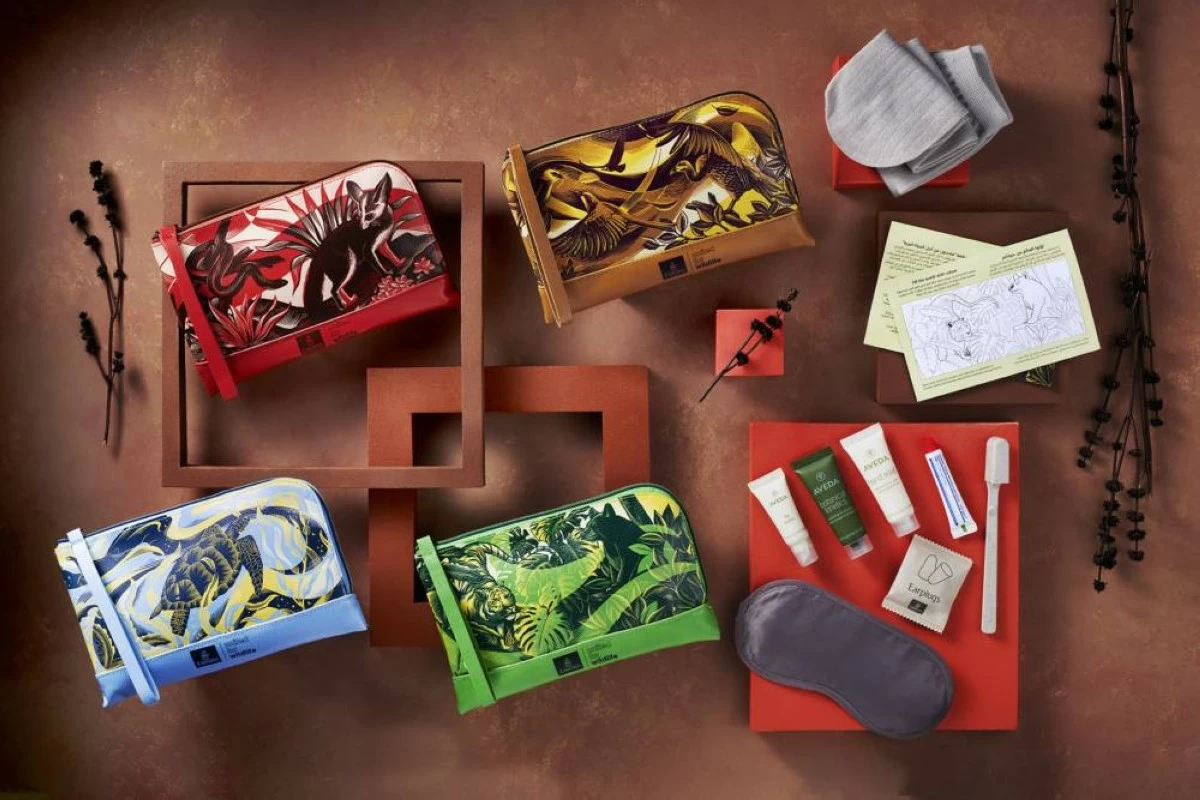
In Premium Economy and Economy Class, reusable amenity kits developed in partnership with United for Wildlife use bio-based materials, including cactus-based alternatives, and contain items made from 100 percent recycled polyester. The packaging uses non-toxic soy-based inks, with accompanying materials produced from responsibly sourced paper.

Fleece blankets in Premium Economy and Economy Class are also made from recycled polyester, with each blanket using material equivalent to approximately 28 recycled plastic bottles.

In First and Business Class, loungewear, slippers and eye masks are produced using lightweight modal fabric derived from certified botanic fibres. Meanwhile, VOYA skincare products featured onboard are made using organic seaweed sustainably harvested from Ireland.

Further measures include replacing plastic straws with certified paper alternatives, introducing paper bags for inflight duty-free purchases, and adopting alternative packaging solutions such as stone paper for certain onboard amenities.

Emirates has also implemented onboard recycling initiatives, including the segregation of glass and plastic bottles on flights arriving in Dubai, where operationally feasible, to support more effective recycling processes.

Menus across all cabin classes are now printed on paper sourced from responsibly managed forests, reinforcing the airline’s commitment to sustainable sourcing.

Together, these initiatives reflect Emirates’ broader efforts to reduce environmental impact, support circular economy practices and enhance sustainability across the passenger experience.