Fed seen holding rates steady as Powell nears possible final meeting amid oil shock
Rising energy prices and Iran war uncertainty test Fed outlook as Jerome Powell’s tenure nears potential end
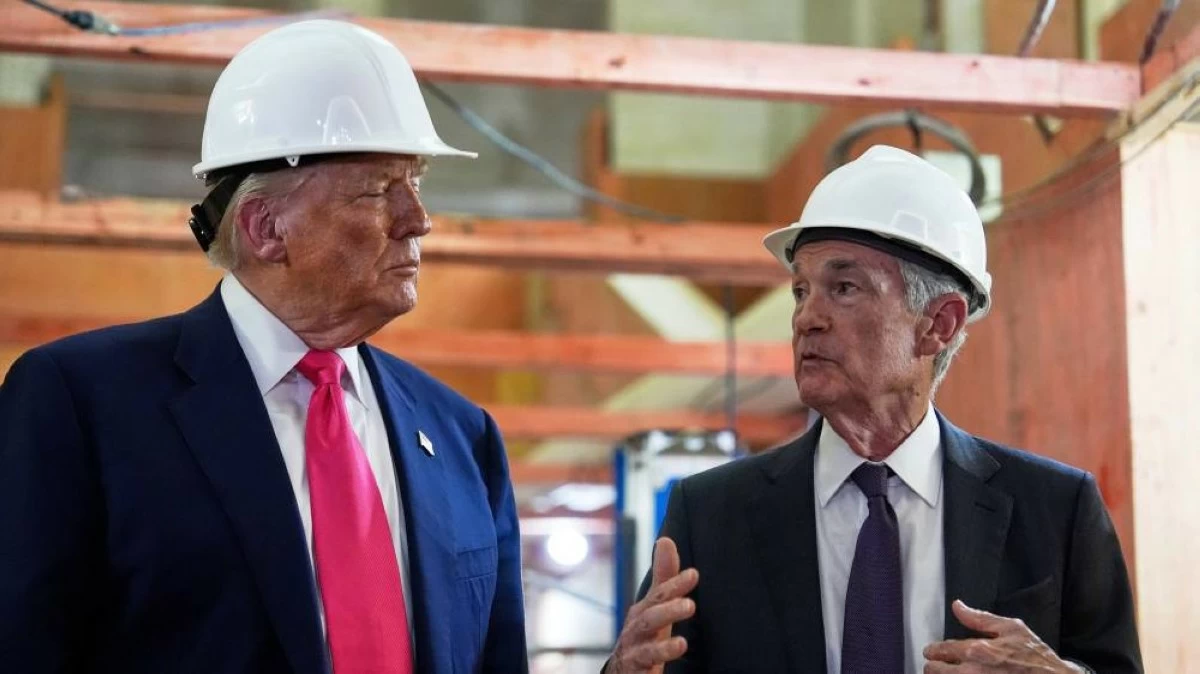
Washington: Federal Reserve policymakers will gather in Washington this week for what may be Jerome Powell’s final meeting as chair of the U.S. central bank, with elevated energy prices and a stalled Iran war clouding the economic and monetary policy outlook.
A May 15 end date for Powell’s eight‑year tenure as Fed chief now appears more likely after a major obstacle to the U.S. Senate’s confirmation of his appointed successor, Kevin Warsh, was removed on Friday. As a possible final act, Powell is expected on Wednesday to oversee another vote by the Federal Open Market Committee (FOMC) to hold the benchmark overnight interest rate steady in the 3.50%–3.75% range, where it has remained since December.
Still, the meeting and Powell’s subsequent press conference could address several key issues, including whether policymakers will signal the possibility of interest‑rate hikes later this year if inflation accelerates further.
Another unresolved question is whether Powell would remain on the Fed’s Board of Governors even if Warsh is confirmed in time to preside over the next policy meeting in June. That issue gained new relevance after the U.S. Department of Justice on Friday dropped a controversial criminal probe into renovations at the Fed’s Washington headquarters — a probe that had threatened to delay Warsh’s confirmation due to opposition from a key Republican senator.
Powell had also made the end of the investigation a necessary condition for leaving the Board. While Fed chairs historically resign their board seats when their leadership terms expire, Powell said last month he might stay, noting he would “make that decision based on what I think is best for the institution and for the people we serve.” The issue has taken on added significance amid President Donald Trump’s renewed efforts to test the Fed’s independence.
If he remains, Powell could serve as a Fed governor until January 2028 — the final full year of Trump’s presidency — extending the public role of the man the president has openly criticized as “too late” for not delivering the aggressive rate cuts he demanded.
Powell is expected to face questions both about his future and about the economic debate still overshadowed by the U.S.–Iran conflict. The FOMC will release its policy statement at 2 p.m. EDT (1800 GMT), followed by Powell’s press conference at 2:30 p.m.
When the war began on February 28, central bankers said its impact on inflation and growth would depend on how quickly it ended and whether oil prices fell back toward pre‑war levels near $70 per barrel. Eight weeks later, while bombing has paused, economic warfare continues. The United States has blocked Iranian ships from leaving the Strait of Hormuz, while Iran has restricted other vessels from passing through the vital waterway — disrupting global oil and supply chains at a moment when policymakers are increasingly sensitive to inflation risks.
‘Very complicated’ policy environment
Brent crude, the global oil benchmark, has climbed about 50% since the start of the war. The surge in gasoline and energy prices last month helped drive the U.S. Consumer Price Index to its largest increase in nearly four years.
While the Fed is expected to keep rates unchanged, officials must now decide whether to acknowledge a potential need to raise borrowing costs if inflation continues to accelerate. Expectations for rate cuts have largely faded, with bond markets now pricing in unchanged policy rates through at least mid‑2027.
“The longer energy prices remain elevated and the strait is constrained, the greater the chances that higher inflation gets embedded across a wide variety of goods and services, supply chain effects emerge, and real activity and employment begin to slow,” Fed Governor Christopher Waller said last week in his final public comments before the meeting.
Waller said the Fed could be forced to confront a combination of weakening labor markets and persistently high inflation — a scenario he described as “very complicated for a policymaker.” While such conditions could justify keeping rates on hold, an increasing number of officials at the March 17–18 meeting discussed the possibility that the next policy move might need to be a hike, not a cut.
That debate raises the prospect that this week’s FOMC statement could include language suggesting policy risks are now two‑sided — a meaningful shift from recent guidance.
The Fed had previously been expected to resume rate cuts later this year, but inflation remains about one percentage point above its 2% target. “Monetary policy right now is in a good place and probably appropriate to maintain for some time,” St. Louis Fed President Alberto Musalem said earlier this month. He cautioned, however, that prolonged high oil prices could feed into core inflation and, over time, threaten inflation expectations.
Few policymakers openly oppose holding rates steady for now. Even Fed Governor Stephen Miran, previously the most vocal advocate of lower rates, said recently that he may slow his recommended pace of cuts as the inflation outlook has become “a little bit less favorable.”
The key question remains whether the Fed will formally acknowledge the possibility of higher rates as the next step — and how Powell frames that discussion.
“The Fed will stay firmly on hold at its April meeting,” Bank of America economists wrote last week. “Upside risks to inflation from the Iran war haven’t dissipated. Labor data have improved. The major question is whether the statement signals two‑sided policy risks. We think it won’t — but it’s a close call. Powell is likely to sound hawkish.”