Central Bank backs higher rate offers
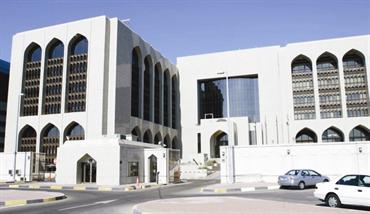
The Central Bank said yesterday it supported a drive by the country's banks to offer higher interest rates to lure in more customers in an attempt to increase their deposits and bridge the gap with their credits.
Central Bank Governor Sultan bin Nasser Al Suwaidi described such moves as healthy competition and said it had largely narrowed the deposit-loan gap after swelling to alarming levels during the oil boom in the first half of 2008.
Speaking after a meeting of four Central Bank Governors at the Abu Dhabi-based Arab Monetary Fund (AMF), Suwaidi said the UAE banking sector had largely recovered from the global financial distress but expected its general performance to be below last year.
He declined to comment on the banks' exposure to Saudi Saad and Gosaibi groups but said details would be issued soon.
"Naturally speaking, competition will always compel banks to give different rates," he said when asked whether he approved of the offers by banks.
"If all banks give the same rate, I think the market will be without competition and this will not be right… this is healthy competition and I don't think it will be beneficial for the deposit owners not to have competition. There has to be some competition… there has to be some rewards given by the banks to their clients."
Suwaidi said such a drive had already paid off as the gap between deposits and loans had sharply narrowed to around Dh25 billion at the end of April.
He said the gap had reached alarming levels in the first half of 2008 when domestic demand was at one of its highest levels because of strong oil prices.
"The gap has been nearly tackled… the UAE banking sector is a dynamic system, which possesses the capability to collect deposits," he said.
"This system has shown a considerable ability to raise funds and deposits from special sources… as you know, during the oil boom, demand for credits largely exceeded deposit growth but now after deposits started to grow, the gap with the loans has largely declined to around Dh25bn from a very large size in the past. This is an excellent development as it has become manageable."
Suwaidi gave no figures on the previous deposit-loan gap but Central Bank figures showed it stood at around Dh68bn at the end of August 2008, when loans and advances totalled nearly Dh925bn against deposits of nearly Dh857bn. At the end of April, loans and advances totalled around Dh997bn, while deposits stood at Dh961bn. "There is a steady improvement in deposits. Banks have started to expand lending in a studied and calculated manner. Demand for credit has receded recently because the general economic activity for the time being does not necessitate large volume of loans," he added.
But Suwaidi said this does not mean a full recovery by the country's 24 national banks and 24 foreign units, adding their growth would still be impacted by the crisis in the second half of 2009.
"Of course, the UAE banking system is still amidst a crisis. I don't think it will grow as normally as in times of economic stability… growth will of course be affected in the second half. The performance of the UAE banks will be good this year but not as good as in 2008," he said.
"Yet I am satisfied with their performance and rate of recovery. I am sure the banking sector is doing well and liquidity has greatly improved, so I can say that the situation is much better now than in the early days of the crisis. With regards to the deposit-loan gap, as I said, the situation is better and I am now very satisfied."
Suwaidi said he expected strong compliance with the Central Bank's deadline for banks to raise their capital adequacy to 11 per cent by the end of June and 12 per cent at the end of June 2010.
"We expect a very good degree of compliance and those who will not meet the deadline on time will be able to do so in a very short time… I am not worried about this," Suwaidi said.
Keep up with the latest business news from the region with the daily Emirates Business 24|7 newsletter. To subscribe to the newsletter, please click here.