FDIC finds 117 problem banks, most since 2003
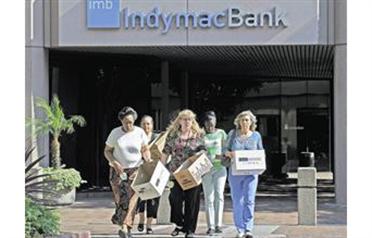
The number of troubled US banks rose 30 per cent to 117 in the second quarter, the highest level in five years, and a top regulator warned that conditions will worsen as the housing slump and credit crisis continues to pound profitability.
Federal Deposit Insurance Corp (FDIC) Chairman Sheila Bair said she expected more banks to join the agency's watchlist of problem banks, which tallies institutions with financial, operational or managerial weaknesses that threaten their financial viability.
"We don't think the credit cycle has bottomed out yet," Bair told a quarterly news conference, adding that US banks will not return to high levels of earnings anytime soon.
"We expect that banks and thrifts will keep building up reserves for the next several quarters," Bair said.
The news initially pulled down financial shares before markets closed higher on the back of a surge in energy shares.
Nine US banks have failed so far this year, including mortgage IndyMac Bancorp, which has drained the FDIC's Deposit Insurance Fund used to repay insured deposits at failed banks.
In a bid to replenish the $45.2 billion fund, Bair said the FDIC will consider a plan in October to raise the premium rates banks pay into the fund, a move that will further squeeze the industry.
The agency also plans to charge banks that engage in risky lending practices significantly higher premiums than other US banks, Bair said, to encourage safer business practices.
Charlie Peabody, a bank analyst at Portales Partners in New York, said such a weighted tax could hurt already troubled banks past the point of recovery.
"The tax will fall most heavily on the weakest, so the conclusion is, the weak are going to get weaker and the strong will be able to take advantage of the weak," he said.
The FDIC said the sector's earnings fell 86 per cent from a year earlier to $5bn in the second quarter, mainly due to a fourfold rise in provisions for bad loans to $50.2bn. With the exception of the fourth quarter of 2007, industry profits were the lowest since the fourth quarter of 1991.
The FDIC said the combined assets of the 117 problem banks increased to $78bn, from $26bn in assets at 90 banks in the first quarter. Bair has said that historically 13 per cent of banks on the watchlist fail.
The latest figure included $32bn of assets from IndyMac, which became the third-largest US bank failure in July. FDIC examiners closely monitor the watchlist but do not publicly release the names on it.
Bair said 98 per cent of the 8,500 US banks continue to be well-capitalised. She also noted that the banking sector's exposure to mortgage giants Fannie Mae and Freddie Mac's preferred securities is "not problematic" but said some smaller institutions' exposures could cause them greater stress.
"With $8.6 trillion in deposits, banks have plenty of resources to continue meeting the lending needs in their communities," said James Chessen, chief economist for the American Bankers Association.