Greater liquidity will finance recovery: Saidi
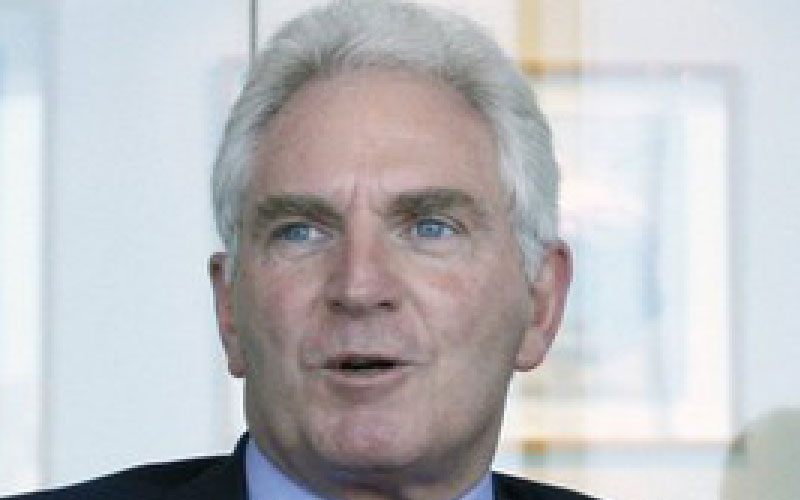
Dubai’s economic recovery is being boosted by the resilience of its banking sector, a senior economist has said.
“If you look at UAE banks, capital adequacy ratio, which is major ratio looking at the soundness of the banking sector and its finances, is now running at 20.4 per cent,” Dr Nasser Al Saidi, Chief Economist at the Dubai International Financial Centre, told a media gathering on Sunday.
“Just to put that in perspective, for the advanced economies – Europe and the US – capital adequacy is still hovering around seven to eight per cent,” Dr Saidi said. “What we have in the UAE is a highly well-capitalised banking sector with a great deal of liquidity.
“Related to that, if you look at the non-performing loans (NPLs), latest numbers show that NPLs are at 4.3 per cent of total loans. This is lower than what it was in 2005-2006, when they [NPLs] were running at 8.3 and 6.3 per cent,” he pointed out.
“Despite the lower growth, we still don’t have the same level of NPLs,” Dr Saidi said, although he added that one would expect this rate to go up because of the current lower economic growth.
Dr Saidi highlighted that other banking ratios remained robust as well. “Return on assets remains strong, at 1.5-1.6 per cent, return on equity is 12.1 per cent,” he said.
“I mention these [ratios] because the greater liquidity of the banking sector – its good capitalisation – will allow it to start financing the recovery,” he emphasised. “We’ll all be seeing an increase in credit growth to the corporate sector,” Dr Saidi predicted.
“However, there is one lesson that we need to learn from the crisis,” he cautioned. “At the height of the crisis, international capital and credit withdrew from the region, including from the UAE. That means that as part of addressing the major lessons from the crisis, we need to grow our own credit and capital markets,” Dr Saidi said, adding that “that’s started to happen.”
He pointed to the fact that “Dubai was very successful in returning to the markets. It issued $1.25bn worth of debt, which was well priced and was four times oversubscribed,” he said.
“The reason Dubai was able to do that,” he said, “is because of the return of confidence, not only in the growth prospects of Dubai, but because of the resolution of the Dubai World [debt restructuring exercise].”
Dr Saidi said the Dubai World issue was “like a cloud hanging on the capital and credit markets” and that its resolution has led to a “strong resurgence in equity markets and CDS [credit default swaps] rates declined dramatically – from over 600 [basis points] to a level of 410-420 [bps].”
Not only that, the resolution also opened up bond and equity markets, with new IPOs, some of which have already been announced, to hit the markets soon, he added.
Dubai’s position is favourable because it has made the right types of investments, it has taken the right policy action, and geographically, the infrastructure assets that it has put in place allow it to benefit from the great delinking that is happening between the emerging market of the world and the advanced economies,” Dr Saidi summarised.
“The infrastructure assets that Dubai has… say, Dubai Ports World (DPW) – 70 per cent of DPW’s assets are either in the emerging world or serve the emerging economies,” he said. “The strong linkage between Dubai and the emerging markets is going to pick up more rapidly than other countries of the region,” Dr Saidi reckoned.
Dubai, he added, was less dependant on oil and therefore less dependant on the volatility of oil prices. “It is strongly supported by the banking sector, which is well capitalised, [is] liquid, and is now able to resume credit lending.”