News
HSBC to focus more on the Middle East and Asian markets
img_08212008_ec41c8d9-8320-4136-b139-9baa5105c4b8.jpg
Attracting more than $300 billion (Dh1,102bn) of sovereign wealth funds every year, the Middle East has become a haven for investment bankers from the West, and as the region further diversifies from hydrocarbon dependency, it is becoming increasingly enticing to international players in the banking sector.
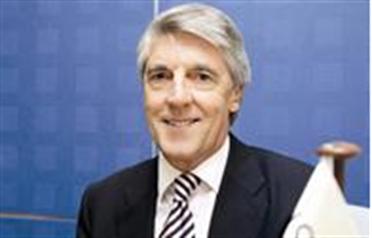
In an interview with Emirates Business, David King, HSBC's Managing Director for Business Development and Global Banking for Mena, said: "Just as the majority of the world's international trade will increasingly happen in emerging markets, HSBC will increase its emerging market activities."
—HSBC Middle East has done remarkably well in the first half of this year. Do you expect the same level of growth for the second half?
—Yes, HSBC in the Middle East – which includes investment, commercial and retail banking – did extremely well. But the bank overall also returned reasonable results against the background of the sub-prime problems that are affecting most major international banks.
Compared to most, we've done well. Anyone who makes predictions at this time is overly self-confident. The first half of this year saw such a stellar performance. In the previous year, our growth was 26 per cent over the year before that. To expect growth continuing at that level is unrealistic, but I am not expecting it to drop either.
We live in challenging times but HSBC has been in the Middle East for a long time. Our heritage goes back 119 years. We have a 60-year presence in Dubai, and in Doha and Abu Dhabi we have a presence of more than 50 years. We are the biggest international bank here, and we are growing constantly across all sectors and have a strong commitment to the region, as witnessed by the investments we are making here.
—With deals drying up in London and New York, investment bankers are said to be on an exodus to emerging markets. Will this scenario continue in the short to mid-term?
—It will continue. HSBC has for a long time determined that its focus of attention will be on emerging markets. And increasingly, just as the majority of the world's international trade will happen in emerging markets, HSBC will increase its emerging market activities. Emerging markets essentially mean countries outside North America and Western Europe. Thus, we'll be concentrating more on the Middle East, Asia, the BRIC (Brazil, Russia, India and China) countries, Eastern Europe and South America.
—Is the growth momentum in the emerging markets sustainable?
—Emerging markets are not insulated but they are pretty well protected from the problems of the West, particularly the sub-prime crisis. We also have to remind ourselves that the Middle East is going through some kind of a third oil boom, as some call it. This time, however, we will not describe it as a boom but a total strategic change because high oil prices will continue until the foreseeable time. Unlike previous booms, this is a long-term situation where the Middle East is blessed with surplus resources.
Sovereign wealth funds have an excess of $300bn a year, which they have to find a home for. Governments are putting their money not only in investments abroad – 80 per cent of their money is invested abroad – but also regionally. That is why we see more investments in infrastructure, diversification away from hydrocarbon dependency, service industries as well as heavy industries.
—Can emerging markets offset the slow down in the West?
—I don't think the emerging markets have the capacity to offset it in global terms but they will certainly soften the blow. Looking at these emerging markets in their own capacity, our view is that they have a great potential for growth, which is continuing. The opportunities are very significant.
—Family-owned companies, for years, have been encouraged to go to market. Yet until now, they remain reluctant to list. Why is that?
—Damas is the first family-owned business to go public, so this is a significant change. In Saudi Arabia, Mohammad Al Mojil was another family business that went public earlier this year.
One of the difficulties with the regional regulatory structure and exchange environment is that some progress has to be made in terms of laws and regulations and their application. The regional exchanges are fairly young. Most of them were not established before the year 2000, in contrast with the US and the UK where many exchanges go back over a 100 years.
In mature markets or in the West, the size of the capital markets is a multiple of GDP. In this part of the world, the size of the capital market is only a percentage of GDP. This implies that the capital markets here have some way to go. But we are great believers in DIFX. We were founding members and we are heavily committed to it.
—Do you have any IPOs in the pipeline?
—Yes we have a number of IPOs in the pipeline. To date we have been involved in eight IPOs. I cannot tell you how many companies are in the pipeline but I can tell you that our pipeline is currently robust. And some of them may go public in the second half of this year.
PROFILE: David E King
King has spent a number of years in senior financial positions in the United Kingdom and the Middle East.
He is a former Chief Executive of the London Metal Exchange and oversaw the exchange's turnover increasing 10-fold to $3 trillion and its global market share increased to more than 90 per cent.
King was also a director of the London Clearing House and the Futures and Options Association, and was a member of the Bank of England's City Euro Group.
Between 2003 and 2005, he worked with the newly created Dubai Financial Services Authority, the independent regulator of financial services undertaken in and from the Dubai International Financial Centre (DIFC).
He joined HSBC in 2005. King is a qualified accountant and business graduate.
In an interview with Emirates Business, David King, HSBC's Managing Director for Business Development and Global Banking for Mena, said: "Just as the majority of the world's international trade will increasingly happen in emerging markets, HSBC will increase its emerging market activities."
—HSBC Middle East has done remarkably well in the first half of this year. Do you expect the same level of growth for the second half?
—Yes, HSBC in the Middle East – which includes investment, commercial and retail banking – did extremely well. But the bank overall also returned reasonable results against the background of the sub-prime problems that are affecting most major international banks.
Compared to most, we've done well. Anyone who makes predictions at this time is overly self-confident. The first half of this year saw such a stellar performance. In the previous year, our growth was 26 per cent over the year before that. To expect growth continuing at that level is unrealistic, but I am not expecting it to drop either.
We live in challenging times but HSBC has been in the Middle East for a long time. Our heritage goes back 119 years. We have a 60-year presence in Dubai, and in Doha and Abu Dhabi we have a presence of more than 50 years. We are the biggest international bank here, and we are growing constantly across all sectors and have a strong commitment to the region, as witnessed by the investments we are making here.
—With deals drying up in London and New York, investment bankers are said to be on an exodus to emerging markets. Will this scenario continue in the short to mid-term?
—It will continue. HSBC has for a long time determined that its focus of attention will be on emerging markets. And increasingly, just as the majority of the world's international trade will happen in emerging markets, HSBC will increase its emerging market activities. Emerging markets essentially mean countries outside North America and Western Europe. Thus, we'll be concentrating more on the Middle East, Asia, the BRIC (Brazil, Russia, India and China) countries, Eastern Europe and South America.
—Is the growth momentum in the emerging markets sustainable?
—Emerging markets are not insulated but they are pretty well protected from the problems of the West, particularly the sub-prime crisis. We also have to remind ourselves that the Middle East is going through some kind of a third oil boom, as some call it. This time, however, we will not describe it as a boom but a total strategic change because high oil prices will continue until the foreseeable time. Unlike previous booms, this is a long-term situation where the Middle East is blessed with surplus resources.
Sovereign wealth funds have an excess of $300bn a year, which they have to find a home for. Governments are putting their money not only in investments abroad – 80 per cent of their money is invested abroad – but also regionally. That is why we see more investments in infrastructure, diversification away from hydrocarbon dependency, service industries as well as heavy industries.
—Can emerging markets offset the slow down in the West?
—I don't think the emerging markets have the capacity to offset it in global terms but they will certainly soften the blow. Looking at these emerging markets in their own capacity, our view is that they have a great potential for growth, which is continuing. The opportunities are very significant.
—Family-owned companies, for years, have been encouraged to go to market. Yet until now, they remain reluctant to list. Why is that?
—Damas is the first family-owned business to go public, so this is a significant change. In Saudi Arabia, Mohammad Al Mojil was another family business that went public earlier this year.
One of the difficulties with the regional regulatory structure and exchange environment is that some progress has to be made in terms of laws and regulations and their application. The regional exchanges are fairly young. Most of them were not established before the year 2000, in contrast with the US and the UK where many exchanges go back over a 100 years.
In mature markets or in the West, the size of the capital markets is a multiple of GDP. In this part of the world, the size of the capital market is only a percentage of GDP. This implies that the capital markets here have some way to go. But we are great believers in DIFX. We were founding members and we are heavily committed to it.
—Do you have any IPOs in the pipeline?
—Yes we have a number of IPOs in the pipeline. To date we have been involved in eight IPOs. I cannot tell you how many companies are in the pipeline but I can tell you that our pipeline is currently robust. And some of them may go public in the second half of this year.
PROFILE: David E King
King has spent a number of years in senior financial positions in the United Kingdom and the Middle East.
He is a former Chief Executive of the London Metal Exchange and oversaw the exchange's turnover increasing 10-fold to $3 trillion and its global market share increased to more than 90 per cent.
King was also a director of the London Clearing House and the Futures and Options Association, and was a member of the Bank of England's City Euro Group.
Between 2003 and 2005, he worked with the newly created Dubai Financial Services Authority, the independent regulator of financial services undertaken in and from the Dubai International Financial Centre (DIFC).
He joined HSBC in 2005. King is a qualified accountant and business graduate.