Mashreq banks on customised funds for its strategic growth
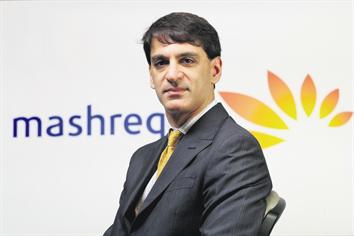
Amid the global downward spiral in stock markets, high oil prices, runaway inflation and a sagging dollar, local money managers are churning out positive results. The GCC and Mena region hold out hope and those who want to invest in the region have some good quality funds to choose from. One such umbrella fund is the Makaseb group of funds from Mashreq bank, a key player in the UAE banking industry.
Established in 2004, Mashreq Asset Management is the bank's investment management arm for the Makaseb funds, which include Makaseb Arab Tigers Fund, Makaseb Emirates Equity Fund, Makaseb Qatar Equity Fund, Makaseb Emirates Opportunity Fund and the Makaseb Income Fund. Makaseb additionally manages several institutional managed accounts with customised investment guidelines.
Incorporated in Bahrain as an exempt stock company and approved by the Central Bank of Bahrain (formerly the Bahraini Monetary Agency or the BMA) and UAE Central Bank, Makaseb Funds Company provides an umbrella structure to establish several mutual funds tailored to suit different investment strategies.
Listed among the top 10 performers by business information portal Zawya.com as of March 2008, Makaseb's Qatar Equity fund is rated number one followed by Makaseb's Emirates Opportunity Fund at number four. Imran Ahmed, Managing Director, Mashreq Asset Management, discusses the bank's policies and strategies with Emirates Business.
Why did you choose Bahrain?
We wanted to establish our mutual fund business in a jurisdiction which has robust regulation for collective investment schemes. Regulations are important to protect the interests of investors, by ensuring transparency and a clear operating framework. Bahrain is one of the largest centres in the Middle East for fund registration for gulf co-operation council states, and, as a regional bank, we wished to pursue a regional solution.
The sector is regulated and supervised by the Central Bank of Bahrain (CBB), formerly Bahrain Monetary Agency, which since 2002 has functioned as the single regulator for the entire financial system. In 2006, CBB initiated discussions to update the existing framework and laws for different categories of investors, including enabling hedge funds. The new rules were issued in May 2007 and all our funds are now operating in accordance with the enhanced rules.
What does your bank's investment team look like?
It has always been a priority for us to invest in attracting and training the right kind of people and providing ample opportunity for their career growth. The investment team comprises seven professionals with a combined experience of over 33 years. On an average, portfolio managers have experience of about 10 years. All our portfolio managers are either pursuing the CFA charter, or are already designated CFA charter holders.
What is your investment philosophy?
Our core investment philosophy is that equity markets are inefficient, and this inefficiency can be exploited by an active manager – given the right resources and a disciplined and coherent approach. These inefficiencies are more profound in the newly-emerging frontier markets such as those found in the Middle East. We believe that, over time, the price of a stock will rise or fall to reflect the true value of the underlying company.
Our selection of strong shares takes into consideration the income, liquidity and financial status of the companies in question. We then conduct further screening of the prospective financial company with a qualitative assessment by meeting the management of the concerned company and get acquainted with the future strategy of the company itself. This process is followed by a valuation of the company's share price using (typically) internally devised financial models which forecast the company's earnings stream and growth potential.
What sectors of the economy do you typically invest in?
While we do not preclude investing in any sector, we prefer playing on certain themes predominantly prevailing in the region. Over the last five years, economic growth has remained strong and urbanisation is changing people's lifestyles to being more consumption oriented, thus making companies driven by domestic demand very attractive.
Do you depend on independent rating agencies?
The introduction of Standards & Poor's fund management ratings into the Middle East market is a significant step in helping to educate clients and potential investors about the importance of having a replicable and disciplined investment process. It is the process which will determine the long-term performance of a fund, and the stability of returns to investors.
The ratings are used as a selection tool by many of the world's leading institutional and private client investors. By assigning ratings to no more than 20 per cent of funds within each sector, investors and their advisers have the confidence that they are choosing quality funds that best meet client requirements.
S&P has assigned its 'AA' very high quality rating to our Makaseb Arab Tigers Fund and its 'A' high quality rating to both the Makaseb Qatar Equity Fund and the Makaseb Emirates Equity Fund. This highlights our well defined investment approach and specifically mentions Mashreq's "clear commitment to transparency and best practices". The ratings testify to its strong financial profile and robust investment process and management approach.
From an asset management perspective, what is your view about the region's financial markets?
The Middle East is among the most energy rich-regions in the world. Over the last five years, economic growth has remained strong and the outlook for the medium to long term also shows that robust growth will continue, suggesting that prospects are bright for investors in this region. Our portfolio managers rely on the promising investment and development opportunities in the markets of the region, especially in the banking, property and oil sectors.
Since the beginning of this year, the Abu Dhabi Securities Market has appreciated by eight per cent, while Dubai's market has shown a negative performance. The main reason for Dubai's negative performance is the large presence of foreign investors in the Dubai market compared to Abu Dhabi. Foreign investors quickly pulled out their investments in this region in order to make up for their losses which occurred when the global economy declined.
A majority of investors are currently focusing on property as they are looking for opportunities to diversify their investments, thus explaining the price rise in the property market. This, in turn, has had its effect on property shares in the Abu Dhabi market. The confidence in the capital's market has led to increase in prices. As for the Gulf markets, especially those in Qatar and Oman, they have had the best performance in the region.
News concerning natural gas in Qatar has started to attract the attention of foreign investors, who are buying shares in banks and petrochemical companies. The production of natural gas in Qatar has provided funds to fuel spending on infrastructure. Qatar is a small state where the per capita GDP is among the highest in the world. The rapid pace of development of infrastructure has led to the pumping of cash into banking and petrochemical shares.
Meanwhile, Oman had the best-performing market in the region in 2007, thus drawing foreign investors to invest in the Omani index, which recorded strong growth rates since the beginning of this year.
Saudi Arabia's sound economic performance is likely to continue over the next few years as high oil prices and increasing oil production will support steady real GDP growth. In addition, the government's efforts to diversify away from the hydrocarbons industry – notably through the building of seven economic cities – and improve the business environment look set to continue. That said, rising inflation and ongoing sectarian problems will remain the key risks, constraining both the government's domestic economy policy and foreign relations.
On the political front, we continue to see very solid relations between Saudi Arabia and the US, even given the anticipated change in the White House in November. We do not expect any radical change in the US policy towards Saudi Arabia. Rising inflation and the need to maintain domestic harmony will encourage the Saudi government to pursue reform, albeit at a measured pace.
How do you see the economy performing?
We expect the economy to expand steadily over the forecast period, with real GDP growth set to average 4.1 per cent over the five years, on the back of increasing oil production and high oil prices. On top of this, the government looks set to continue to develop the non-oil sector through the building of seven industrial cities, a strategy that will not only aid diversification away from hydrocarbons but also create jobs.
PROFILE: Imran Ahmed, Managing Director, Mashreq Asset Management
Imran Ahmed joined Mashreq as the Managing Director of the Asset Management division in January 2004. He is responsible for the establishment of Mashreq's Asset Management business, including the Makaseb family of five mutual funds and the discretionary managed account business, with the launch of the Makaseb Emirates Equity Fund in February 2005.
Ahmed is also responsible for the strategic growth and development of Mashreq's fiduciary investment management business. He is a member of the Asset Allocation Committee which provides investment guidance for the portfolios under Mashreq's management.
Ahmed has almost 20 years of experience in the financial service industry, which has seen him assume a variety of positions within treasury, corporate finance and investment management departments, across Singapore, Pakistan and the UK. Prior to joining Mashreq, Imran worked for Citigroup, in Singapore, for 10 years. His last role was as a Senior Portfolio Manager responsible for the management of global balanced discretionary accounts.
Imran additionally worked with the Bank of America in the Corporate Finance area where he led the team that issued Pakistan's first publicly-listed corporate bond. Ahmed received a BA (Honours) in Diplomacy and World Affairs from Occidental College, Los Angeles, in 1988. In 2001, he obtained an Investment Representative Licence issued by the Monetary Authority of Singapore.