North African states turn to Islamic finance
North Africa has begun to embrace Islamic finance as banking develops and governments try to channel more Gulf petrodollars into an investment-starved region. But growth could be far slower than in the Middle East given resistance from secular-minded political and business elites and more flexible views on which loans and investments are Islamic, analysts say.
The Islamic finance industry has come from almost nowhere 30 years ago to be worth more than $700 billion (Dh2,571bn) in terms of assets currently.
Morocco and Tunisia have moved to authorise Islamic finance last year, partly to encourage the investment inflows on which their fast-growing tourism and real estate industries depend.
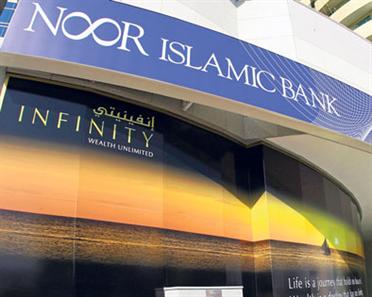
Islamic banking in Tunisia is still limited to one bank, Bank Et-Tamweel Al-Tunisi Al-Saudi – an arm of Albaraka Banking Group – but Dubai's Noor Islamic Bank last month opened a representative office seeking new opportunities in Maghreb.
"Islamic finance is promising but not yet popular in Tunisia due to a lack of information," said economist Ghazi Boulila.
Morocco now allows conventional banks to offer Ijara leasing products, Murabaha contracts to buy and re-sell an underlying good and Musharaka – co-ownership financing structures.
Analysts say Morocco's tax regime, especially stamp duty rules on mortgages, put Islamic finance at a disadvantage. An Attijariwafabank branch manager in Morocco's capital Rabat said he offered Islamic products but had sold none so far. "I was astonished to find these products were more expensive than ordinary ones," said Khalid, a teacher. "My religious beliefs forbid me borrowing with interest and I thought this was the right opportunity... but now I have abandoned the idea."
Economists blame Morocco's secular establishment for deliberately obstructing the development of Islamic finance. "There is a plot against these products," said Najib Boulif, economist at the opposition Justice and Development Party (PJD). "Economic lobbies are pressing the government to ensure these products do not have an important role in the market."
Neither Algeria nor Libya have fully authorised Islamic finance but Algeria already permits two players.
Saudi-controlled Banque Albaraka d'Algerie has become one of the country's most successful private banks by offering more sophisticated products and better customer service than bigger public sector lenders, analysts say. Libya says it is planning to launch Islamic financing services next year when appropriate rules are decided following talks between the central bank and commercial banks.
In Morocco and Tunisia, competition with the region's conventional banks will be fierce as both have developed competitive lending with low interest rates.
Islamic banks in the Gulf often charge more than conventional banks and rely on clients paying a premium for loans and investments seen as acceptable for the pious.
Islamic banks are already pushing into Maghreb countries by financing big real estate, industry and tourism projects. Bahraini Islamic investment bank Gulf Finance House is behind a $1.4 billion Equestrian City project over 380 hectares in Marrakesh and a luxury seaside leisure complex in Tangier including golf courses and a congress centre. It also has a $3billion financial hub in the works in Tunisia, a $3 billion economic development zone in Algiers and an Energy City in Libya worth $3.8 billion.
"What we need in the Maghreb is infrastructure that can be financed with bank loans, capital and wholesale funding from the GCC," said Hassoune.
"Islamic finance can play as a bridge between the Mashreq (Middle East) and the Maghreb."