Saudi inter-bank funding surges
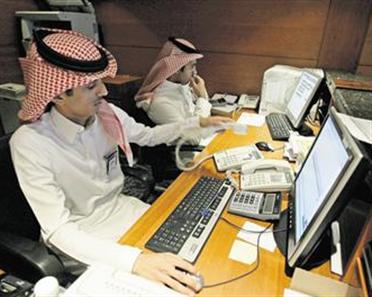
Inter-bank funding in local currency in Saudi Arabia increased sharply in the first five months of this year, indicating an overheating economy and a jump in domestic investment, a leading Saudi bank said yesterday.
The surge in demand for riyal-denominated funds among the Kingdom's banks was reflected in a sharp rise in Saibor (Saudi Arabian inter-bank official rate), the National Commercial Bank (NCB) said in its weekly bulletin, sent to Emirates Business.
The study noted that inter-bank rates are normally taken as liquidity and risk indicators for any economy, adding these rates are frequently cited as an indication of the credit crunch in the US, UK and other European countries, with rates excessively higher than the corresponding benchmarks in each region.
"However, in the Saudi economy, which is constantly tagged as 'awash with liquidity' and with monetary aggregates increasing in the double-digit range, a spread of 165 basis points from the benchmark reverse repo rate of two per cent merits an explanation.
"The 3M Saibor, which stood at 2.44 per cent on May 25, escalated to 3.65 per cent on July 4, reflecting a surge in the demand for SAR denominated funds among banks."
According to the bulletin, two indicators reflect the growing demand on SAR funding, mainly an increase in interbank liabilities by SAR16 billion (Dh15.7bn) from December to May, representing an 80 per cent increase in 2008 year to date.
Another factor is the increase in repos with private parties by SAR4.9bn from December to May, which is a 92.5 per cent increase in 2008 year to date.
"In contrast to the credit crunch, Saibor reflects an overheating economy with surging investment," said NCB, Saudi Arabia's largest commercial bank.
Figures by the Saudi Arabian Monetary Agency (Sama), the Kingdom's Central Bank, showed inter-bank liabilities jumped from SAR13.9bn in May 2007 to SAR20.8bn in December and a record SAR36.6bn in May 2008.
Repos, better known as repurchase agreements, a sale and repurchase deal between borrowers and lenders, soared from SAR2.9bn to SAR5.2bn and a record SAR10.2bn in the same period, said Sama.
Like other Gulf oil producers, Saudi Arabia is passing through an economic boom similar to the oil era of late 1970s and early 1980s. Its economy has jumped by between nine and 26 per cent in nominal terms over the past four years, while projects worth more than SAR1trillion are under way or planned in the next five years.
The economic overheat has sharply boosted bank credits to the private sector to nearly SAR673.5bn at the end of May from SAR594.2bn at the end of 2007 and around SAR476bn at the end of 2006, Sama figures showed.
Money supply, which is associated with soaring inflation, also recorded sharp growth. Sama's data showed M2, which covers currency outside banks, demand deposits and time and savings deposits, swelled from around SAR538.7bn at the end of 2006 to SAR666.6bn at the end of 2007 and SAR702.8bn at the end of May. M3, which includes M2 plus other quasi monetary deposits, surged from SAR660.5bn to SAR789.5bn and around SAR844.4bn in the same period.