'UAE banks must be wary of surge in realty loans'
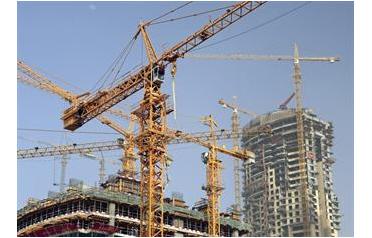
UAE banks should be more careful in providing excessive funds to the construction sector as it could be hit by a credit crunch similar to the devastating US sub-prime crisis in the absence of a mortgage law, according to a semi-official report.
Although their lending activity in the fast-expanding real estate sector has so far remained reasonable, massive projects planned for the next few years could sharply boost financing activities and deprive the banks the much-needed liquidity since real estate credits are normally long-term loans, said the report by Abu Dhabi Chamber of Commerce and Industry (ADCCI).
ADCCI forecast such credits could reach a staggering Dh150 billion in Abu Dhabi alone in the next five years, given the rapid growth in the property sector and the high return for investors. It noted that construction projects underway and those in the pipeline are valued at more than Dh1.3 trillion.
"UAE banks and other financing institutions are facing major challenges in their lending activities in the real estate sector," the chamber said.
"They include mainly an expected surge in funding, the absence of proper legislations to regulate the mortgage loans, a possible decline or stagnation in the real estate sector in the foreseeable future, and the absence of long-term studies on the property sector."
The study said mortgage loans are still relatively low compared to the banks' total credits and their available financial resources but added they could be affected in the long term given the expected surge in such credits and their nature of long-term financing. "Real estate loans are usually long-term and they could negatively impact the banks' liquidity since their main financial sources are short term deposits…what they need to do is to seek new long term financial sources," it said.
"But risks remain ahead. Some debtors might fail to pay back, while the real estate market could go through a price correction period and this will certainly hit financing operations. A bigger risk is that a decline might take place in the property sector in the UAE and other Gulf states which are experiencing a construction boom. Banks and other institutions should exercise utmost care and derive lessons from what happened in the US, where major financial institutions reeled under heavy losses," the report said.
A surge in mortgage loans over the past two years due to a property boom has triggered fears the UAE could be struck by a credit problem similar to the devastating sub-prime crisis that has jolted the US and swept through many other countries.
But experts believe the lending activity in the UAE has so far remained under control despite the large increase in personal and mortgage loans over the past two years. They noted that mortgage loans at the end of 2007 accounted for less than six per cent of the UAE's GDP compared with as high as 130 per cent in the US.
"I know there has been a sharp rise in mortgage loans in the UAE due to the current boom in the real estate sector. But this is normal for a country witnessing an economic boom and having a large banking sector," said Mohammed Al Asumi, a Gulf economist. "I don't think this increase is worrying because the total size of those credits has remained within reasonable levels and on the safe side. At the same time, banks in the UAE are enjoying a strong position and they are diversifying their lending activities. Any problem in their housing loans could be offset in other sectors," he said.
Central Bank figures showed real estate mortgage loans provided by the country's 24 national banks and 28 foreign units jumped to Dh58.8bn at the end of 2007 from Dh31bn at the end of 2006 and Dh17.2bn at the end of 2006. They stood at only around Dh10.6bn at the end of 2005, almost unchanged from 2004.
Projections by Shuaa Capital showed such loans would soar by nearly 28 per cent annually to Dh114.7bn in 2012 as a result of expectations the present real estate boom would continue.
Despite the rapid growth, the mortgage loans accounted for only eight per cent of the total credits extended by the UAE banks, estimated at Dh720bn at the end of 2007.