Kuwaiti bank move signals dinar adjustment
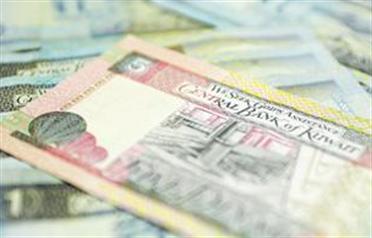
The Kuwait Central Bank could be preparing to adjust its fixed exchange rate and attempting to push up interest rates to fight record inflation after a policy move aimed at deterring speculative bets on the dinar. The central bank of the world's seventh-largest oil exporter has recently notified local banks it would no longer buy or sell dollars to them to cover interbank currency trades, bankers said on Monday.
The move dried up liquidity in dinar trades because it stopped local banks from using cheap central bank liquidity to enable offshore banks to take positions.
Given the central bank's track record of trying to stamp out speculation before a major change in the currency, the move could be the precursor to a change to the fixed exchange rate.
"It would certainly make sense to tighten controls ahead of an adjustment," said Koon Chow, a currency strategist at Barclays Capital in London. The central bank is asserting more control, possibly preparing the ground for a adjustment of 0.5 per cent to 0.25 per cent."
Last year, the Kuwait central bank cut key interest rates and the coupon on its bonds in the runup to a revaluation on May 20, 2007, when it dropped its peg to the tumbling dollar in favour of a basket of currencies to fight inflation.
Days after that, as global investors piled into dinar deposits, the central bank stopped selling the certificates it used to set the one-month intervention rate to discourage speculators from anticipating more appreciation of the dinar.
It resumed the sales only a month later after a major, 1.7 per cent, adjustment in the dinar's rate on July 25.
"This move by the Central Bank of Kuwait is in line with the rest of the Gulf central banks' attempts to put an end to speculation on their currencies," a Standard Chartered research note said of the recent policy move.
One reason for this move could also be a possible preparation of a stronger adjustment – revaluation – of the Kuwait dinar."
Since July's adjustment, the central bank has moved the rate daily based on the dollar's moves – on four occasions by at least 0.5 percent – and twice in one day about half a dozen times, including on Tuesday.
A stronger Kuwait currency would help the Gulf state fight inflation, which was at a near-record 11.1 per cent in May.
Inflation has become a politically-sensitive issue across the Gulf. To insulate its population from rising prices, Kuwait has raised wages of citizens twice this year, boosted subsidies and introduced new rules on property trading to control prices.
While inflation is mainly driven by housing costs, food prices are rising partly because Kuwait pays for about a third of its imports in euros. The dinar's rise against the dollar has been outpaced by the euro's gains against the US currency.
The dinar is up nearly nine per cent against the dollar since the central bank's May 20, 2007 move compared with the euro's almost 15 per cent gain against the dollar in the same period.
The recent policy move could help raise interbank interest rates by sapping liquidity from the market – hence raising borrowing costs for corporates – at a time when the central bank is keen to tackle surging inflation.
"The way this move stops people from wanting to hold dinars could help boost interbank rates – so it's a way of tightening monetary policy," said Monica Malik, regional economist at EFG-Hermes. "Corporate lending is based on how much liquidity banks have. If they reduce liquidity, interbank rates will increase."
While Kuwait has more flexibility than its Gulf neighbours in setting monetary policy, it still follows US policy because its basket is comprised mainly of the
US dollar. In response to seven US rate cuts since September 18 totalling 300 basis points, Kuwait reduced its repurchase rate by 175 basis points and cut its benchmark discount rate by 50 basis points.
By contrast, its dollar-pegged neighbours have slashed deposit rates by the full amount, driving real interest rates into negative territory as inflation gallops.
But any substantial adjustment in the dinar is not likely to happen immediately because a lot of global investors and hedge funds are short of dollars, a Kuwait-based currency trader said.
"They don't want it to be a payday for these investors so they may want to wait. The main aim was to stamp out speculation and they've succeeded at that," the trader said.