Al Rayan to use sukuks to finance projects
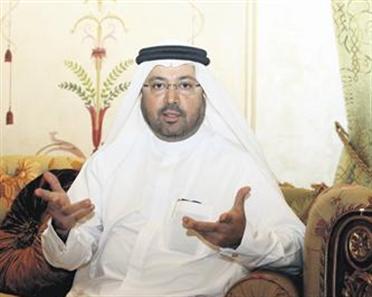
The UAE is ready for the transformation from a private and family enterprise lead economy into a mature market where public joint stock companies dominate, said the head of a prominent investment house in the country in an interview with Emirates Business.
Fardan Hassan Al Fardan, Board Chairman of Al Rayan Investments, said Al Rayan will turn into a joint stock company to attract new capital and broaden its base of shareholders to execute recently announced projects. The company will use a mix of sukuks and bonds to finance projects worth up to Dh6 billion, he said.
Al Fardan, who occupies important positions in Sorouh and Al Qudra, said the efforts made by Abu Dhabi to privatise and attract foreign investment have begun to show results.
—What are the reasons for turning into a public joint stock company? And when will Al Rayan offer its shares?
—They are the same reasons that push other companies – most importantly to attract more capital and broaden the base of shareholders to serve the company's aims of business and project expansion. Our company intends to enter into important and big investment projects in the near future, and this requires the provision of finance from all available sources.
As for the timing of the share offer, it will be announced later.
—Five big real estate firms in Abu Dhabi have announced they will turn into public joint stock companies this year. Do you think the market needs these companies and can accommodate them? And what effect will these companies have on Abu Dhabi's economy, especially the liquidity in the market?
—Al Rayan is a company with several investments in various fields, and real estate has the biggest share. Al Rayan's investment covers industry, environment-friendly building materials, alternative education, health services, military services and finance. I believe the economic situation in the UAE, particular in Abu Dhabi, is conducive for all these companies to successfully launch IPOs.
Also, the leap in the real estate market seen in the country is a result of carefully planned policies, where risk is at the lowest level. As for excess liquidity, there are no real risks as both the market movement and supply and demand for real estate is a basic element in the transformation of the companies into public joint stock ones.
—Why has the board restructured the company, and how would you explain the priority given by the company to real estate investments?
—I think the growing demand for real estate and the market's need for more residential units and commercial property, in addition to our experience in real estate development, have made us reconsider the company structure and to increase the rate of investment in property development. And let us not forget that the high return on real estate investment has a big effect, too.
—What projects are you currently developing? And do you expect delays in their handover given that several developers have reported delays with their projects?
—We have the Apex, which has two towers – a hotel and studios; the Moon Flower residential project in Dana, Abu Dhabi; a labour housing project in Al Musaffah accommodating 25,000 workers; the building worker residential city in Al Mafraq for some 32,000 workers; and the Al Rayan youth village – a low-income housing project.
—When will you start constructing the low-cost housing city?
—The project is still under study. The date of construction will be announced when some necessary procedures are complete.
—How will you finance your projects?
—We have many choices and we might combine sukuks with bonds. We will make an announcement at a suitable time about the direction we will take in terms of finance.
—What is your evaluation of the current partnership between the government and the private sector in Abu Dhabi? Has the privatisation policy that the government started many years ago borne fruit?
—The partnership between public and private sectors has been a success. The Abu Dhabi Government used all its abilities to make the initiatives successful and gave a pioneering role to the private sector. The public-private partnership is a model applied in many countries and has lead to positive results. Privatisation contributes to the enhancement of the quality of products and services and creates fair competition for the benefit of consumers. There has been no exception in Abu Dhabi.
—What is your total projected investment in the next few years?
—The total value of the company's investments by 2010 will be around Dh6 billion.
—What is you evaluation of the real estate sector in Abu Dhabi?
—The real estate sector in Abu Dhabi is characterised by integral planning and is in line with the wise policies of our leadership.
—Do you think property developers invest in properties because the return on other investments sectors is weak?
—I do not think so, because the growth seen in Abu Dhabi extends to all sectors, such as tourism and trade. All studies indicate there is a need for thousands of housing units and property developers simply act to meet that demand.
—What is your evaluation of the foreign investment in Abu Dhabi, as you had earlier invited a US foreign delegation to Abu Dhabi to take a look at the emirate's investment environment?
—The stable investment climate in Abu Dhabi is attractive for international and regional capital. The government is also making every effort to attract capital and has been big successful so far in that regard.
—Do you think the aims of Abu Dhabi Plan 2030 will be achieved, and what are the requirements for its success?
—Abu Dhabi Plan 2030 is an integral plan. It was drawn up carefully and all components required for its success are already in place.
—What is your opinion of the Abu Dhabi Government's stance on the regulation of the real estate market?
—I think that laws issued by Abu Dhabi Government to regulate the real estate market are a big step on the right direction. They will reduce the volume of money transferred abroad by the labour force, making it available for investment in the emirate.
The laws, also, will attract major investments and provide stability for Arab and foreign expatriates who have lived in the emirate for many years. There should be continual modifications to the laws to keep them in line with developments in Abu Dhabi's real estate market. I appreciate the Government's response to the requests of property developers to speed up work on the infrastructure for new projects. I think the quick response encouraged companies to work harder and offer more innovative ideas in their projects.
The Government is trying to make sure these projects are good for Abu Dhabi economically and commercially, as it is keen to make the capital a 21st century international city without traffic jams and offering a good environment for residents.
—Most new projects in Abu Dhabi involve luxury residences. Real estate sector experts fear this kind of residence will be hit by a recession during the next few years. What is your view of that?
—Luxury residency projects will not solve the problem of a shortage of residential units in Abu Dhabi. The real estate market is in an urgent need of residences for middle-income workers – the biggest category in our society. The kind of projects launched by some developers such as Manazel and Hydra do not meet this demand. There should be other projects for middle-income people. I firmly believe that companies developing luxury residences will not face any kind of recession, at least not during the next 10 years. These projects are not constructed only for the rich – many of them are suitable for the middle-income category.
—Abu Dhabi still has a lot of old buildings that need to be demolished and replaced to help end the accommodation crisis. Is this project proceeding too slowly?
—Abu Dhabi is reconstructing many old buildings. The Executive Council has set up a department specialising in municipal development. This department has very ambitious plans for Abu Dhabi up to 2030. I looked into these plans and can confirm they are excellent and great plans. They will make Abu Dhabi a most beautiful city in 2030. I think that projects carried out in Abu Dhabi are very organised and constructed on a scientific basis and everyone living in, or visiting, the emirate feels that.
—What is your opinion about Abu Dhabi's residential rent law?
—This law is very important. It has curbed excessive rent increases and benefits families and businessmen alike. I think the accommodation market in Abu Dhabi will become stable within five years as the projects being built by top developers enter the market.
PROFILE: Fardan Hasan Al Fardan, Chairman, Al Rayan Investments
Fardan Hasan Al Fardan belongs to a family of prominent businessmen. He has been a member of the Abu Dhabi Investment Authority for 24 years. Al Fardan is a member of the Abu Dhabi Chamber of Commerce and Industry and holds many positions in different business sectors.
He is also a board member of Sorouh and Deputy Chairman of Al Qudra Holding.