News
Airlines look at ground operations to save fuel
img_06042008_f09184e2-664d-4c33-b303-9c3521c2e3d8.jpg
Middle East countries are seeking a place among the leading economies of the world and bidding to put themselves on the global tourism map. But the resulting growth of the aviation sector has raised concerns about the environment and fuel wastage.
Airlines, governments and airport authorities are aware of these worries and acknowledge the need to save fuel for both environmental and economic reasons.
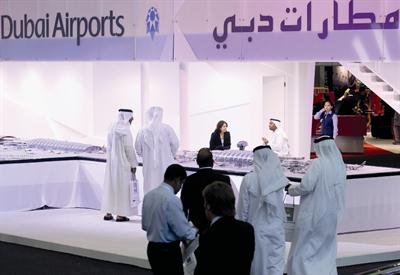
And specialised conferences addressing such issues at the Airport Show in Dubai are another step in the right direction.
This is a necessary move as research by Airbus indicates that passenger traffic in the Middle East will grow at 7.1 per cent per annum until 2015 compared with a global average of 5.3 per cent.
Proof of the expected growth can be seen on the ground. Dubai International Airport is spending $4.5 billion (Dh16.5bn) on expansion projects that include a third terminal and two new concourses that will enable it to handle up to 70 million passengers annually. And expansion at Abu Dhabi International Airport will increase capacity to 40 million per year. The new $10bn Al Maktoum International Airport at Dubai World Central will have two mega-terminals, six runways, six concourses and an annual capacity of more than 120 million when it is completed in 2017. And Qatar's $5.5bn Doha International Airport is expected to have a capacity of 60 million by 2020.
But while rapid growth in the aviation sector is good for economies it is not without its problems, not just in the region but globally. Airports and planes are major sources of carbon emissions. Research shows that 18 per cent of fuel is wasted each year through airport infrastructure and operational inefficiencies – amounting to 120 million tonnes of carbon dioxide worldwide. Fuel inefficiency is exemplified at Frankfurt Airport, Germany, which uses 30 million litres of gasoline a year to transport jet fuel to the planes.
Apart from the environmental impact the aviation industry is also plagued by the rising cost of fuel, which is pushing more and more airlines into the red.
At a recent world air transport summit in Turkey Giovanni Bisignani, Director General and CEO of the International Air Transport Association (Iata), called on governments and industry partners to address the fuel crisis.
Iata earlier forecast industry losses of $2.3bn in 2008 based on an average oil price of $106.5 per barrel for Brent crude. But now the association has warned that this year's losses could be even higher – potentially $6.1bn if the oil price remains at $135 per barrel for the rest of the year.
In the light of the rising cost of fuel, wastage has an impact on both the bottom lines of the aviation industry and the environment. The industry is spending billions in research to reduce consumption of this precious resource.
Airlines are pulling out all the stops to save vital kilogrammes, from adopting lightweight aircraft interior materials such as lighter carpets to switching from metal cutlery to plastic sets. Industry figures suggest that a plane saves 34,000 litres of fuel per year for each kilogramme saved per seat.
In line with this thinking, a new fuel saving air-conditioning technology for cooling aircraft on the ground that was developed in the UAE is being showcased at the Airport Show among a host of other green technologies. Ground support systems specialist Cavotec says the environment-friendly system, which uses pre-compressed air (PCA), can help revolutionise the regional aviation industry by producing huge savings on fuel and reducing air and noise pollution at airports. "With the rising price of gasoline and environmental concerns I would like to see jet fuel used to fly planes and not wasted on the ground," said Cavotec group Vice-President Michael Widegren. "We have the technology now to power ground support equipment with electricity and save on fuel that should be used in planes."
This technology could save an international airport such as Dubai's at least $57 million a year and an airline such as Emirates $31m annually. The estimates are based on the 130,000 planes landing at Dubai International every year which, while on the ground, have to be cooled at a cost of $400 per hour using traditional kerosene-powered auxiliary power units (APUs).
Widegren said the Cavotec PCA system was specifically designed to handle the extreme heat in the Middle East and cooled planes through reversed compression using 400kw of electricity per hour. APUs use 600 litres of fuel per hour – equal to 6,000kw/h of power.
"We have seen the problem with the normal systems that try to cool the airplanes worldwide," he added. "We have also seen all the APUs running in airports around the world and since we had this idea of using compressed air we have been inspired to use it to help the environment and save precious fuel." Nick Webb, Director of show organiser Streamline Marketing Group, said .
"The best way to reduce the amount of fuel wastage and its pollutant byproducts is through ground support equipment, so it is absolutely necessary that the industry leaders in this field get together to discuss the options and solutions," he said.
Widegren added: "The worst wastage happens when an aircraft comes to the terminal contact gate and the airport ground operations team sends all the necessary vehicles to service it.
"Those vehicles are all over the airport and have to drive long distances as most international hubs are several kilometers wide and long. All those buses, fuel trucks, catering vans, luggage trailers, fuel-guzzling APUs, cargo trucks, cleaning squad cars – imagine the pollution and fuel bills!
"The best way to cut all this extra expense is to have a direct point of use where most of the equipment is already installed at the gate.
"Ground power systems such as the pop-up pits we are now installing in huge volumes all over the world are a good way to save fuel. These systems enable power to be brought from the building to the aircraft without using fuel-driven ground power units.
"All other services that cannot be included in this direct point of use concept should make use of electric or bio-ethanol powered vehicles. Ground support equipment and ground fleet management in the future will be different from what we see today as there is a lot of innovation coming in.
"New communications systems, more accurate information about flight operations, more efficiency technology to make airports cleaner and more environment-friendly, more direct points of use designs to prevent heavy vehicular traffic on the tarmac and fewer diesel-driven vehicles will all be integral parts of ground handling in the future."
The Gulf Airports Services Association (GASA), a group of 11 non-airline ground handling agencies, believes many companies will adopt cost-cutting operational models such as those provided by Cavotec to stay competitive and maintain commercial viability. Dr Ghanem Al Hajri, Director General of Sharjah International Airport and Secretary General of GASA, said: "The ground handling industry will need to evolve to meet the needs of future airports.
"A greater emphasis on efficiency and productivity will raise ground handling service standards to a new level to the benefit of the whole aviation industry."
The Airport Show – the largest aviation trade event in the world this year – is being held at Dubai's Airport Expo and ends today.