DNV sees continued revenue growth
Every year hundreds of ships are turned away from seaports around the world because they fail to meet basic international quality standards. Many others are involved in accidents – causing major losses for shippers and ship owners.
Classification societies such as Det Norske Veritas (DNV) are responsible for ensuring that ships meet standard requirements before they sail.
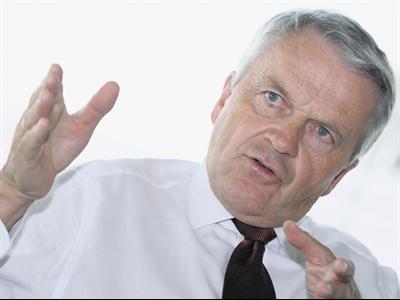
Eivind Grostad, Senior Vice-President and Regional Manager of DNV Maritime, spoke to Emirates Business about the growing demand for ship classification and how the region is coping up with the growing global requirement for high quality standards in the maritime industry.
Tell us about DNV and the activities the firm is involved in.
DNV was formed 40 years ago to help make quality assessments of all types of ships and offshore units. We began our operations in Dubai 31 years ago and in the 1960s we went into oil. We issue ISO certifications such as ISO 9000, ISO 14000 and ISO 18000. Besides classifying ships based on their qualities we do consultancy work, training, oil and gas certifications, general risk management and very soon we will be starting programmes on green shipping. Within the field of ship classification, DNV's share of the world fleet measured in gross tonnes is around 16 per cent. Of the new-builds contracted during 2007, DNV's share of the world market was 19 per cent when measured in gross tonnes. This represents 741 ships.
How do you go about classifying a ship?
When a ship owner wants to build a ship he appoints a third party to ensure that the ship is built according to international standards. That is the job of a classification society. There are six major classification societies in the world and DNV is one of them. DNV is the fourth largest by tonnage in the world and the largest in the Middle East and India. After making all the quality assessments we issue standard certificates. We currently issues certificates on behalf of more than 110 flags. From the shipyard we will follow up the ship until it is scrapped, 25 years after it is built. We go on board a minimum of twice every year to verify a number of things. We make about 25 surveys in Dubai alone every day. We have a six-member team in Fujairah that works 24 hours a day, every day.
How would you describe the general performance of your business in this region?
The business has been doing well and our revenues for 2007 totalled $38 million (Dh140m) – up 33 per cent on 2006 levels, with maritime accounting for 61 per cent, energy for 25 per cent and other industries representing 14 per cent. Business trends are exceptionally positive and in response to the enormous potential here we are increasing our commitment to the region as more and more customers are expanding their own businesses in this booming economy.
How do you see demand for ship classification going in the future?
There is already a strong demand for ship classification as orders for new vessels of all types increase. We are seeing surging demand for risk management services in the region's energy and industrial sectors. This demand will certainly increase further as capacity continues to grow. Environmental concerns, globalisation, corporate responsibility and sustainable growth are direct business drivers for DNV. As a result of the surging demand, DNV expects its revenues and size to grow by 100 per cent in the next four years if there are no downturns in the shipping industry before then.
Are the current shortages of skilled shipping staff likely to compromise quality in the industry?
The biggest challenge in the maritime industry is the lack of enough skilled staff to match the growing capacity in the market. The lack of qualified staff is definitely taking a serious toll on the quality of shipping activities and therefore raising serious safety concerns. The world needs 300,000 additional maritime staff in the next five years and no one knows where to find them. We don't know where to get them from. While we make an effort to create a risk-free environment within the maritime sector, the lack of specialised manpower remains a serious challenge.
What are classification societies like yours doing to mitigate the risks resulting from the lack of specialised manpower?
At the moment we are providing consultancy services for shipping companies to cover the gap created by the shortage in skills. DNV recently started up an academy in India to help produce more skilled maritime staff. We will be providing training in all technical areas.
Do you have plans to start classifications for pleasure boats since the market for them is growing here?
We provide classification for yachts and pleasure boats in Northern Europe. It is certainly something we are planning to do in this region too, especially as demand is growing. We are also in talks with the transport authorities in Dubai regarding the classification of public and private water transport boats.