Surcharge change to revive air cargo industry
Major airlines with air cargo operations in the region are set to lower their fuel surcharge soon, following a drop in oil prices in global markets – a move likely to revive the declining demand for air cargo, said senior industry sources.
This will be the first reduction in fuel surcharges this year for most of the airlines after the surcharges were increased more than six times since the beginning of the year. It follows recommendations to reduce the surcharge applied to air cargo shipments in compliance with fuel index procedures and the decline in global oil prices.
A reduction in fuel surcharges is expected to boost demand for air cargo in the region, which had dropped sharply since last year as a result of increasing airfreight costs, and will also provide airlines with an opportunity for expanding their freighter fleets.
Emirates SkyCargo, the cargo division of Emirates Airlines, will reduce the fuel surcharge on regional cargo shipments from Dh2.4 to Dh2.2 per kg, or its equivalent in local currencies, starting tomorrow.
The airline will also reduce the fuel surcharge for cargo shipments to Europe from Dh4.8 to Dh4.6. These prices are monitored against a fixed base of $0.535 per gallon equal to index 100.
The surcharge will come down further by $0.10 if the index drops to below 145 points for two consecutive weeks.
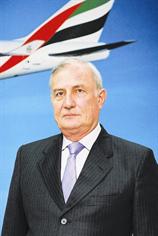
Peter Sedgley, Senior Vice-President, Cargo, for Emirates SkyCargo told Emirates Business earlier that the carrier expected to maintain growth despite the high fuel prices.
"The high oil prices are having a minimum impact on our operations despite the global slump in air cargo demand. We hope to maintain our annual level of growth," he said.
Etihad Crystal Cargo and Qatar Airways Cargo, two major regional air cargo carriers whose fuel surcharges have been going up almost on a monthly basis, are also set to lower the surcharges in accordance with their fuel index procedures.
The fuel surcharge for all shipments to Europe by Etihad Crystal Cargo currently stands at Dh4.10 and Dh2 for India and the Middle East. It's Dh2.2 for Sudan per kg, but as the fuel index slides, the surcharges are expected to drop, too.
"We follow a very strict fuel index and we have a team that has been monitoring the trends. Now that fuel prices have gone down, we are most likely to lower our fuel surcharges in the coming days," Des Vertannes, Etihad Crystal Cargo Senior Vice President-Cargo told Emirates Business on phone from Portugal.
An official from Qatar Airways Cargo office in Dubai said the carrier, whose current fuel surcharge for the Middle East is Dh1.80 and Dh2.50 for Europe, was only awaiting a management decision, which will come in a few days, to lower its current fuel surcharge.
Major international air cargo carriers have already announced reductions in fuel surcharges effective from next week, following a slide in global oil prices.
British Airways World Cargo is set to lower its fuel surcharge back to 84 pence ($1.30) starting from tomorrow from the current 87 pence ($1.35).
It had increased its fuel surcharge a total of eight times since the beginning of this year when it stood at 55 pence ($0.85).
"High fuel prices remain a very real challenge for the industry. However, recent weeks have seen some relief with prices falling, triggering a decrease in our fuel surcharge in line with the index," said Adam Carson, Senior Manager of revenue management at BA World Cargo.
KLM-Air France, the largest air cargo carrier in Europe, and Lufthansa have also announced plans to reduce their fuel surcharge.
"While overall the industry's growth is expected to drop from 4.5 per cent to four per cent, the region is expecting an overall growth of eight per cent, although lower than last year's 10 per cent," said Jean Pierre De Pauw, Senior Vice-President of Dnata Cargo.
He said if oil prices continue to slide, the air cargo industry will grow faster, but it might not be able to achieve the same level of growth reached five years ago when fuel prices were much lower.