US airlines urge customers to fight oil surge
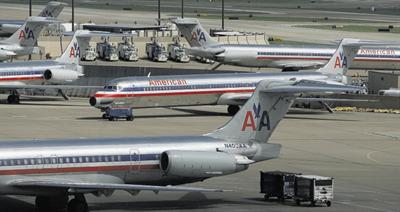
Heads of major US airlines have drafted "An Open letter to All Airline Customers," urging consumers to help them stop oil speculation.
"Our country is facing a possible sharp economic downturn because of skyrocketing oil and fuel prices, but by pulling together, we can do something to help now," says the opening line of the letter that is signed by chairmen, CEOs and presidents of 12 American airlines, including Delta Air Lines, American Airlines, United Airlines, JetBlue Airways and Northwest Airlines.
"For airlines, ultra-expensive fuel means thousands of lost jobs and severe reductions in air service to both large and small communities," reads the letter. "To the broader economy, oil prices mean slower activity and widespread economic pain. This pain can be alleviated, and that is why we are taking the extraordinary step of writing this joint letter to our customers." It is an extraordinary step indeed, but one that seems to be justified by the extraordinary circumstances. The cost of oil reached an all-time high recently, hitting $146 (Dh536.27) a barrel.
The CEOs claim that even as high oil prices, which have been the bane of the industry in recent times, are partly in response to normal market forces, they lament that these forces are being "dangerously amplified by poorly regulated market speculation".
The industry leaders have urged consumers to contact the US Congress through the Website www.StopOilSpeculationNow.com (the website's acronym spells out SOS – perhaps intentionally) to put pressure on the Congress to control excessive speculation by enforcing stricter regulation.
"Twenty years ago, 21 per cent of oil contracts were purchased by speculators who trade oil on paper with no intention of ever taking delivery. Today, oil speculators purchase 66 per cent of all oil futures contracts, and that reflects just the transactions that are known," stated the letter. "Speculators buy up large amounts of oil and then sell it to each other again and again. A barrel of oil may trade 20-plus times before it is delivered and used; the price goes up with each trade and consumers pick up the final tab. Some market experts estimate that current prices reflect as much as $30 to $60 per barrel in unnecessary speculative costs."
That translates into between $0.48 and $1.43 at the pump for the consumer.
The letter maintained that although the US Congress did establish regulation to control speculation seven decades ago, years of lax implementation have left it practically toothless.
"Over seventy years ago, Congress established regulations to control excessive, largely unchecked market speculation and manipulation. However, over the past two decades, these regulatory limits have been weakened or removed," stated the letter.
"We believe that restoring and enforcing these limits, along with several other modest measures, will provide more disclosure, transparency and sound market oversight. Together, these reforms will help cool the over-heated oil market and permit the economy to prosper. The nation needs to pull together to reform the oil markets and solve this growing problem. We need your help."
The "Stop Oil Speculation" coalition comprises 38 organisations, which have joined together to push for effective short-, mid- and long-term solutions to help materially reduce unnecessarily high energy prices.
"This crisis deserves the full attention of Congress – now – not next week, next month or next year. It is too important to wait. We believe that the fastest way to get oil prices under control in the short term is by reducing reckless and unfair speculation in the futures markets while, at the same time, enacting measures for the mid and long term to expand oil supplies, enhance efforts to advance alternative and renewable energy sources and improve energy conservation across the board," ATA President and CEO James C May said, speaking on behalf of all of the coalition members.