Septech Emirates plans to invest $150m in the region
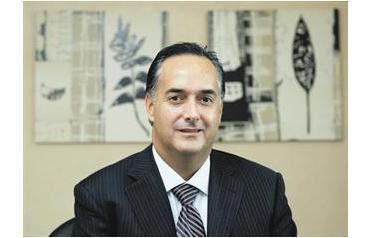
Water infrastructure company Septech Emirates plans to invest $150 million (Dh552m) in the region in the next 12 months, its CEO said yesterday.
The expansion programme will include three acquisitions, David Heffernan told Emirates Business in an exclusive interview.
"In terms of total investment in the next 12 months we are looking at around $150 million for the region," he said.
"We are in the process of identifying and building a factory for our marina business in Abu Dhabi with our partners Bellingham. It will be the largest marine production facility in the world. This year we are taking 500,000 square feet of space on the Dubai-Sharjah road to build Septech Technology Park.
"While we will keep the other factories we plan to eventually consolidate all our businesses in the park.
"We are in addition looking at building a major factory in Dubai because of the sheer size of the market and plan to set up our precast infrastructure and a marine business together with office facilities," he said.
The company plans to set up base in Saudi Arabia on a 100 per cent ownership basis. "We are finalising the Saudia deal with Sagia and have identified a piece of land there, between Riyadh and Damman, where we will set up a base. We are also going to set up a manufacturing facility in India."
Septech Emirates, a division of UAE-based Septech Holdings, is a specialised water and wastewater infrastructure and engineering company with expertise in environmental management, renewable energy, marine construction and leisure.
Septech and GE Water and Process Technologies recently announced a 20-year, multi-million-dollar agreement that will help the UAE and Oman meet their growing water needs.
Leveraging GE's mobile water treatment systems – the world's largest fleet – Septech plans to rapidly respond to the region's mounting water needs. Under the agreement, Septech, has purchased a fleet of rapidly deployable GE Mobile Water Treatment Systems.
"Ninety-seven-and-a-half per cent of water in this region is desalinated water and there is a shortage," said Bellingham. The UAE has been very proactive in this aspect. Dubai and Sharjah are upgrading their capacities, while Fujairah is building plants.
"They are all catering to the demand but there will always be demand for emergency mobile water services even in the medium-to-long-term. Major desalination plants take years to build and that is where our initiative with GE comes in. They have the largest global fleet in the world in terms of mobile desalination plants.
"We have the global experience in treating any source of water and hence this synergy will place us at the forefront of the water and wastewater industry. The reality is that with the growth rate here it is impossible to keep up with demand."
The initiative will produce around 100 million litres of water a day from the mobile fleet. "That will help address the demands in smaller developments, power plants, some industrial processing plants and so on. We have been asked to work with a project in Qatar which needs a solution for four to six months because the infrastructure is falling behind. We anticipate that the situation will remain such in certain parts of the GCC.
"At the moment we are committed to a fleet of around 30 mobile desalination plants. By the end of the year we will have around a 100 mobile plants."
The company is also receiving inquiries from multinationals. "Many multinationals are coming to this region and are willing to have someone build, own and manage their water infrastructure. So we are looking at the build, own, operate (BOO) model in terms of growth." Heffernan said the market was in the middle of a period of change.
"The governments are privatising their assets. We pre-qualified for the Abu Dhabi Water and Electricity Authority project for the sewage plants and upgrading and it is a 25-year concession. We are also in the final negotiations with a major concession with a developer where we will manage their networks, build their sewage plants and manage the reverse osmosis, district cooling and so on.
"This is a growing trend with governments and private developers. Our initiative with GE will address the market demand in the next three to five years. We are looking at investing around $100m in this venture."
Septech Emirates has a current customer base of major developers whereas GE has an industrial base.
"Since we announced the synergy we have had a lot of blue-chip real estate companies signing up with us in the UAE, Oman and the rest of the GCC. We are looking at expanding within the Menasa region and also setting up in India.
"We are in negotiations in Turkey and Libya. Additionally, we have done a lot of marine work in Oman and have set up desalination plants there."
The company is also serious about expanding in India, he says. "We will be working out of Hyderabad and Mumbai. India is a long-term market for us.
"The Australian Government has been quite proactive in sending us information on some other projects there. Besides our existing clients from the UAE such as Emaar and Nakheel are going there and this will place us in a situation where we can deliver a complete solution to them."
The water market is the next big growth market, not just in the Middle East but globally, says Heffernan.
"We are well positioned in the Middle East to take a considerable market share of that growth. As the market matured, the property markets opened up and foreign direct investment poured into the region.
"There was a realisation that infrastructure needed a huge amount of attention for all the developments to succeed. With all these major projects and labour on site there is a huge demand for temporary water, power and sewage – the three basic fundamentals without which you cannot build a development. The missing part of the puzzle was the potable water solutions on site and that is where we decided on the synergy with GE.
"Projects here will take time between two years to 10 years. Hence it is a very sustainable market for us as a company."
The sewage network market also holds great potential. "It is almost impossible to mobilise sewage networks in line with the phenomenal growth in this region.
"The UAE has been very proactive in this area. But most municipalities are now pushing the responsibility back to the developer and telling them that they have to build their own solutions.
"The reason why we targeted this sector in 1996 was that this is an attractive proposition. Today most developers in Dubai are integrating the sewage plants into their master plan and making a provision to connect to the main municipality networks in the future.
"Consultants know that they have to provide an end manhole near the common corridor on the roads to connect to the municipal network." This can lead to certain conflict.
Heffernan said: "A lot of developers push back on that demand since they need every drop of treated wastewater they can get to irrigate the common areas.
"But in the long run people buying these properties will benefit from these enforced best practices."
Besides GE, the company has also entered into a partnership with Bellingham Marine Australia, a subsidiary of Bellingham Marine, which enables them to manufacture and install the Bellingham Unifloat floating concrete pontoon system.
"GE is a significant deal and so is Bellingham in the marine business. But we are also looking at three or four acquisitions in the near future which will complement our current business."
Menasa requirements
Current and anticipated water supply gap
- The GCC accounts for 50 per cent of global desalination capacity. However, the sector does not have sufficient capacity to meet current demand – resulting in a supply gap
- Saudi Arabia has faced the largest supply gap in desalinated water within the GCC since 2005
- This supply shortfall is forecast to continue through 2010.
- Egypt had a large supply gap in 2005 but this is expected to diminish by 2010 completely because of the capacity currently under construction
- Pakistan, which has historically been water affluent, is expected to face a huge gap in its desalinated water supply by 2010 primarily as a result of its growing industrialisation.
- The GCC will require a labour force of 185 million by 2010. More than 50 per cent of this labour force will be housed in temporary accommodation that will require potable water and re-usable greywater technology. The infrastructure investment profile for the GCC is in excess of $2 trillion (Dh7.3trn)
- Live projects related to infrastructure in the UAE are worth approximately $40 billion
- Water and wastewater infrastructure spend for the next five years will be in excess of $133bn