Demand for petrochemicals expected to slow down
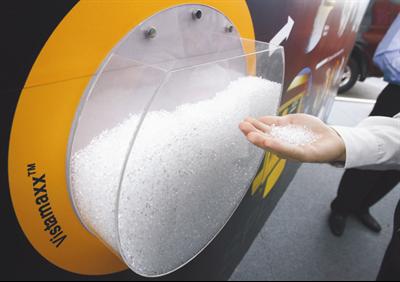
The rising prices of ethylene, propylene and other basic petrochemical products have restricted demand growth to between four and five per cent, says a new report.
And producers are gradually reacting to the limited demand.
Figures from Global Research, the research arm of Kuwait's Global Investment House, show that the major increase in petrochemical production capacity was witnessed in 2005 and 2006.
However, in 2007, the growth was limited to 2.5 per cent due to increased feedstock prices
"Based on our expectations the crude oil price will remain on the high side," says Global Research. "After an expected relaxation the average price is forecast to remain in the range of $100 to $110 per barrel in 2011 compared with 2008 second quarter average prices of $117.2 per barrel.
"Since the prices of petroleum products and gas feedstock are derived from crude oil prices we expect the price of international feedstock to remain high as well."
The Middle East and North Africa (Mena) is continuing to embark on massive expansion programmes, with total investment investments now exceeding $92 billion (Dh336.7bn), it said.
Combined petrochemical production capacity in Mena has now reached 84.7 million tonnes, or roughly 66 per cent of total world capacity, making the region the largest petrochemical producer in world. Mena's capacity will rise further to 90.9m tn in 2008 and 104.1m tn in 2009.
"We expect production capacity will increase to 114.6m tn by 2011, at a four-year compound annual growth rate of 7.2 per cent."
The report says major capacity expansion in petrochemicals of different grades is expected in Saudi Arabia, which will account for 65.1 per cent in 2008, followed by Kuwait, which is expected to contribute by 22.5 per cent.
After 2011, production capacity in Mena will further increase by 3.4m tn in 2012 due to upcoming capacity expansion in Saudi Arabia and Qatar.
The total expected petrochemical products increase of 29.9m tn is based on the addition of 16.2m tn of basic chemical olefins, 4.9m tn of basic chemical aromatics and 8.8m tn of basic chemical oxygenates.
But the activity is not limited to Mena. China, the world's third largest petrochemicals market, is currently undergoing extensive expansions in ethylene capacities, which will add almost 6.6m tn of ethylene between 2008 and 2012.
Ethylene capacities in China are planned to increase by 11.4m tn to 11.6m tn between 2008 and 2016.
China's ethylene output will go up from 9.6m tn in 2006 to 14m tn to 18m tn by the year 2010.
Most Chinese crackers will be naphtha based which will result in a rapid growth of heavy feedstock consumption and this will exert upward pressure on international naphtha prices.
The build-up of output, primarily from Mena and China, at a time when demand is gradually dropping, has caused many analysts to forecast that the Gulf's petrochemical industry is in danger of facing a downturn in the next two to three years.