Local producers benefit as food imports are cut
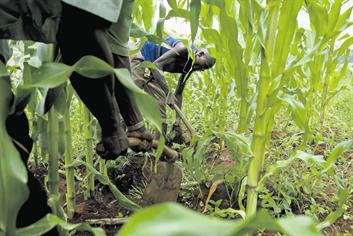
The rise in the cost of food has devastated consumers from the cities of North America to the tiny villages of Africa. But for many of Uganda's farmers, higher food prices have been the best thing to happen to them in years.
Since last year, the Ugandan arm of the world's top food aid agency, the UN World Food Programme (WFP), has cut its imports from America and bought more than 60 per cent of its food aid locally, boosting the market and income of rural farmers.
The primary reason? Higher global food prices.
"The WFP saved the farmers," says Paul Masaba, a farmer who grows maize, potatoes, wheat and coffee in Kapchorwa, a small, dusty town nestled at the foot of western Uganda's Mount Elgon.
"We now have a ready-made market at a fair cost."
The WFP still imports maize from American farms for its relief efforts in Africa, but the increased cost of transporting the food added with rising food prices have made the idea of buying African food more alluring.
Masaba's tall, lush maize plants compete for space with gold-coloured reeds of wheat along the roads winding though his farm.
As he strides through rich, brown soil crushed by cars and bare feet, Masaba says he expects to sell 300 bags of maize to the WFP this season, netting upwards of Ugandan shillings 1 million (Dh2,570).
Before joining the Kapchorwa Commercial Farmers' Association and entering into the WFP contract, Masaba says, he was "working at a loss" due to a lack of capital, low productivity and a non-existent market.
Because there were no thriving markets or set prices, "middlemen" or businessmen who would buy crops at a low price then resell them to exporters for a large profit, would exploit the farmers, Ugandans say.
Grace Cheberen says she was one of the oft-exploited growers.
"We at least now have a fair price for our maize, which has opened our market," says Cheberen, dressed in a bright-purple sheath as she sweeps up her children off the grass.
"Before, our maize did not have a price." Local consumers would pay farmers what they could afford, sometimes at half the value of the produce. I feel happy my produce is being appreciated and that I am able to pay for my children's school fees," Cheberen says, pointing past lumbering banana trees to a half-finished building that will become her office and store. She earned shillings 3 million (Dh7,700) from her contract last year.
Lydia Wamala, spokeswoman for the WFP's Uganda office, said that the UN agency has always tried to buy around half of its food on the continent, but the percentage increased to 65 per cent last year. "It's becoming more of a trend to buy food from African growers instead of importing from abroad," Wamala said.
Indeed, the WFP saw the food price crisis as a "good opportunity" to increase the income of local farmers, the agency said.
The WFP added it plans to partner with the US-based Bill and Melinda Gates Foundation to increase its buying from small-scale farmer groups in Africa.
But the boom in Ugandan farmers' incomes may only be temporary. With higher food prices come higher prices for farming inputs, such as fertiliser, seeds and fuel. Vice-chairperson of the Kapchorwa Commercial Farmers' Association, Joyce Banan, says the WFP price is really "not enough for the farmers".
Still, farmers say the contract has motivated them to better organise and bargain for prices within their own local markets.
"Farmers were just barely surviving before, that's why they have remained poor," Banan says. "But I can talk now, and say this is the price I want for my maize."