Non-conventional oil set to stabilise market in long run
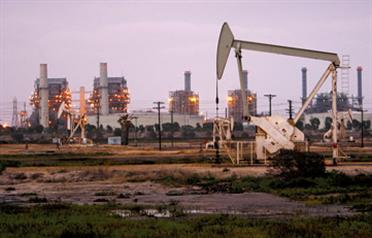
The discovery of mammoth oil resources in tar sands in Canada as well as extra heavy crude in Venezuela and other non-conventional energy sources will aggravate the market imbalance in the short and medium term but will achieve stability in the long run, according to an Arab oil expert.
At the end of 2007, non-conventional oil sources were estimated at as high as eight trillion barrels but only 10 per cent of them can be extracted, said Ali Rajab, a senior energy expert at the economy division in the Kuwaiti-based Organisation of Arab Petroleum Exporting Countries (OAPEC).
"The International Energy Agency has revised those resources down to seven trillion barrels… but given the low recovery rate, the proven non-conventional oil reserves are estimated at 800 billion barrels, nearly two thirds of the total recoverable conventional oil reserves of around 1.2 trillion barrels," Ali Rajab said in the study, published in the latest Arab Oil and Co-operation magazine.
"Current indications show that the ongoing expansion in non-conventional oil industry will contribute to expanding the sources of crude oil supply, which could be exploited in achieving stability in the market in the long term… this in turn will prolong the life of oil as a leading source of energy."
Citing IEA and other sources, Rajab said non-conventional oil production is projected to more than quadruple between 2005 and 2030 to around 8.25 million barrels per day but added that it would remain a small component of the total energy supply sources, not exceeding seven per cent of conventional oil supplies in 2030.
Rajab attributed this to the relatively high production costs, the negative effects on the environment and the need for high oil prices for investment.
Besides tar sands in Canada, estimated to contain nearly 178 billion barrels of crude oil, and the extra heavy crude in Venezuela, the non-conventional oil sources comprise oil shales, gas-to-liquids (GTL), coal-to-liquid (CTL), and biomass to liquid, which includes ethanol and bio diesel. The study said the expansion in the production of some non-conventional oil sources would benefit Arab states which have such sources, mainly Qatar, which is locked in a major GTL investment drive given its massive gas resources, estimated at more than 900 trillion cubic feet, the world's third largest.
"In the short and medium term, the expansion in the production of non-conventional oil sources is expected to aggravate the state of imbalance between supply and demand and this will hurt Arab oil producer countries which do not have non-conventional sources," the study said.
" But in the long term, the growth of these non-conventional sources is expected to have a positive impact on the Arab producers and on the oil market in general as they will complement conventional oil sources… this will contribute to narrowing the gap between the growing global demand and supply… this in turn, will achieve a sort of balance and stability, which will also help stabilise prices.
"Another factor is that the growth of such sources will ease the burden on the major Gulf oil producers, which are expected to account for the bigger part of the required increase in production capacities to meet the growing global demand," it said.
It cited such Gulf oil heavyweights as Saudi Arabia, Kuwait, Iraq and the UAE, which are members of OAPEC, along with Bahrain, Qatar, Syria, Libya, Algeria and Egypt.
Its figures showed OAPEC controls more than 60 per cent of the world's proven oil resources while the first four members alone sit atop nearly 45 per cent of the global crude deposits.
A breakdown put Saudi Arabia's crude wealth at around 262 billion barrels at the end of 2007, while the reserves were estimated at nearly 115 billion barrels in Iraq, 104 billion barrels in Kuwait and 98 billion barrels in the UAE.
THE NUMBER
262bn: Barrels of oil reserves is estimated in Saudi Arabia and 98 billion of barrels in the UAE