UAE and Bahrain sign carbon capture deal
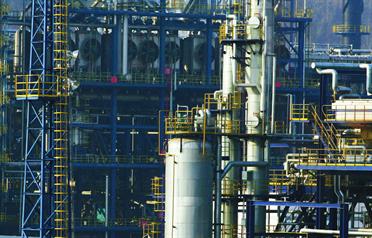
The project aims to capture carbon dioxide from flue gas and use it as feedstock to produce urea and methanol at GPIC's fertilizer facility in Bahrain, Masdar said in a statement.
The project is expected to cut around 100,000 tonnes per year of carbon dioxide equivalent as of 2010, Masdar said.
Masdar plans to manage the process of registering the project under the UN's clean development mechanism to generate carbon emissions reduction certificates.
Under the Kyoto Protocol, developing countries can sell emissions reductions from their energy-intensive industry to help rich countries offset their own contribution to climate change.
Masdar was set up by the Abu Dhabi government to develop sustainable and clean energy. It aims to put the emirate of Abu Dhabi, holder of 90 per cent of the United Arab Emirates’ oil reserves, at the forefront of the future energy industry.
Opec-member the UAE is the world's fifth-largest oil exporter and one of the largest per capita greenhouse gas emitters in the world.
Masdar is developing plans to build the world's first nationwide carbon capture and storage (CCS) network, which aims to trap emissions and pipe them to oilfields.
Pumped into the ground, the carbon is kept out of the atmosphere and helps to maintain pressure and boost output at oilfields.
CCS has yet to be proven on a commercial scale.
GPIC is a joint venture producing petrochemicals and fertiliser, owned by Bahrain's government, Saudi Basic Industries Corporation (Sabic) and Kuwait's Petrochemical Industries Company.