Creating autism awareness
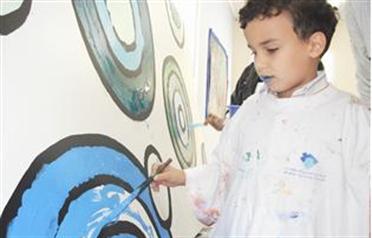
The Dubai Autism Centre (DAC) has kicked off its annual campaign to increase public awareness and promote a better understanding of autism and the effects that accompany the condition.
Sarah Al Marzooqi, an educational psychologist who heads the Occupational Therapy Creative Unit, told Emirates Business: "Our mission is to integrate the children back into society as they have a right to be a part of it. But this will only happen if other people accept them. And in order for this to happen people have to understand what autism is all about, how it affects the children, their lives and the lives of their families. Once this awareness happens, then it will be easier to remove the barrier that separates the children from society and integrate them. So it all starts with awareness."
Apart from creating awareness the centre's mission is to successfully integrate children with autism back into the community through intervention and therapy.
Marzooqi said: "In our efforts to integrate the children back into society we try to make them more independent. So we give them functional skills because the more functional skills they have the easier it will be for the family and for society at large.
"Once they reach their teens we teach them how to act outside the centre, say, in a shopping mall, how to order a meal at a restaurant, how to buy groceries, manage small amounts of money. We also teach them how to use public transport, like go on a taxi and a bus. We teach them safety issues regarding the use of public transport.
"We also do a lot of outdoor activities with the children such as visits to parks, play areas, museums and take them for swimming, horse riding and swimming with dolphins. These are all very therapeutic activities and all serve to further their functional skills."
Along with integration DAC is also trying to create social awareness and generate public interest in autism. It particularly wants to get corporates involved in its efforts to reintegrate young adults back into society so that they can support themselves and not be dependant on anyone for a living.
Marzooqi said: "We also prepare them for the future. We teach them how to use the computer, type, edit, type memos and schedules, and use MS Office. After we attend seminars or lectures we come back and write down what we learnt on a piece of paper and ask the children to type it out."
However, DAC's efforts to get corporates on board have not met with much success till now because most businesses do not have the time or resources to employ a person with autism.
Marzooqi said: "Our children can be employed outside but people don't accept them. We have tried to get our children recruited but not many corporates are willing to recruit. They say they can't do it as they don't have the time or the resources to hire a person with autism. This is because when you hire a person with autism you have to have trainers on site from the same organisation to communicate with that person and teach them.
"They need help and supervision and help from others in the organisation and so most companies back out. I wish they would make the time and resources because it is much better for the young adults to earn some money for themselves than be dependant on their parents and the government. I admit that it will be hard in the beginning but in the end it will work to everyone's advantage."
Apart from awareness and integration, DAC's other goals are to run an educational centre/school for children with autism; to support local authorities in the development of their own specialist services for children with autism; to publish a range of books about autism and to have a library that parents of children with autism and researchers can use; to run a helpline for parents and caregivers; to organise conferences and training programmes; to offer specialist assessments and diagnosis; to provide consultancy services to professionals and organisations working in the field of autism; to encourage research in the field of autism; to offer an accredited programme for autism-specific education and to support local groups and families around the country.
DAC's awareness campaign will activate an entire calendar of events geared towards educating society on the condition that affects one in every 150 children around the world, and stimulating their passion to help and extend support to those in need.
Planned activities during the month will include presentations at social clubs, parents' associations, and employees at various companies in the UAE.
The centre is also supporting other initiatives by sharing its professional knowledge and lending its specialists who provide expert opinions and address questions posed by affected families. A synchronised motorbike ride across the Gulf Co-operation Council is also in the pipeline of activities, and this occasion will facilitate the congregation of the Gulf states in support of the autism cause. Other activities include an awareness presence at four malls in Dubai (Mall of the Emirates, Dubai Festival City, Mercato, and Deira City Centre), parents' story competition, and an Open Day at the Children's City.
Keep up with the latest business news from the region with the Emirates Business 24|7 daily newsletter. To subscribe to the newsletter, please click here.